
The Woman Who Goes to Dangerous Places
Last updated 01:00 AM EDT • Read time: 17m
Jane Ferguson was living the high life in 2008.
A twenty-four-year-old journalist for Gulf News, her young career had steadied into a rhythm covering luxury car expos in the Middle East, a Victoria’s Secret fashion show in Miami, a Mariah Carey concert to which she held a special pass and mixed with celebrities at the after-party. But amidst all the glitz and good fortune, while standing outside a Mazda showroom one day surrounded by a dozen reporters and Japanese car executives, Jane found herself in a personal emergency, a moment. Sweating through the ridiculous summer heat, hair sticking to her face, she had an epiphany: “What the f— am I doing?” She simply could not take it anymore—couldn’t spare one more second of her life speeding around Dubai in her Porsche Boxter S, spending her days in hotel bars or lounging on beaches while the United States rushed more troops into southern Afghanistan. The world was waiting. The war was somewhere else.
And so, she left. “I had no plan. I just needed to act,” she writes in her outstanding new memoir No Ordinary Assignment (Mariner, 2023). All it would take was a bold decision and the rest would follow. She drove one last trip in that Porsche, boarded a flight to Kabul, Afghanistan and never looked back. In the years that followed, Jane would build her career going to one dangerous place after another, first Afghanistan, then Yemen, Somalia, Syria, and back again to Afghanistan, where she reported on the shameful end to America’s Operation Enduring Freedom. That she did most of it without a big security detail is no small feat, a testament to both her drive and her nerve. But why, I wondered? Why did she leave success behind; why did she risk so much? From reading her words, it wasn’t (only) that she was drawn to danger. Or that she needed to be living on the edge to feel alive. What most compelled her to go to combat zones was something else, something like curiosity—an inquisitive spirit pushing her to search for truth or something close to it, to “follow knowledge like a sinking star,” as Tennyson wrote. Who really knows. Whatever the reason for all those trips to the frontlines of combat, Jane managed to bring back a bounty of clues as to what moves ordinary people to take up arms and fight, sometimes to their own deaths. Her body of reporting, as well as this book, reflect well-honed sensitivities to the forces that swirl inside us. She shows how ordinary people—step by logical step—end up living their lives in the extreme.
We talked about her youth in Ireland and her career as a foreign correspondent. What follows is a lightly edited transcript of our conversation.
You grew up in County Armagh, seven miles north of the border with the Republic of Ireland in the 1980s and ‘90s. A childhood surrounded by The Troubles. You learned about conflict up close. And yet you say that “war was a secret.” What do you mean?
I mean that when you’re living through an insurgency as opposed to a conventional war, it’s possible to live an almost normal life. Pair that with an Ulster-Scots culture that prizes circumspection and a certain degree of hush-hush about things and war becomes a secret. People didn’t like to talk about it. As a child, I felt like there were all these subjects that were taboo to talk about, but I’ve discovered since that it’s common in sectarian countries to not discuss these things.
The culture of secrecy fuels your search for the truth. “The more I read, the more I questioned authority.” As a young girl growing up in Northern Ireland, were you rebellious or just curious?
I was extremely inquisitive. Authority figures were often preachers and there were a lot of fire-and-brimstone, black-and-white sectarian authority figures in my childhood. People in positions of power on both sides of the divide, Catholic and Protestant. I questioned them. In church and Sunday school, I was being taught a sectarian version of events and I bristled against it because I was looking to have much more freedom. I was reading about the wider world. I was cynical about what I was being told.
While writing this book, I looked back at this younger woman and saw how I had become adaptable. I was a hillbilly kid. I didn’t fit into the world of network news, and I didn’t go to a very fancy college, and I didn’t have family connections. But I learned very early on—from living in a rural setting in Northern Ireland to being at an elite school in America [Lawrenceville School]—that I had the ability to change myself. Adaptability, when it is self-knowing, can allow you to do things with a sense of faith that you know you’ll figure it out. Being aware that you are adaptable allows you to take risks. It’s the best way that someone can live a full life and not be afraid.
You went to America and studied at an elite boarding school, then returned to the United Kingdom for university. But you found few opportunities in journalism after graduating. You catch a lucky break when your aunt sends you $4,500 and a note that reads: “Please use this for something fun.” You set off for Yemen. Why?
Let me say that, where I come from, you grow up calling a person “aunt” when she is an honorary aunt. Aunt Fanny was the friend of my great aunt. I had just graduated college and was trying to get any kind of job in media. She had seen me doing my internships and trying hard, and she knew that I had this wanderlust about the Arab world. I was fascinated by the explorers and archaeologists involved in this world. I had taken a few lessons in Arabic. I’d learned just enough but still I couldn’t find a job, so I decided to take this leap believing that somehow going to Yemen would lead to something more.
That seems like a theme for you: “For me, a plan has only ever been a desire for something that seems unattainable…”
Well, I had heard stories about young people going to Cairo, Beirut, and Damascus, and so it didn’t seem so unrealistic. I was literally just looking at maps and wondering about the future when I stumbled upon Yemen. I needed something. You get spat out the other end of the education system and you must try to figure out a way to keep your dreams going because it’s all on you. I was doing all this during a global economic crisis. As a youngster, I had such confidence and clarity that this life was going to be possible, and then I came out of college, and it seemed that it was not possible. I felt like it was slipping away. Those months in Yemen felt like a pathway from one life to the next.
A real job in journalism with Gulf News followed thereafter. “I buzzed with excitement. I was becoming new again.” You felt worthy, no?
I definitely had that Protestant work ethic combined with guilt. I was never going to just bum around the world even though I would have enjoyed it. The job title helped negate the imposter syndrome quite a bit because if you’re naturally shy and don’t feel like you necessarily fit in, then it’s much easier to walk into a room with a title. “I am the blah blah blah correspondent,” you know? The title gave me the feeling that I belonged. You’re searching for a belonging and that title went a long way.
But you were covering business deals in the Middle East – car shows and other consumer spectacles. You had a realization. “I was living a life I did not want to live anymore, and at the cost of what I considered to be my real life.”
I think there are moments in life when you can see something becoming the rest of your life, which can lead to be a bit of a panic. I had a nice life. Good salary. Solid paper. I was writing for them, and I could have very easily stayed, and I could sort of feel that life was making those decisions for me—
Pages flying off the calendar sort of thing…
Well, I didn’t want to wake up one day in 30 years and wonder why I hadn’t picked a harder route. I had gotten a small taste of fancy things for the first time in my life. I felt a creeping sense that I had slipped into the wrong place. A nice place, of course, but it was not what I had dreamed of as a little girl.
A lot of young people come to me now looking for advice and wondering “how did you do it?” I think we live in an era of “overnight success” culture and “25 under 25.” There’s a sense that you’re meant to be a young star. If you’re not making it, then time is running out. I recognize that now looking back it’s not true at all and careers that are sustainable and worthy are built on plenty of work. There’s a pressure to not fall behind. There’s a pressure to make it work out.
By 2009, you’ve committed to going to dangerous places. You’re filing stories from Yemen, Somalia, and Afghanistan. Somewhere along the way, you discover that fear—of gunfire and combat—is something you can manage. Tell me about fear.
Yes, I realized that fear was completely new and intense. I realized I could function alongside fear. For me, being able to function under fear became a strength. But there is something totally different from fear that exists for living under a brutal regime. Something about intimidation. It’s much—
Different. Something different happens in Syria, in 2012. Witnessing frontline Syrian rebels, you write that “their readiness to die had a sort of recklessness to it […] I knew everyone [there] was likely to die. They knew it, too. The level of nihilism amongst the activists shocked me.” Something was wrong.
This is the first time in my career, at the age of 27 or so, that I used the word “die.” I had a moment that I realized “I might die here.” I wanted to articulate that this fear was different. This was a kind of dread that I could not understand at the time. I always had a fear to prove myself but the situation in Homs was one of impossible hope—the kind of young men who were prepared to sacrifice themselves, which you could say about a lot of young people rising up, but these guys were prepared to die. They knew the assault was coming. It shocked the naïve, young me who should have known better that this was something they were okay with happening. I recognized that I had entered their world and their world held the reality that death stalked them. I realized I felt different afterward, that the sense of extraordinary, heightened fear did not dissipate after leaving Syria, as it did from other places. I was very scared. The next day it didn’t go. The day after that it didn’t go away. I was able to walk around and talk to people, but the fear was on me in ways I had not known. Some of those feelings have come back in the years that followed but thankfully I have largely moved beyond it.
After Syria, your career leads back to Afghanistan. The most searing passages in the book focus on the withdrawal of Western troops from Kabul in 2021, but also on the media’s superficial, lackluster coverage of that war in the years prior. “No one wanted the story about how bad it was out there for the soldiers or why it was. No one wanted to know a mission was flawed and their army was no longer a world power.” Was it difficult for a journalist to tell the ground truth about Afghanistan?
Absolutely. Many stories produced by journalists were not getting those journalists invited back on embeds. I was talking to young soldiers as senior officers stood over them, breathing over them. It was choking, the way the information was controlled by senior military—it was an extremely controlled environment.
As we look back, I’m not certain the American public was sufficiently informed about how badly the war was going. I don’t think it was about the journalists on the ground doing a bad job or being disingenuous, but we do have private media and there is a lack of coverage for certain things. When I lived in Afghanistan in 2014, there were no American networks with bureaus in Afghanistan any longer, even as American troops were still being wounded and killed. Many networks did not stick around. I’m very lucky to work in public media nowadays where I don’t have to care so much about the entertainment value. The consequence is a warped view of what war is. I don’t think it’s true that people don’t care or are calloused, but I think you get an incredibly key-holed view of what’s going on. I lived in Beirut for 6 years, many years after the civil war there, and still the place is haunted by war—structurally, socially, economically. I think we get war way too much through a geopolitics lens and analysts talking and not enough from the field.
I’m still thinking about those senior officers “breathing over” the junior foot soldiers. Why was it so hard to get testimony from foot soldiers in Afghanistan?
The U.S. military became totally out-of-bounds by the end of the war. By 2019, nobody wanted to talk. American military didn’t want to talk about what was going on because there was nothing good to say. There was a petition signed by many journalists saying that the military leadership had completely prevented us from getting access to information. I tried getting embeds with the Afghan special forces, but because they had western special forces alongside, we would get protest from senior Afghan officials saying they wanted us along but couldn’t afford to do it. By the end of the war, it was much easier to get an embed with the Taliban than the US military.
Wait, it was easier for our media to work with the Taliban than the U.S. military?
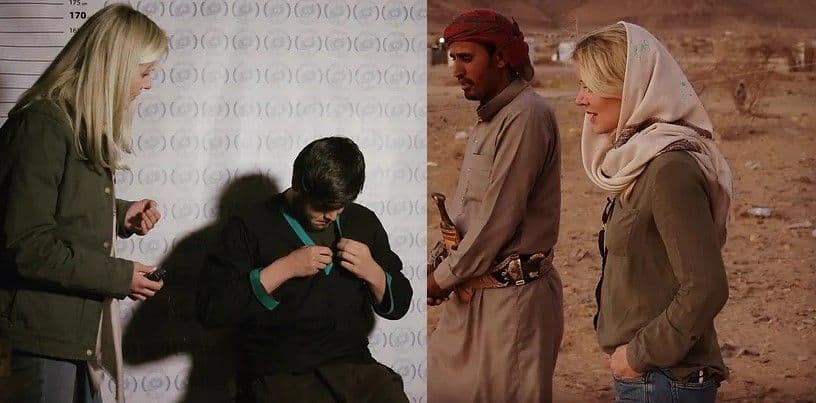
You had to go through an official channel with the Taliban, but when their overall media office granted permission, there was a reasonable amount of confidence that I would be relatively safe and able to do my job. I would get in the car with my Afghan colleagues. I would put on a burqa. I would hide all my filming equipment under the burqa, and we would head out into Taliban territory. Then, the Taliban would come and meet me on the side of the road and lead us into their camps, such that the real danger becomes the Western helicopters flying overhead. My impression was that the local commanders enjoyed being on-air. I was struck by how many very senior commanders came up from Helmand and Kandahar to visit with me on a trip to Herat. Even before the withdrawal, the Taliban commanders had a feeling of victory and seemed to feel “it is only right that I should be on the television talking,” that sort of thing. At the same time, they had their messaging and were not getting off message to talk about politics or what have you. They were confident, yes, but also extremely disciplined and organized. Watching them operate and talk amongst themselves it was fascinating how disciplined they were—they gave me free rein to walk around. If I asked them to leave so that I could talk to locals, they pretty much did. They felt a certain pride in hosting journalists, though it varied from one commander to the next.
Let’s move to August 2021. The withdrawal of Western forces from Kabul. “The fear and tension among the jumpy soldiers peaked” in those final days. There was an immense crowd building, and you sensed the fear pulsing through gate guards and watch-standers. What did you feel?
I was feeling as though something bad was going to happen. There was a level of chaos I’d never seen before, and the soldiers had never seen before. The Taliban had never seen it before, either. British military commanders were talking to the Taliban, like “help us manage this,” but the Taliban seemed confused and uncertain as to what was happening. It was an electric, scary danger in the massive crowd of people who were afraid they would be left behind. I was seeing weird things. Like, American troops just standing in the road as they had never stood outside before, totally exposed. It was unprecedented. Everyone on the ground was aware that the rules we had known for how to behave had crumbled.
The system was “completely unfair because there was no system” in those final days.
Yes, there was a sense that we were living in times of utter chaos. The soldiers were effectively being asked to do work that was not their jobs. They were not the State Department. They were not immigration. How do you tell a crowd of 100,000 people to get in line so you can check their passports? You could see it in their faces. Some of the British paratroopers seemed a bit more organized because they had a system for filtering people into a compound, but everything else was a bit arse-about-face. That’s not how it’s supposed to go. Nowhere could be more vulnerable. You’re standing around totally exposed for days and days. There’s an atmosphere that something bad is going to happen.
For you, a cycle took hold. “A friend or colleague would send me a message on WhatsApp saying their former interpreter or fixer was near the gate and asked if I could get them in.” You had the power to help, so you did. You stopped being an observer and became a participant, is that right?
It’s extraordinarily rare as a journalist to have an opportunity to help someone. We stand in refugee camps and ask questions. We stand in hospital wards and ask questions. What happened in the 10 days after the fall of Kabul, because there was no system, myself and my colleagues found ourselves in the position to help people. When Canada Dave brought people inside, they got onto a flight. I knew that if a person could get inside the complex, they had a very good shot at getting on a flight out of Afghanistan. All day long, I’m surrounded by people begging me for help. Everyone spoke English. They looked me in the eye and asked for help. There are moments in your life where you have an opportunity to help, and you’ll always regret not doing it. I tried my best. I’m no hero.
Let’s end with the beginning in mind. You wrote there was no such thing as “peace and justice.” We pick one. “That’s what war is. It is killing and sacrifice until a monstrous bitter pill must be swallowed to make it stop.” Strategists, generals, and presidents probably disagree with you. But do you believe this is how wars end, from the perspective of regular people caught in the fighting?
Well, look at the truth and reconciliation commissions in South Africa, where people got an incredible amount of catharsis but not justice. The Good Friday Agreement came with many murderers getting released and it was a bitter pill to swallow for so many people, but it did bring peace. Many people’s version of justice is just another version of war. From my observation, justice as a concept is overly romanticized. We make the mistake of thinking justice must come with peace. I think it takes leadership to help people understand how wars end.
John Waters is a writer in Nebraska. His novel River City One publishes this fall.
Is It Déjà vu All Over Again: The 2012 Report on Global Zero
By Peter Huessy • RealClearDefense
As Private Investment Pours Into Defense, the Clock Is Ticking
By Elaine McCusker • RealClearDefense
The First Test of Peace Lies in Ukraine's Borderlands
By Dennis T. Cosgrove • RealClearDefense
The VFW’s Gambling Addiction Victimizes Veterans
By Jack Yoest • RealClearDefense
Superintelligence Exposes a Gap in the Law of Delegated Authority
By Sue Ghosh Stricklett • RealClearDefense
When Your Navy is too Small, the Bill Comes Due Bigly
By CDR Salamander
Quo Vadis MCU?
By Marine Corps Compass Points
When the Network Goes Dark, Who Controls the Battlefield?
By Jonathan K. Corrado • RealClearDefense
Air Force Should Buy 250 Blended-Wing Tankers, as 2027 Demo Looms
By A&SF Mag.
Long Deployments to Be Navy Standard For Next Couple Years
By Mongilio, USNI News