
Four Priorities To Prevent a Russian-Style Logistics Failure in Future U.S. Operations
Last updated 06:25 AM EST • Read time: 4m
Russia failed to seize Kyiv in early 2022 because its logistics system collapsed under combat conditions. That collapse should serve as a warning to the United States. Current U.S. operational concepts often prioritize speed and maneuver while treating sustainment as a supporting function rather than a precondition for success.
The northern axis of the invasion depended on fragile assumptions of rapid Ukrainian collapse and minimal resistance. When those assumptions failed, Russian forces stalled quickly. The Hostomel Airport airborne assault showed the danger clearly: paratroopers landed without assured resupply, reliable medical evacuation, or realistic contingencies if the airfield became contested. The plan relied on a single air bridge node. Once Ukrainians damaged the runway, the entire operational design unraveled.
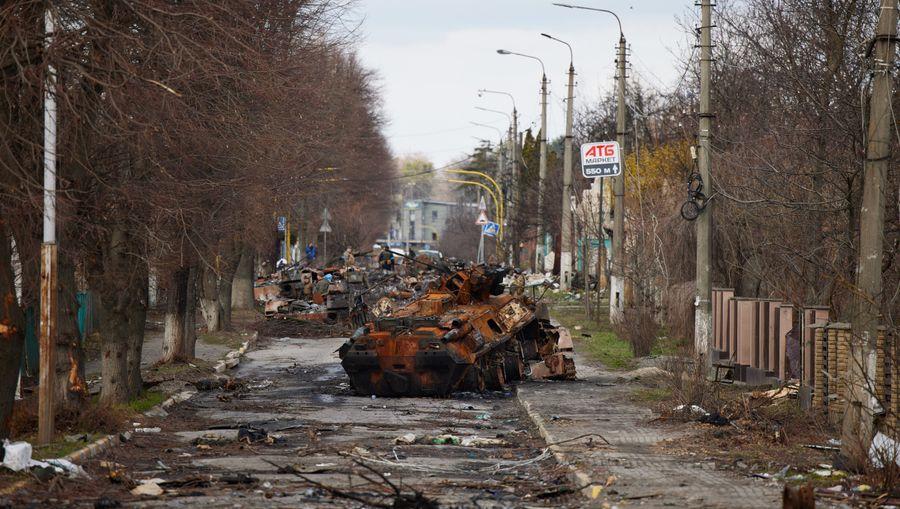
The infamous 60-kilometer convoy northwest of Kyiv revealed the same pattern on a larger scale. Fuel shortages, vehicle breakdowns, poor route selection, and Ukrainian strikes turned the column into a stationary target. No redundancy existed. No protected corridors protected the flow. Maintenance and recovery lagged far behind. Units ran dry before follow-on forces could link up. Communications issues made everything worse. Insecure radios left forward units unable to report shortages or adjust convoys. Rear echelons lacked visibility. Supplies sat idle without real-time coordination. These aren't just Russian blunders; they're what happens when operations assume quick wins and undervalue contested sustainment. The U.S. military, focused on multi-domain speed and expeditionary ops faces similar pitfalls if logistics isn't elevated.
Some might counter that U.S. tech and training superiority insulate them. But recent history disagrees. Gaza Joint Logistics Over‑the‑Shore (JLOTS) operation, a single improvised pier for aid, lasted just 20 days due to sea states, equipment mismatches, and planning gaps, leaving supplies undelivered. It's a microcosm of broader vulnerabilities: funding cuts to Army/Navy logistics systems, interoperability issues between services, and exercises that rarely simulate full-spectrum disruption.
To avoid Russia's fate, U.S. leaders must overcome these obstacles through targeted reforms.
First, eliminate single-point dependencies. Gaza's pier fiasco stemmed from no backups; planners must mandate resilient alternatives like multiple nodes and modular designs. Obstacle: Budget constraints due to Congress slashing JLOTS funding for years. Solution: Prioritize it in the next National Defense Authorization Act (NDAA), tying it to peer-threat scenarios like Indo-Pacific ops.
Second, build logistics command for degraded environments. Russia's insecure comms crippled resupply; U.S. units rely on digital networks that peer adversaries can jam. Train with intermittent connectivity, pre-delegated authorities, and analog fallbacks. Obstacle: Over-reliance on tech creates inertia. Overcome it by integrating "comms-denied" drills into every major exercise, starting with RED FLAG and TALISMAN SABRE.
Third, give sustainment forces equal billing to maneuver units. Fuel, maintenance, and recovery must operate forward under threat, not lag in safe rears. Russia's convoy exposed this gap; U.S. doctrine risks the same if logisticians aren't armored, mobile, and integrated. Obstacle: Cultural bias toward "trigger-pullers." Address it by cross-training: Embed logisticians in combat units during rotations, and measure exercise success by sustained power, not just objectives seized or land grabbed.
Finally, make contested sustainment the baseline for planning and exercises. Wargames often assume ideal timelines; Russia's Kyiv assumptions imploded under friction. Deliberately disrupt supplies, infrastructure, and comms in simulations to build resilience. Obstacle: Resource limits, full-scale stress tests are expensive. Start small: Scale up from tabletop to live-fire, leveraging AI for virtual disruptions, and collaborate with allies for cost-sharing.
Russia’s Kyiv debacle proves stockpiles alone don't win wars, but delivery does. Speed without sustainment is gambling, not art. The U.S. can't afford that bet. By elevating logistics now, we turn warnings into strength.
Travis Veillon is a former Marine infantryman and a federal employee with the U.S. Army Corps of Engineers. He has extensive education and experience in logistics, emergency management, and deployments to austere environments through disaster and recovery operations. His work focuses on operational realities, military adaptation, and strategic forecasting.

A Defense Win for Americans and Israelis in Arkansas
By Bradley Bowman • RealClearDefense
A Path to Success Against Iran
By Michael Schwartz • RealClearDefense
The World Cup Is Over. The Drone Threat Isn’t.
By Mitzi Perdue • RealClearDefense
AI Should Speed Veterans’ Benefits, Not Decide Them
By Rob Schroder • RealClearDefense
Don’t Be Swayed by Tactical Nukes
By Benjamin Giltner • RealClearDefense

Big Surface Combatants are so Hot Right Now
By CDR Salamander
USS Stout Loses Power During Port Visit Due to ‘Engineering Casualty’
By USNI News
Air Force Lessons Learned From Operation Epic Fury
By Tabitha Reeves, National Defense
Marines Need Nine More Amphibious Warships To Carry Out Its Missions
By TWZ
AFRL, ACC Fly XQ-67A Drone To Test Autonomous Teaming
By Airforce Technology