
How Western Military Orthodoxy Misread the Ukraine War — Twice
Last updated 06:27 AM EDT • Read time: 5m
In late 2021 and early 2022, as Russia massed troops along Ukraine's border, Western experts delivered one confident prediction after another. From Pentagon planners to cable-news strategists, the consensus held firm: Russia was bluffing to extract concessions, the costs of war would deter any real invasion, Ukraine was too fractured to mount resistance, and any conflict would end quickly in Moscow's favor. When the invasion came anyway, and Ukrainian forces shattered every forecast with fierce resilience, the same voices pivoted to prescribe NATO-style doctrine as the sure path to victory. Yet when that playbook was tested in the brutal 2023 counteroffensive, it stalled against minefields, drones, and grinding attrition warfare that no textbook had fully prepared for. Twice, Western military orthodoxy, conditioned by wars in which it enjoyed uncontested airspace and logistical supremacy, fundamentally misread the battlefield. Ukraine's triumphs and setbacks alike reveal a hard truth: success in high-intensity war stems not from distant analyses or rigid manuals, but from the adaptive grit and innovation of those fighting on the ground.
The Consensus That Failed
As Russia staged forces along Ukraine’s border, many Western analysts downplayed the danger, viewing the buildup as a bluff for diplomatic leverage rather than prelude to full-scale invasion. They overestimated Russian military prowess, underestimated Ukraine’s national cohesion and resolve, and largely failed to anticipate the attack itself. Even as intelligence warnings mounted and the threat grew undeniable, these flawed assumptions slowed the delivery of advanced weapons and delayed robust NATO support, leaving Kyiv uncertain of firm Western backing at a critical moment. Eliot Cohen later highlighted how distorted views of both Russian and Ukrainian capabilities warped early policy choices, while Alexander Vindman pointed out that analysts who claimed deep insight into Moscow had profoundly misread Kyiv’s determination and strength.
The consequences were not merely analytical errors but policy outcomes. Underestimating Ukraine while inflating Russian capability narrowed options, amplified escalation fears that proved overstated, and delayed material backing that might have accelerated Ukraine’s early momentum. The episode exposed a deeper vulnerability within the Western strategic community: when expert consensus calcifies around flawed assumptions, analysis hardens into policy, and policy shapes the battlefield.
Winning Without Western Scripts
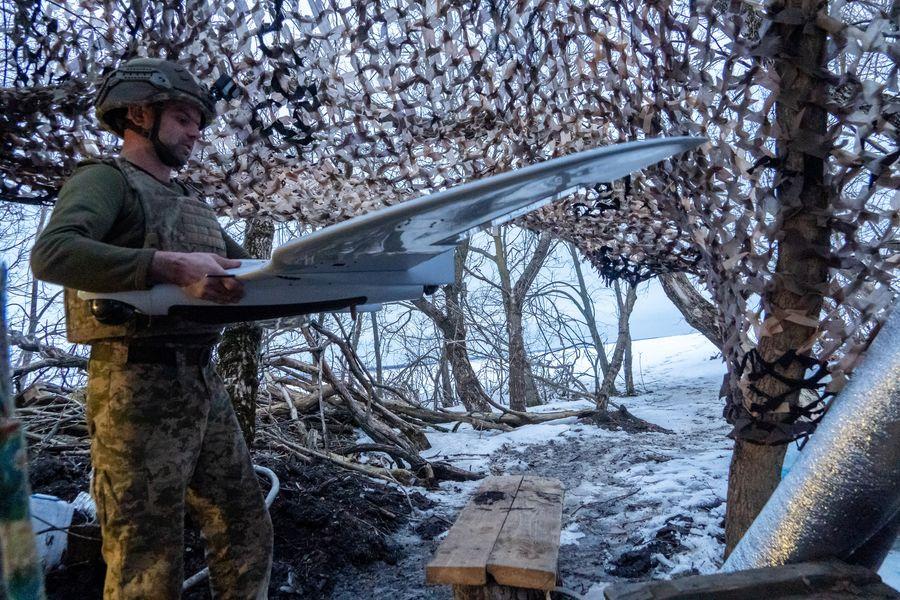
The most compelling rebuttal to early Western skepticism came in the fall of 2022 with the Kharkiv offensive. Ukrainian forces achieved a rapid operational breakthrough using limited NATO equipment and command structures shaped more by wartime necessity than imported doctrine. Small, agile units exploited weak points, maneuvered quickly, and integrated drones, forward observers, and local reconnaissance to deliver real-time intelligence to commanders. By emphasizing initiative, speed, and decentralized decision-making rather than rigid templates, Ukraine seized the initiative and overwhelmed Russian forces that believed they remained on the offensive and had left the sector thinly defended. The operation shattered Russian defensive lines many analysts assumed would hold and underscored a central lesson of the war: battlefield success depends less on formal manuals than on adaptive leadership and situational awareness. Though not flawless, the offensive was widely hailed by foreign policy observers as one of the most significant operational victories of the 20th and 21st centuries.
Lessons NATO Couldn’t Learn in a Classroom
Ukraine’s battlefield ingenuity has also been reflected in recent NATO exercises such as Hedgehog 2025, where approximately 16,000 NATO troops faced a small Ukrainian opposing force (OpFor) equipped with drones and AI-enabled targeting systems. Despite being heavily outnumbered, the Ukrainian teams repeatedly disrupted and outmaneuvered larger formations; in one scenario, a ten-person unit mock-destroyed 17 armored vehicles in a single afternoon. Observers reportedly noted the striking effectiveness of Ukraine’s tactics, with at least one NATO commander allegedly reacting, “we are f—cked.”
The exercises reinforced a broader reality: Ukraine’s effectiveness has derived from hard-earned battlefield experience and adaptive use of emerging technologies rather than rigid adherence to inherited doctrine. For decades, many Western analysts, shaped by permissive conflicts during the Global War on Terror, have underestimated the demands of high-intensity, technology-saturated warfare. Ukraine’s experience exposed persistent gaps between theoretical expertise and battlefield adaptation.
Theory Meets Reality—and Fails
By contrast, Ukraine’s 2023 summer counteroffensive, guided by NATO-style doctrine and reliant on Western weapons, slowed sharply under heavy casualties. Russian forces had months to prepare, constructing dense minefields, layered trenches, anti-tank obstacles, and fortified defensive belts. Even with coordinated armor, artillery, and reconnaissance, Ukrainian units advanced only about 90 meters per day. Front-line reports highlighted a stark mismatch between Western instruction and battlefield realities: mines, explosive ordnance, and drone-directed precision fires often neutralized conventional tactics. Ukrainian units increasingly reverted to familiar approaches, noting that NATO-style training emphasized conventional infantry maneuvers while success demanded mastery of artillery, drones, and asymmetric electronic warfare.
Orthodoxy as Liability
It is easy to theorize victory from conference rooms, lecture halls, or TV studios. Experts, strategic forecasters, and talking heads—shaped by permissive counterinsurgency campaigns—often offer prescriptions that fail under high-intensity conditions. NATO has not recently faced a peer adversary capable of contesting every domain of warfare. Persistent drones, electronic warfare, precision fires, and industrial-scale attrition define Ukraine’s battlefield. When violence unfolds in real time, doctrine that cannot adapt becomes a liability. Ukraine’s experience demonstrates that success depends on decentralized, flexible tactics and rapid decision-making on the ground, not distant manuals or remote expertise. Western militaries that ignore this lesson do so at their peril.
Travis Veillon is a former marine infantryman and a federal employee with the U.S. Army Corps of Engineers. He has extensive education and experience in logistics, emergency management, and deployments to austere environments through disaster and recovery operations. His work focuses on operational realities, military adaptation, and strategic forecasting.
The views expressed in this article are solely those of the author in a personal capacity and do not reflect the official policy, position, or endorsement of the U.S. Army Corps of Engineers, the Department of the Army, or the U.S. Government. All information referenced is drawn from publicly available sources, and no classified or sensitive internal materials were used in the preparation of this article.

A Defense Win for Americans and Israelis in Arkansas
By Bradley Bowman • RealClearDefense
A Path to Success Against Iran
By Michael Schwartz • RealClearDefense
The World Cup Is Over. The Drone Threat Isn’t.
By Mitzi Perdue • RealClearDefense
AI Should Speed Veterans’ Benefits, Not Decide Them
By Rob Schroder • RealClearDefense
Don’t Be Swayed by Tactical Nukes
By Benjamin Giltner • RealClearDefense
Big Surface Combatants are so Hot Right Now
By CDR Salamander
USS Stout Loses Power During Port Visit Due to ‘Engineering Casualty’
By USNI News
Air Force Lessons Learned From Operation Epic Fury
By Tabitha Reeves, National Defense
Marines Need Nine More Amphibious Warships To Carry Out Its Missions
By TWZ
AFRL, ACC Fly XQ-67A Drone To Test Autonomous Teaming
By Airforce Technology