
Rebuilding the Arsenal: The Push to Restore U.S. Missile Inventories
Last updated 06:00 AM EDT • Read time: 5m
The United States military is urgently recalibrating its industrial base to meet the math of modern warfare. In the wake of the defense of Ukraine and the intense 2026 conflict with Iran, a stark reality has crystallized: finite stockpiles of premium interceptors are being rapidly depleted to counter asymmetric threats.
To address this strain on inventories, the Department of Defense (DoD) is executing a two-front industrial mobilization. This effort focuses on heavily capitalizing physical manufacturing infrastructure to exponentially increase the production of high-end missiles, while simultaneously creating a new tier of ultra-low-cost ones.
Capitalizing the Defense Industrial Base
Reversing munition drawdowns requires massive, long-lead capital commitments to physical infrastructure. Prime contractors are responding to formal government agreements with historic investments. Lockheed Martin, a central player in this mobilization, has committed to investing up to $9 billion through 2030 to modernize and expand over 20 manufacturing facilities across five U.S. states.
This physical expansion includes the new Munitions Acceleration Center in Camden, Arkansas, which utilizes digital production lines and advanced robotics to scale interceptor output.
Scaling High-End Interceptors: PAC-3 MSE, PAC-2 GEM and THAAD
For years, the U.S. and its allies have relied on sophisticated interceptors, but recent operational tempos have exposed the limits of legacy production rates. To stop the bleeding of elite inventories, the Pentagon and defense contractors have established binding framework agreements to drastically increase annual output across multiple Patriot-compatible and strategic tiers.
PAC-3 Missile Segment Enhancement (MSE)
The DoD is executing a strategic ramp-up of the PAC-3 MSE used in the Patriot system. In 2025, Lockheed Martin delivered 620 of these missiles, a 20 percent increase over the previous year. However, this rate remains insufficient for global demand. Driven by an April 2026 $4.7 billion undefinitized contract action (UCA) for accelerated production, the industrial base is scaling to reach a production capacity of 2,000 PAC-3 MSEs per year by the end of 2030.
PAC-2 and Low-Cost Patriot Interceptor Variants
Recognizing that not every threat requires a high-cost hit-to-kill interceptor, the industrial base is simultaneously expanding production of the legacy PAC-2 missile which uses a fragmentation warhead. This includes scaled production efforts for the PAC-2 (such as the Guidance Enhanced Missile (GEM) series).
Terminal High Altitude Area Defense (THAAD)
A similar trajectory applies to THAAD interceptors. Historically, production hovered at 96 missiles per year. Following a framework agreement signed in January 2026, the DoD and Lockheed Martin have committed to quadrupling this capacity. Over a seven-year ramp, the goal is to achieve an annual production rate of 400 THAAD interceptors.
Expanding Offensive Precision Strike
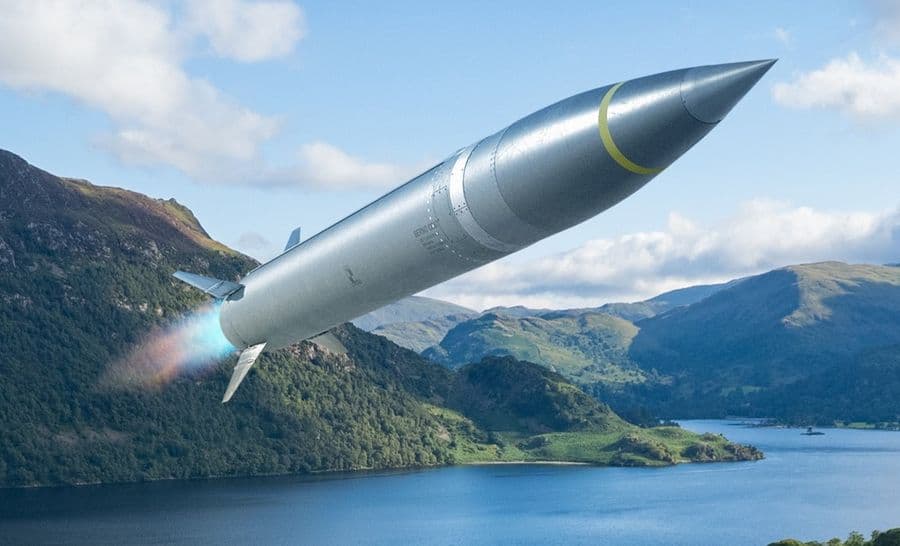
The revitalization of the industrial base extends beyond defensive shields to a generational shift in offensive precision strike capabilities. The U.S. Army is transitioning from the legacy Army Tactical Missile System (ATACMS) to the Precision Strike Missile (PrSM), which made its operational debut during early 2026 operations against Iran.
The PrSM fundamentally alters the logistical footprint on the battlefield. Its form factor allows standard M270 MLRS (Multiple Launch Rocket System) and M142 HIMARS (High Mobility Artillery Rocket System) launchers to carry two missiles per pod instead of one. Boasting a demonstrated range exceeding 499 kilometers, the PrSM is a cornerstone of future operations. Through a seven-year agreement, the industrial base is slated to expand PrSM production capacity to 550 missiles per year, with deliveries of 400 missiles annually expected to start in 2027.
The Push for Low-Cost Anti-Drone Interceptors
In August 2026, the service issued a Request for Information (RFI) for the "Next Generation C-sUAS Missile" (NGCM). The mandate is absolute: deliver a kinetic interceptor priced at under $150,000 per unit.
The NGCM is designed to hunt Group 2 and Group 3 small, unmanned aircraft systems threats ranging from 21 pounds up to 1,320 pounds. The physical requirements demand the missile launch within five seconds of an operator's command, striking targets over 16 kilometers away at altitudes of at least six kilometers, with an ultimate objective of reaching beyond 25 kilometers.
Crucially, the NGCM must be system-agnostic, integrating seamlessly with existing battle management architectures. It is required to interface with Raytheon’s Coyote launchers and take targeting data from already-fielded radars, including the Patriot, Sentinel, and AN/TPQ-53 systems.
Demonstrating the urgency of the threat, the Army's initial requirement calls for a bulk purchase of at least 5,000 missiles, demanding that the first 50 units be ready for rigorous operational assessments by the first quarter of fiscal year 2028.
Projected Production Matrix
By heavily financing the expansion of high-end missile production lines while simultaneously advancing PAC-2 manufacturing, low-cost Patriot options, and a dedicated tier of mass-producible anti-drone interceptors, the DoD is structurally recalibrating its inventory. This multi-layered strategy ensures the U.S. industrial base can generate the volume and variety of munitions required to confront both sophisticated state adversaries and asymmetric drone swarms.
The table outlines the baseline deliveries and the targeted capacity expansions as new manufacturing lines come online.
Rebuilding the U.S. missile arsenal requires a fundamental transformation of the defense industrial base, shifting from peacetime production rates to wartime capacity. Supported by multibillion-dollar investments in physical infrastructure and digital manufacturing, this strategy secures the high-end interceptors and offensive systems such as PAC-3, THAAD, and PrSM which are required for sophisticated state conflicts.
Concurrently, the accelerated development of the sub-$150,000 Next Generation C-sUAS Missile and the scaled production of legacy PAC-2 variants address the critical need for cost-efficiency. This dual approach ensures the military can efficiently neutralize high-volume, asymmetric drone threats without exhausting its premium stockpiles.
Ultimately, this comprehensive industrial mobilization provides the strategic depth, versatile inventory, and favorable cost-exchange ratios necessary to sustain modern combat operations.
Bruce Allen Lubbering held several management positions with aerospace manufacturing companies in a career that lasted over 30 years.

In Pursuit of Nuclear Abolition
By Peter Huessy • RealClearDefense
Innovation Alone Won’t Prepare the U.S. for the Future Battlefield
By Joshua Segal • RealClearDefense
The sUAS Tactical Trifecta
By Bryan T. Woody • RealClearDefense
The Revolutionary War: When Strategic Options Share the Same Weakness
By Henry Yep • RealClearDefense
The Houthis Are Testing the Limits of Collective Defense
By Saima Afzal • RealClearDefense

Who Shoots Down the Drone Over the Shipyard?
By John Ferrari & Dillon Prochnicki • RealClearDefense
Northrop Grumman Breaks Out the Big Guns at AUSA
By Daniel Terrill, Defense News
Army Pursuing Diverse Array of New Anti-Air Interceptors
By Trevithick, The WarZoneWho Shoots Down the Drone Over the Shipyard?
By John Ferrari & Dillon Prochnicki, RCD
F-35C Lands for the First Time on a Ford-Class Aircraft Carrier
By The Aviationist