
The Most Dangerous Assumption: Logistics Failure Is Reversible
Last updated 09:20 AM EST • Read time: 5m
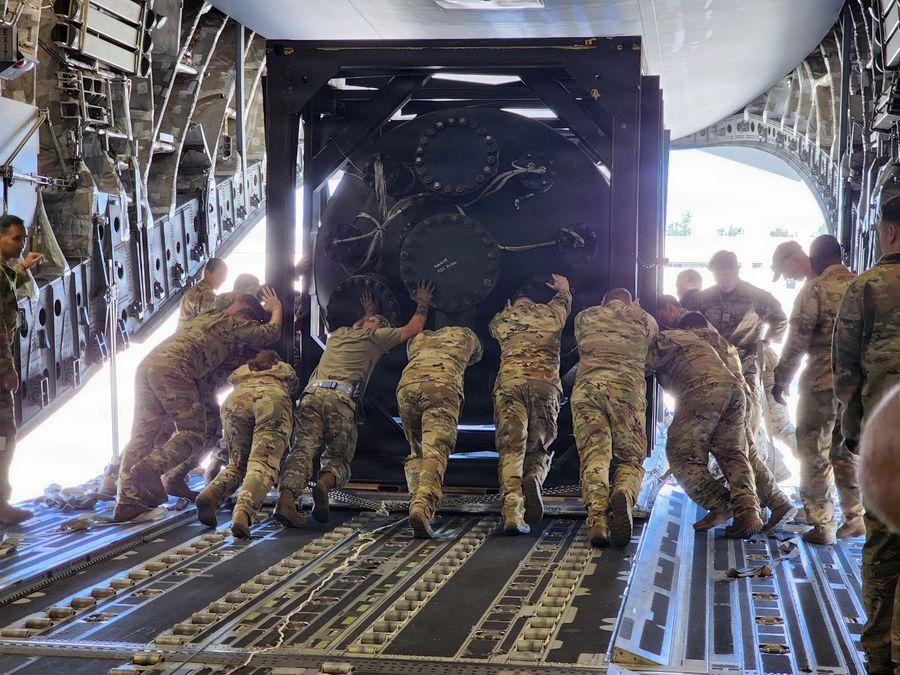
In the fog of the next high-intensity war, the first units to collapse may not fall to enemy fire. They will simply stop moving. Fuel tanks run dry, repair crews sit idle without parts, convoys freeze in place, and commanders wait in vain for networks that never reconnect. This is not a hypothetical failure of resupply. It is the predictable outcome of a force trained to believe logistics breakdowns are always fixable.
The most dangerous assumption in the U.S. military today is not that supplies will arrive on time. It is that logistics failure will always be reversible. Exercises routinely reset disrupted networks, restart stalled convoys, and erase shortages once training objectives are met. Real wars offer no such mercy.
This assumption is reinforced by another fiction: the belief in a survivable rear area. U.S. doctrine often treats sustainment forces as operating behind the fight, protected by distance and time. In high-intensity conflict, long-range fires, cyberattacks, and unmanned systems erase that distinction. Logistics will be contested everywhere.
Large-scale exercises rarely reflect this reality. Communications disruptions are typically brief and scripted. Sustainment shortfalls are mitigated by controllers to preserve scenario flow. Units almost never fail because they exhaust fuel, munitions, or lift. The result is a force trained to expect friction, but not to endure it.
Recent U.S. experience shows these assumptions fail even under noncombat stress. During the COVID-19 pandemic, supply chains optimized for efficiency collapsed into chaos. Shortages of medical supplies, microelectronics, and critical industrial components created cascading maintenance delays and production bottlenecks. The Department of Defense ran into unexpected choke points across both civilian and military sectors, exposing how heavily force readiness depends on fragile commercial systems. This occurred without enemy action and demonstrated that U.S. logistics can fracture under pressure long before combat begins.
Efforts to support Ukraine exposed deeper structural limits. Dormant munitions production lines, including for Stinger missiles, took years to restart due to component obsolescence and workforce constraints. Submarine construction missed delivery goals amid skilled labor and parts shortages. The F-35 program faced delays linked to foreign-sourced components. Multiple wargames examining a Taiwan contingency concluded that U.S. forces would exhaust key long-range precision munitions in under a week. Exercises assume replenishment timelines that industrial reality cannot meet.
Even outside production, U.S. logistics hubs remain acutely vulnerable to disruption by near-peer adversaries. Recent incidents at overseas bases, including runway closures and tanker availability shortfalls during periods of heightened readiness, have already constrained air-bridge operations and slowed force movement. These disruptions were survivable only because they occurred short of conflict and without deliberate interference. In a war against Russia or China, logistics hubs would be among the first targets, not incidental victims. Runways, fuel infrastructure, tanker fleets, and command nodes would be attacked repeatedly, turning brief disruptions into sustained operational paralysis and sharply limiting the ability to move and sustain forces at scale.
Yet exercises continue to teach the opposite lesson. When maneuver units outrun logistics in training, timelines are adjusted. When sustainment stalls, scenarios are reshaped. The institutional signal is subtle but dangerous: logistics friction is an inconvenience, not a decisive constraint. In combat, it is often the constraint.
Force design reinforces this gap. Maneuver units are armored, mobile, and resourced to fight forward. Sustainment forces frequently are not. Fuel, maintenance, and recovery elements depend on permissive conditions that will not exist against a peer adversary. Exercises rarely force logisticians to operate under sustained threat, so this mismatch persists.
Ironically, U.S. wargames repeatedly reveal these vulnerabilities. Ports become congested. Airlift falls short. Convoys are interdicted. Critical hubs are targeted. Combat power erodes not from defeat in contact, but from resupply failure. These findings are well known among planners, yet they rarely determine exercise outcomes or institutional decisions.
Fixing this does not require new doctrine. It requires enforcing realism.
Exercises must allow logistics failure to end missions. If units run out of fuel, munitions, or medical capacity, they should lose. Degraded communications should be the baseline, not an inject, with sustainment units operating under intermittent connectivity and pre-delegated authority. Sustainment forces must be trained and equipped to fight forward, not sheltered behind a rear area that no longer exists.
Russia’s failure outside Kyiv in 2022 showed that wars are not lost when plans encounter friction, but when systems cannot adapt to it. The United States risks a similar outcome not because it neglects logistics, but because it trains itself to expect recovery. In a high-intensity conflict, logistics failure will not be temporary and the rear will not be safe. If these assumptions persist, early losses will not be accidents. They will be self-inflicted.
Travis Veillon is a former Marine infantryman and a federal employee with the U.S. Army Corps of Engineers. He has extensive education and experience in logistics, emergency management, and deployments to austere environments through disaster and recovery operations. His work focuses on operational realities, military adaptation, and strategic forecasting.

A Defense Win for Americans and Israelis in Arkansas
By Bradley Bowman • RealClearDefense
A Path to Success Against Iran
By Michael Schwartz • RealClearDefense
The World Cup Is Over. The Drone Threat Isn’t.
By Mitzi Perdue • RealClearDefense
AI Should Speed Veterans’ Benefits, Not Decide Them
By Rob Schroder • RealClearDefense
Don’t Be Swayed by Tactical Nukes
By Benjamin Giltner • RealClearDefense
Big Surface Combatants are so Hot Right Now
By CDR Salamander
USS Stout Loses Power During Port Visit Due to ‘Engineering Casualty’
By USNI News
Air Force Lessons Learned From Operation Epic Fury
By Tabitha Reeves, National Defense
Marines Need Nine More Amphibious Warships To Carry Out Its Missions
By TWZ
AFRL, ACC Fly XQ-67A Drone To Test Autonomous Teaming
By Airforce Technology