
The Ukrainian Three-Legged Stool
Published March 19, 2022 • Read time: 5m
U.S. military doctrine defines a “center of gravity (COG)” to be “The source of power that provides moral or physical strength, freedom of action, or will to act.”[i] An enemy can have multiple COGs. Ukraine has three. And the stool analogy only goes so far - in order to defeat Ukraine, Russia needs to do three things:
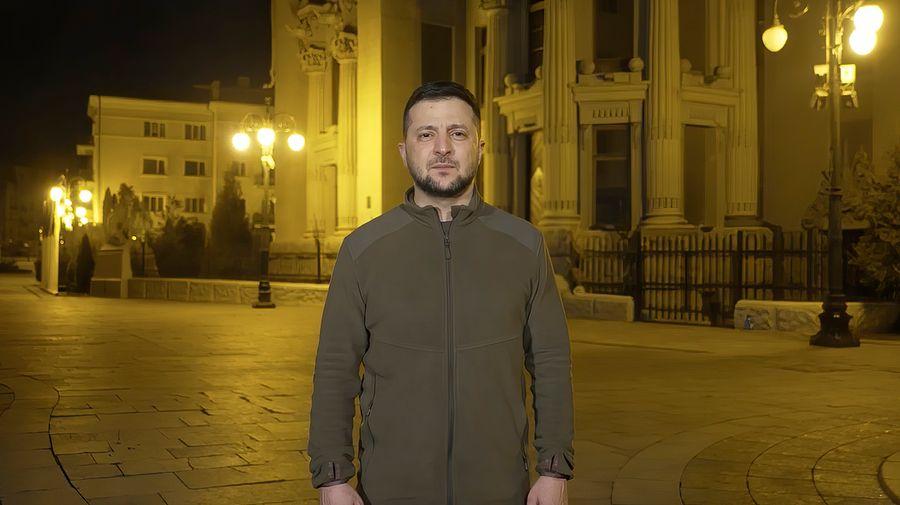
- Overthrow the Ukrainian government. This primarily means removing President Zelenskyy’s ability to communicate with the Ukrainian people and direct the military and other government functions.
- Destroy the Ukrainian Armed Forces (UAF).
- Undermine the Ukrainian people's will to resist - and accomplishing the first two, especially doing it quickly, would go a long way to accomplishing the third.
The Russians have so far failed to achieve any of these goals; in fact, in at least one case, they haven't attempted it:
- They tried to get to Kyiv but so far have failed to reach it, and Zelenskyy is now a national and international hero (strategic setback #1). Zelenskyy has been able to galvanize worldwide support for his country, successfully lobby for military[ii] and humanitarian support, and he has…
- ...increased the will of the Ukrainian people to resist (strategic setback #2). Russia has resorted to indiscriminate shelling of cities, apparently trying to break the will of the people – it hasn't worked so far. In fact, in towns seized by the Russians, there have been public protests, at great personal risk, of Ukrainians against Russian occupation.[iii]
- The Russians have not yet tried to isolate and destroy the UAF in earnest (strategic setback #3). At the start of the conflict, the majority of the UAF operational forces were stationed in the eastern part of the country, facing the separatist regions to the east, and were a long way from any support that would be coming from the west. If the Russians had driven north from Crimea and south from the southern Russian border with Ukraine, they could have surrounded most of the UAF from the west, cut them off from support and re-supply from the rest of Ukraine, and attacked them from both the separatist regions to the east and the Russian forces now in their rear. Two weeks into the conflict and the Russians have still not tried to do this.
Instead, the Russians are following the plan shown by Belarusian President Lukashenko on TV(!)[iv]:
- Attacking Kharkiv, which has no tactical, operational, or strategic value. Using combat forces to attack Kharkiv delayed the Russians from cutting off the UAF from the north and west.
- Tried to create a “land bridge” to the Donbas but has gotten bogged down in Mariupol; again, a city with no real strategic value. While creating this land bridge puts them in control of all of the Sea of Azov ports, that has no practical effect since Russia already controls the Kerch Strait, which effectively prevents Ukraine from using those ports anyway.
- Struck out towards Odesa from Crimea, which they have not yet reached. Getting control of Odesa would put Russia in control of Ukraine's largest shipping port, but since Russia has the preponderance of naval forces in the Black Sea, they can effectively control Odesa by blockading it; there seems little value in trying to seize it at this time.
- Seizing power plants. It is not clear why Russia is doing this, and it is especially not clear why they would fire on a nuclear power plant and run the risk of a nuclear catastrophe, which would complicate their military efforts immensely. If they wanted to cut power to Ukraine, they could just take out the main transmission lines coming out of the plants in any number of ways (smart bombs, combat engineering teams, etc.) – there is no value in wasting time and resources in capturing the plants themselves.
- Amphibious assault. Lukashenko’s map showed an amphibious landing west of Odessa and driving towards Moldova. The Russians have not attempted this – yet – and may not, given how poorly the rest of their campaign has gone. But Moldova should prepare to be invaded. This would further stretch Russian military resources and detract from the goal of defeating Ukraine.
For those who are concerned that this article gives Russia a blueprint for defeating Ukraine, you needn’t be worried: Ukraine has had time to prepare its forces in the east and prepare its defenses around Kyiv – in fact, they have taken advantage of Russia’s inability to keep its forces supplied and attacked stalled Russian forces across the country. And as for the Ukrainian people, we are seeing the concept of "live free or die" play out in real-time: the Ukrainians have lived under Soviet rule, were systematically starved to death by Stalin in the 1930s, and they have no desire to be ruled by Russians ever again. They have tasted democracy, freedom, and self-determination and don't want to go back.
Russia will never defeat the third leg of the Ukrainian stool and has done poorly to defeat the other two.
Anthony Cowden is the Managing Director of Stari Consulting Services.
Notes:
[ii] Although not for a general no-fly zone…

The Army’s AI Cyber Defenders Need a Proven Stand-Down Order
By Gleb Tsipursky • RealClearDefense
After the Silence
By Chase Skylar DeMayo • RealClearDefense
Defense Chip Procurement Needs a Recovery Test
By Percy Yixuanchen Yu • RealClearDefense
FORTRESS America Must Measure Missions, Not Megawatts
By Burak Oktenli • RealClearDefense
After the Midterms, the Right Strategy Against Iran
By Lance Gordon • RealClearDefense
After the Silence
By Chase Skylar DeMayo • RealClearDefense
Underwater Arms Race Puts U.S. Naval Supremacy at Risk
By Tom O'Connor, Newsweek
New Facilities To Pump Out Upgraded F/A-18E/F Super Hornets
By Trevithick, WarZone
U.S. Navy Expands Tomahawk Warhead Production
By Naval News Staff, Naval News
SSN(X) Attack Boat Will be a Swift, Lethal Mothership for Undersea Drones
By USNI N.