
NATO Chief Says Allies to Join Anti-ISIS Coalition
Last updated 05:50 PM EDT • Read time: 3m
BRUSSELS — NATO's chief affirmed Thursday that the alliance will join the international coalition fighting the Islamic State group but will not wage direct war against the extremists — an announcement timed for U.S. President Donald Trump's first appearance at a summit of the alliance's leaders.
In the wake of this week's suicide bomb attack at a concert in Manchester, NATO leaders are keen to show that the alliance born in the Cold War is responding to today's security threats as they meet in Brussels. Trump has questioned its relevance and pushed members to do more to defend themselves.
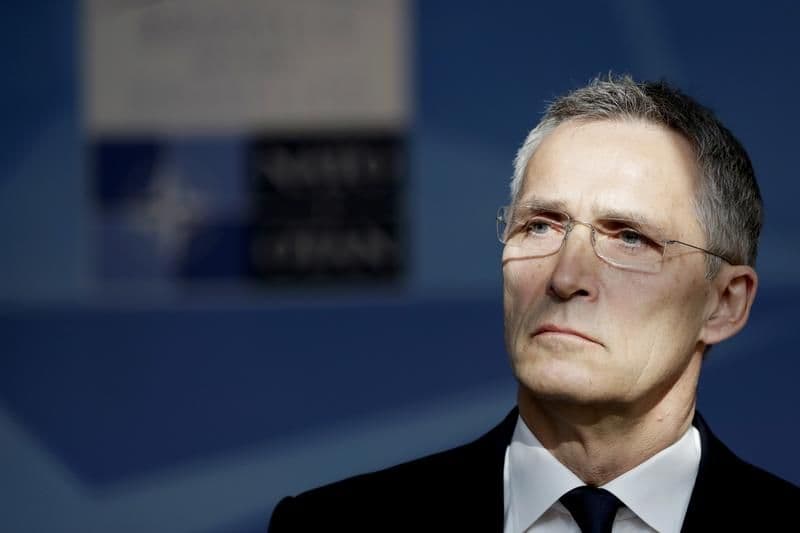
Secretary-General Jens Stoltenberg said Thursday that joining the U.S.-led anti-Islamic State coalition "will send a strong political message of NATO's commitment to the fight against terrorism and also improve our coordination within the coalition."
But he underlined that "it does not mean that NATO will engage in combat operations."
All 28 NATO allies are individual members of the 68-nation anti-ISIS coalition. But some, notably France and Germany, have feared that NATO officially joining it might upset decision-making within the coalition or alienate Middle East countries taking part.
Stoltenberg said that joining would send a strong political signal.
As part of its efforts to respond to Trump's demand to do more to fight terrorism, NATO will also set up a counter-terrorism intelligence cell to improve information-sharing.
It will notably focus on so-called foreign fighters who travel from Europe to train or fight with extremists in Iraq and Syria.
After a working dinner at Thursday's summit, the leaders are also set to announce the appointment of an anti-terror coordinator to oversee their efforts, and increase the number of flight hours of a surveillance plane watching the skies over northern Iraq and Syria.
Another big item on the NATO agenda is Trump's challenge to other countries to up their military spending. Leaders will agree to submit annual action plans laying out how they plan to meet NATO's spending goals. The plans would also describe what kind of military equipment they intend to invest in, and what contributions they will make to operations.
Stoltenberg refused to be drawn into a row between the United States and Britain after leaked photos from the Manchester bomb scene appeared in The New York Times.
He said the dispute over leaked intelligence is a "bilateral issue," but noted that within NATO "sharing intelligence is based on trust."
© Copyright 2017 Associated Press . All rights reserved. This material may not be published, broadcast, rewritten or redistributed.

In Pursuit of Nuclear Abolition
By Peter Huessy • RealClearDefense
Innovation Alone Won’t Prepare the U.S. for the Future Battlefield
By Joshua Segal • RealClearDefense
The sUAS Tactical Trifecta
By Bryan T. Woody • RealClearDefense
The Revolutionary War: When Strategic Options Share the Same Weakness
By Henry Yep • RealClearDefense
The Houthis Are Testing the Limits of Collective Defense
By Saima Afzal • RealClearDefense

Who Shoots Down the Drone Over the Shipyard?
By John Ferrari & Dillon Prochnicki • RealClearDefense
Northrop Grumman Breaks Out the Big Guns at AUSA
By Daniel Terrill, Defense News
Army Pursuing Diverse Array of New Anti-Air Interceptors
By Trevithick, The WarZoneWho Shoots Down the Drone Over the Shipyard?
By John Ferrari & Dillon Prochnicki, RCD
F-35C Lands for the First Time on a Ford-Class Aircraft Carrier
By The Aviationist