
New Canadian Submarine – Good for NATO Bad for RCN
Last updated 06:20 AM EDT • Read time: 9m
Why Canada Just Bought the Right Submarine for NATO but the Wrong Submarine for the Canadian Navy
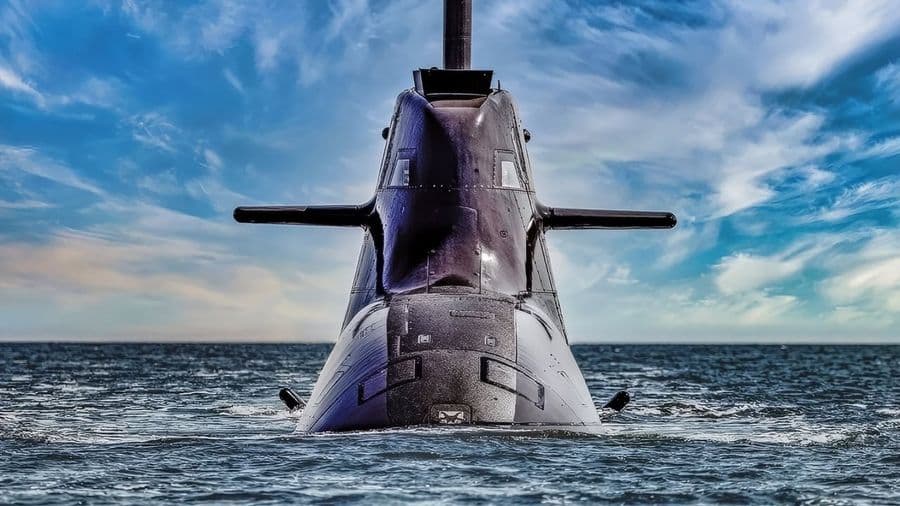
The RCN is ecstatic to be getting a replacement for the troubled Victoria Class subs, with the announced purchase of 12 TKMS 212CD subs from Germany. However, the government of Prime Minister Mark Carney has not actually provided the RCN with the best kit to meet its new challenges. In 1987, the Mulroney government advanced a White Paper titled Challenge and Commitment, outlining Ottawa’s proposal to buy Nuclear Attack Submarines to facilitate under ice patrols of the Arctic and adequately defend, for the first time, the three oceans that surround Canada. They should have followed the wise advice from that White Paper and also invested in a fleet of Nuclear Attack Submarines or SSN. Our choice would have been be a mix of 212CD and the nuclear propulsion French Suffren Class, to fully meet Canada’s needs and fulfill the lofty defense goals from that still-relevant Cold War document.
During and since the Cold War, the greatest persisting weakness of the RCN was its inability to patrol Canada’s ice-covered Arctic archipelago, which extends to the permanent polar ice cap. The small Cold War Canadian submarine force of the Oberon class, and the current Upholder Class, have been unable to operate effectively along Canada’s Arctic Oceanic littoral, deferring to the USN for undersea protection in our northern ocean and deep Pacific basin. The government’s eschewing of nuclear-propulsion submarines is itself a strategy of non-involvement in the defense of our allies. It is even an abandonment of Canada’s own territorial sovereignty in a moment of history when Washington is questioning Danish and Canadian commitments to North American defense.
With a major war ongoing in Europe, concerns for the security of Taiwan in the face of a rapidly rising Chinese navy, and emerging threats to Canada’s Arctic facilitated by climate change, Canada needs a submarine fleet with extended undersea patrol ranges. While there is no evidence that Soviet submarines ever transited Canadian territorial waters in the archipelagic Northwest Passage, virtually every wartime scenario with the USSR involved guided missile submarines seeking approaches to circumvent the Northern Warning System and launch the initial cruise missiles strikes on strategic command and control facilities. Certainly, with over 300 Soviet submarines able to saturate the saturate the trans-Atlantic sea lanes in the 1970s and 1980s, a European orientation was the correct one, as was reliance on the USN’s nuclear submarine fleet for Arctic patrols.
The ongoing Moscow-instigated Ukraine War in Europe, threats to Norway’s Svalbard Island and Baltic security, and the sanctions-breaking Russian shadow oil tanker fleet, shows that the pattern of Soviet era threats, while weaker, is no less likely to result in conflicts. Nowhere is a Cold War more akin to actual conflict, even in peacetime, than in the undersea world of submarines, where the second-strike boomers of the great powers maintain strategic stability. However, today, Russia’s tactical submarine fleet has shrunk to forty, more than offset by forty European NATO subs (plus 22 mutually preoccupied Greco-Turkish platforms) (IISS 2026). Meanwhile. China’s fleet has risen to 56, opposite 50 U.S., 25 Japanese, and 6 Australian subs in the Pacific.
What has changed since the 1987 White Paper in submarine technology to have this government not even consider nuclear submarines? As always cost is a major driver, with conventional submarines typically cheaper to buy and operate than nuclear submarines, although with today’s systems and cost of Air Independent Propulsion (AIP), that crucial cost gap has narrowed. Conventional subs are also quieter than a nuclear submarine at patrol speed because there is no reactor superheating steam to turn a turbine or pumps running to circulate coolant, but the difference is not large, nuclear boats are now also ultra quiet in the water. Finally, AIP has given conventional submarines the ability to remain submerged underwater for weeks and achieve far greater endurance in venturing into under-ice conditions than even the 1990s-built Victoria Class. They nevertheless consume a fuel to power the AIP system, and their underwater endurance is still measured in weeks, especially when conducting high speed transits. Procuring Suffren nuclear submarines, for which there is still time, gives Canada the ability to not only keep a submarine under the ice the whole time it is on patrol, limited only by the food aboard of about 70 days, it would allow the flexibility to redeploy it from the Arctic to the Pacific or Atlantic at a moment’s notice, underwater and unseen, at high speed if necessary, for the entire transit.
The joint German/ Norwegian 212CD submarine is absolutely a great choice for Canada’s Atlantic Fleet and Canada’s NATO contribution to defense of the GIUK gap and Barents Sea, where it can operate within in its designed conditions and parameters. It is a stealthy design with AIP, possesses ultra modern detection and fire control systems, and great capabilities for the NATO mission with logistical commonality with our NATO partners, especially our Arctic ally Norway. What exclusively choosing the 212CD submarine choice effectively does is relegate the Arctic and Indo-Pacific theatres as lesser capability theatres, precisely when they are facing an emergent threat. The surest way to avoid war is to have a viable deterrent, not to purchase submarines deliberately designed to lack the range to intervene. In a major war, Washington will oblige Canada to deploy these submarines regardless.
The only method by which Canada could effectively employ these new conventional 212CD subs in the Indo-Pacific, would be to forward deploy two or more, possibly at bases in Japan, Guam or Australia. Deploying 212CD submarines to the Arctic will expend a large portion of their limited endurance and fuel in constant transitions to and from Esquimalt, leaving shorter on-station patrol times before re-provisioning and tanking-up is required. Very long deployments away from home quickly burn-out both ships and sailors, like the USS Gerald Ford’s recent record deployment has demonstrated. Instead, what Canada has bought for the Pacific is effectively stealthy offshore underwater Coast Guard vessels, good for detecting Russian and Chinese submarines loitering to trail US SSBN leaving nearby Bangor Washington on their patrols. While assisting our American friends and detecting these threats in our coastal waters is one of the RCN’s missions, the Pacific is a large ocean and recent events have shown Canada needs to be able to project power as far as the Persian Gulf to protect its own interests ands signal solidarity with its global allies. The Type 212CD submarines are not the optimal choice for that mission, their effective patrol area might be as far west as Guam, but more likely no further west than Hawaii. A Suffren class nuclear sub extends that effective routine patrol area to the Persian Gulf and Cape Town, all regions that coincide with Canada’s foreign policy interests in trade, development and human rights.
In the Arctic, where the ice cap is shrinking and ever more time of the year is open water, the primary threat of Russian Nuclear Ballistic Missile Submarines are still located under the polar ice. Russian SSBNs are designed to surface and break through meters-thick ice to fire their missiles at Canadian and American targets when ordered to launch. Canadian submariners, as demonstrated by the HMCS Ojibwa during the Cold War, experts in shadowing Russian submarines. Today, for a conventional sub to hunt and shadow Russian SSBN’s on patrol for weeks at a time, especially under the Arctic ice where they now lurk, a 212CD will eventually have to break contact to snorkel or if under ice, surface to recharge it batteries; not a welcome prospect if you are on the Russian side of the Arctic. A Canadian-manned Suffren class nuclear submarine could potentially trail a Russian SSBN under ice quietly during its entire patrol, only breaking contact when the SSBN surfaces to enter port or ordered to redeploy to another ocean if required. That is a measure of real capability, which unfortunately Canada is losing in buying only a conventional fleet.
True, the 212CD is a vast improvement over the troubled Victoria Class, but is it the optimal three ocean choice Canada could have made to truly fulfill all our Navy’s missions and achieve our national interests? The answer again is it is a poorly conceived compromise. To have met the moment, the Carney government should have chosen to buy five 212CD submarines and five Suffren Class Nuclear attack submarines. With three 212CD and three Suffren based in Halifax to patrol the Arctic and Atlantic, and two of each in the Pacific, this would have equipped the RCN with ten submarines with more real effective capability than buying twelve Type 212CD. It still meets the government’s goal of diversification from American dependence, supports and aligns with our European NATO partners, and provides even greater investment potential for Canadian industry, including helping advance Canada’s nuclear power ambitions. Finally, it elevates the RCN into the realm of real middle power navies, with true global reach. Democracies are always weaker and outnumbered by their illiberal adversaries, and their survival depends on being able to reach out and extend military assistance for peace-time deterrence and wartime victory. There is still a wide window of opportunity for this government to provide the RCN the optimal submarine fleet needed to provide it a no compromise solution before contract signing; we hope the government is not too set in stone to seize it.
Raymond Floreani (BA Econ) had a 30-year management career in the private sector and is currently studying graduate level law.
Dr. Julian Spencer-Churchill is associate professor of international relations at Concordia University, and author of Militarization and War (2007) and of Strategic Nuclear Sharing (2014). He has published extensively on Pakistan security issues and arms control and completed research contracts at the Office of Treaty Verification at the Office of the Secretary of the Navy, and the then Ballistic Missile Defense Office (BMDO). He has also conducted fieldwork in Bangladesh, India, Indonesia, Egypt, and Taiwan, and is a consultant. He is a former Operations Officer, 3 Field Engineer Regiment, from the latter end of the Cold War to shortly after 9/11. He is currently collaborating with the Combat Modelling group at the Trevor Dupuy Institute.

In Pursuit of Nuclear Abolition
By Peter Huessy • RealClearDefense
Innovation Alone Won’t Prepare the U.S. for the Future Battlefield
By Joshua Segal • RealClearDefense
The sUAS Tactical Trifecta
By Bryan T. Woody • RealClearDefense
The Revolutionary War: When Strategic Options Share the Same Weakness
By Henry Yep • RealClearDefense
The Houthis Are Testing the Limits of Collective Defense
By Saima Afzal • RealClearDefense

Who Shoots Down the Drone Over the Shipyard?
By John Ferrari & Dillon Prochnicki • RealClearDefense
Northrop Grumman Breaks Out the Big Guns at AUSA
By Daniel Terrill, Defense News
Army Pursuing Diverse Array of New Anti-Air Interceptors
By Trevithick, The WarZoneWho Shoots Down the Drone Over the Shipyard?
By John Ferrari & Dillon Prochnicki, RCD
F-35C Lands for the First Time on a Ford-Class Aircraft Carrier
By The Aviationist