
Why Finland Matters to European Defense
Last updated 01:00 AM EST • Read time: 5m
Nearly ten months after their application, Sweden and Finland continue to wait for their acceptance into NATO. Since September 27, 2022, 28 of the 30 NATO member states have approved the dual application for the Nordic nations. However, the application has been stalled by the two remaining countries: Turkey and Hungary, both concerned with their security posture regarding Russian aggression.
However, there is a struggle just beneath that surface-level security question for Turkey. Regarding Turkish relations with Sweden, the two nations have maintained polarized positions on questions regarding the Kurdish population. As a result of Turkish delays, NATO has recently considered linking its aid to the recent regional earthquakes with Ankara's agreement to ratify Sweden's NATO membership.
With Finland's possible entry into NATO, weighing the historical and military facets is essential. It has taken Finland 75 years since the signing of the Brussels Treaty to join NATO. The nation is no stranger to multinational institutions as it is a member of both the European Union and the Arctic Council. As a member of these liberal foundations, Finland has significantly benefited from global cooperation and wields limited soft power. So why join NATO now?
Despite historically keeping its distance from the alliance, the Russian invasion of Ukraine has catalyzed Finland's desire to bolster its security and consider joining NATO. The Winter War of 1939 began with Soviet surprise attacks on Finland, seeking to gain territory and establish a buffer zone to protect Leningrad from a potential invasion. Despite being outnumbered and outgunned, the Finnish army defended valiantly. It inflicted significant casualties on the Soviet forces before ultimately ceding territory in a peace treaty that ended the war.
Finland also witnessed more contemporary examples of Russian aggression. In 2008, the Russian efforts in Georgia resulted in significant territorial gains for the Eastern power but came at the expense of increasingly strained relations with Western nations. Six years later, Russia responded to the Maidan revolution and ousting of President Viktor Yanukovych with its annexation of Crimea. Although the Russian invasion of Georgia saw over 1,000 civilian deaths, the conflict only lasted five days. This conflict was not the sustained violence displayed in Ukraine, with over 4,000 casualties. Additionally, the seizure of Crimea was seen as a retaliatory political strike aimed at the Maidan protests, which witnessed an extremely limited death total. During these two events, Finland maintained its distance from NATO. However, the Invasion of Ukraine, reminiscent of the 1939 Winter War, was such an aggressive and forceful move that Finland felt it necessary to bolster its security.
Despite its historic role as a significant defender of Western security, NATO has been heavily criticized for its funding disparity between members and perceived inability to deter aggressive actors, exemplified by Russia’s aggressive actions in 2008 and 2014. However, NATO's continued support of Ukrainian forces is undoubtedly responsible for the survival of the sovereign state and has effectively stalled the Russian invasion efforts. Furthermore, providing aid to Ukraine costs less than mounting active deterrence efforts against Russia. This aid also assists the West’s broader objectives of weakening China's most vital ally. Overall, NATO's support of Ukraine demonstrates a successful implementation of collective defense and supports the organization’s long-term strategic efforts. Despite the challenges that NATO has faced, the organization has stood for 64 years. The addition of Finland, along with Sweden's eventual membership, will further bolster NATO's ability to guide its members to a safer future.
With its extensive active reserve force because of its male conscription policies, Finland has an estimated 900,000 troops it can activate for military service. Moreover, the Northern nation outranks the military strength of current NATO members like Hungary, Croatia, Latvia, Bulgaria, and Belgium. The geostrategic importance of Finland also holds tremendous advantages for NATO. Sharing a border with Northwest Russia improves NATO’s defensive capabilities in the event of escalated Russian hostilities. More importantly, Finland's willingness to increase its vulnerability to Russian offenses is a strong statement of support for Ukraine and a testament to NATO's commitment to global security.
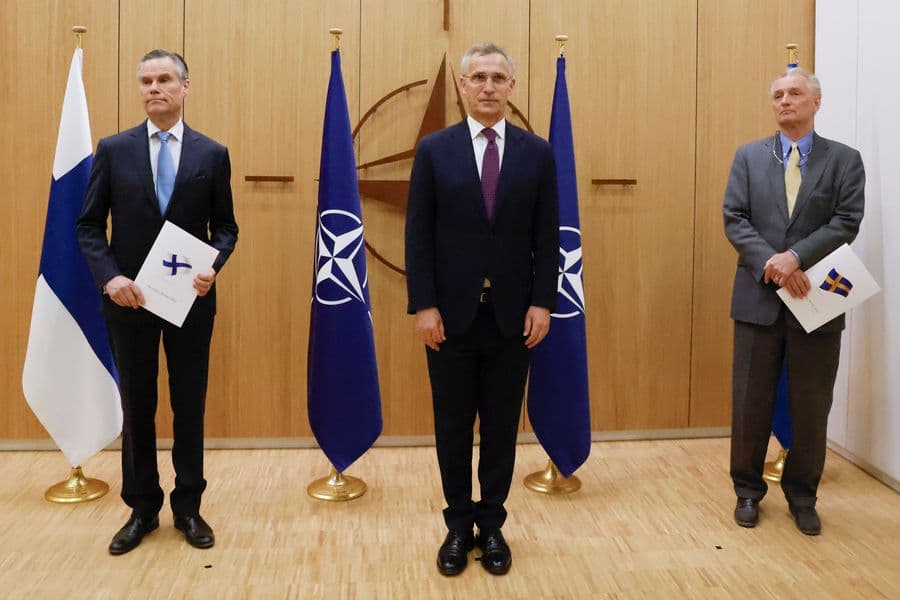
Finland's NATO membership fundamentally alters Europe's security posture and reinforces the organization's deterrence factor. With its benefits of total manpower and geographical proximity to Russia, Finland provides NATO with a tangible strength increase in both manpower and posture. Furthermore, Finland's decision to join during this specific conflict further legitimizes NATO's purpose of deterrence and European defense. Last week, Secretary General Jens Stoltenberg highlighted his passion for Finnish membership, stating, “The main question is not whether Finland and Sweden are ratified together. The main question is that they are both ratified as full members as soon as possible”. Both NATO leaders and the Finnish government are eager to complete this ratification process. Joining NATO would further bolster Finland's security and bring it into closer alignment with other NATO members. Working with Turkey and Hungary to push Finland’s application should be the priority of all NATO members. It is time for Finland to move forward without Sweden and for NATO to welcome a new partner to its collective defense.
Ian Whitfield is a graduate student at Georgetown University, in the Security Studies Program focusing on Energy Security and climate-related security risks. Ian is also an active duty officer in the U.S. Army.
This article represents the views of the author and not that of the Department of Defense or Georgetown University.

Iranian Cyber Operations
By Michael Groen • RealClearDefense
Reflecting on an Epic Horse Campaign in the Mountains of Afghanistan
By Brian Glyn Williams • RealClearDefense
The Godfather of American Foreign Policy Realism Speaks to Today’s World
By Francis P. Sempa • RealClearDefense
In Pursuit of Nuclear Abolition
By Peter Huessy • RealClearDefense
Innovation Alone Won’t Prepare the U.S. for the Future Battlefield
By Joshua Segal • RealClearDefense

26th MEU – U.S. Needs Crisis Response MAGTF
By Marine Corps Compass Points
The Influence of History on a Sea Power
By CDR Salamander
Navy Civilianizes Six Former Flag Billets, Reduces Six to Captains
By Mongilio, USNI N.
Raytheon's $8B Contract for Strategic Comms Terminal Modernization
By M+A El
America’s Maritime Moment Will Not Wait
By CDR Salamander