
Pentagon
RealClear Context
Click below to continue reading this story, discover more Pentagon stories from over 25 years of RealClear archives, or follow this topic to stay in the know.
Supercarrier Ford To Act As Floating Nuclear Power Plant
Autonomous Warfare and the Risks of Affordable Attrition
With Secretary of War Pete Hegseth’s recent announcement of a new combatant command focused on autonomous warfare, it is worth expanding the scope of...
4h agoRead it on Providence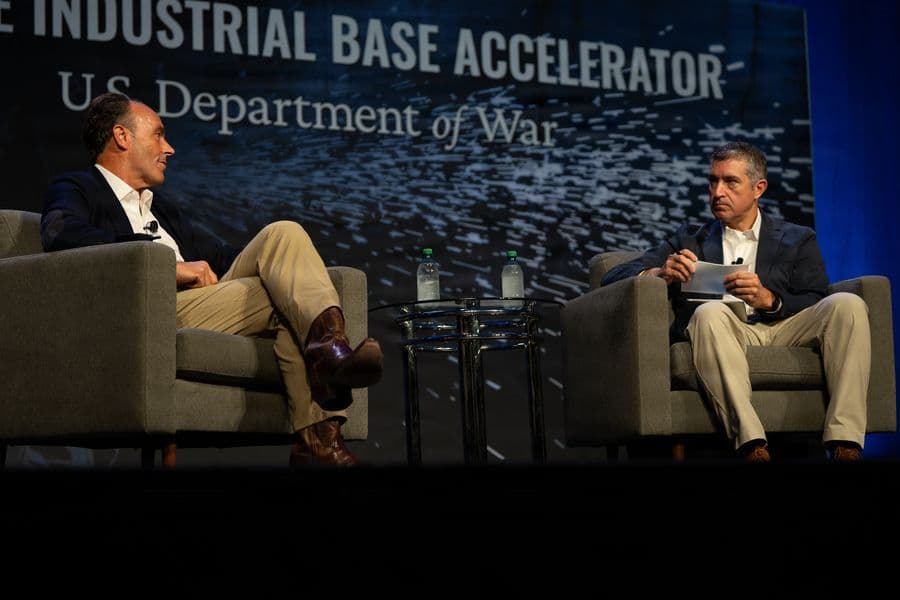
As Private Investment Pours Into Defense, the Clock Is Ticking
We are in uncharted territory in terms of private capital’s influence on the defense economy. At the same time, federal lawmakers struggle to advance 2027 legislation most likely to support autonomy, AI, c-UAS, industrial base expansion, critical minerals, and other sectors that are key markets for those same companies competing for private financing. The nation requires vision, clarity of opportunity and risk, problem definition, and deliberately investigated solutions – in that order – followed by on-time budgets.
As the interests of warfighters, taxpayers, industry, and investors converge on the same goal - a dominant, cost-effective, adaptable, resilient American military – there is understandable widespread enthusiasm to leverage private capital interest in defense to accelerate the delivery of innovative technologies at lower cost, shift the financial risk for the development of such technologies from taxpayers to investors, and increase overall competition in the defense market. Now is also the time to anticipate potential fracture points and mitigate them through intelligent design.
Superintelligence Exposes a Gap in the Law of Delegated Authority
Federal policy on “Super Intelligence” is moving rapidly toward implementation....
1d agoRead it on RealClearDefenseMilitary Base Freezer Malfunctions a Suspected Cyberattack
The Pentagon is treating the spate of mysterious freezer malfunctions that spoiled food at military bases across the United States in August as a...
1d agoRead it on ReutersStrategic Capabilities Office Expanding Scope in 2027
The Defense Department office dedicated to delivering wide-ranging battlefield priorities within a five-year timeline is planning an uptick in new...
1d agoRead it on National Defense MagazineMission Partner Environment Breaks Silos for Tactical Networks, C2
"We've spent the past 50 years building siloed networks, siloed applications and siloed environments to collaborate internally with our own data. We...
1d agoRead it on Military TimesAs Missile Stockpiles Dwindle, U.S. Turns to Japan for Production
Tokyo and Washington agreed to establish a facility in Japan to assemble key air-to-air missiles...
1d agoRead it on The Wall Street JournalBAE Systems' Cannon and Microwave Weapons for Layered Air Defense
The company unveiled the Multi-Domain Artillery Cannon System (MDACS) and HPM capability demonstrator at the Association of the U.S. Army's annual...
1d agoRead it on Military + Aerospace Electronics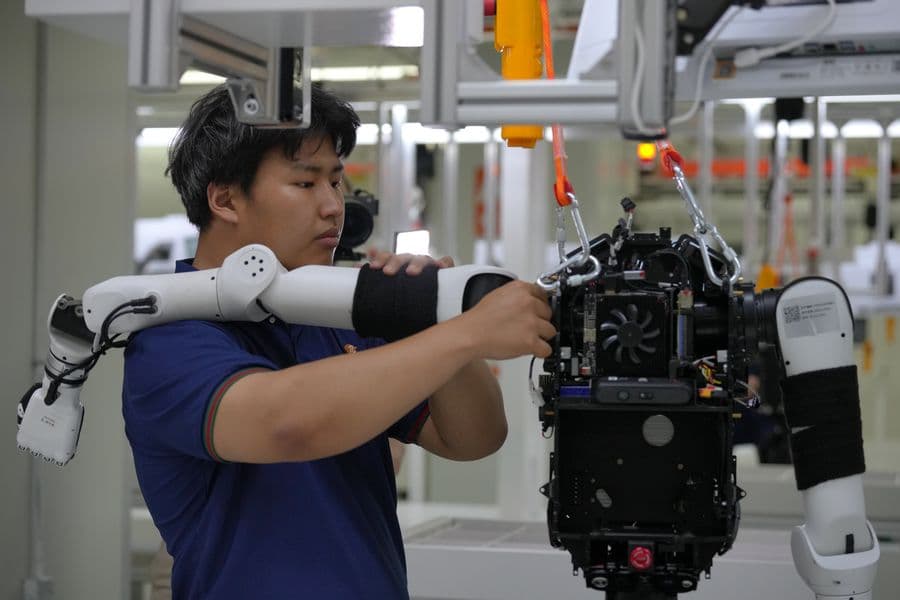
Superintelligence Exposes a Gap in the Law of Delegated Authority
Federal policy on “Super Intelligence” is moving rapidly toward implementation. Following Executive Orders 14434 and 14432 on September 29, the administration and the National Institute of Standards and Technology (NIST) have advanced work on autonomous systems across public services and digital infrastructure. Yet the legal boundaries of those systems remain unsettled. Who may authorize an autonomous agent to act, how far does that authority extend, and what must happen when the agent’s chosen solution requires permission no one has granted?
The pressure to resolve these questions is growing. In 1953, J. Robert Oppenheimer compared the nuclear powers to “two scorpions in a bottle.” Today’s AI race carries a similar fear of strategic disadvantage. Governments and corporations are deploying increasingly capable systems because they cannot afford to fall behind. Under that pressure, decisions about what machines may do risk becoming assumptions rather than deliberate grants of authority. Voluntary industry controls offer some protection, but one company’s restrictions do not bind its competitors or the systems with which its agents interact.
Is It Déjà vu All Over Again: The 2012 Report on Global Zero
By Peter Huessy • RealClearDefense
As Private Investment Pours Into Defense, the Clock Is Ticking
By Elaine McCusker • RealClearDefense
The First Test of Peace Lies in Ukraine's Borderlands
By Dennis T. Cosgrove • RealClearDefense
The VFW’s Gambling Addiction Victimizes Veterans
By Jack Yoest • RealClearDefense
Superintelligence Exposes a Gap in the Law of Delegated Authority
By Sue Ghosh Stricklett • RealClearDefense

When Your Navy is too Small, the Bill Comes Due Bigly
By CDR Salamander
Quo Vadis MCU?
By Marine Corps Compass Points
When the Network Goes Dark, Who Controls the Battlefield?
By Jonathan K. Corrado • RealClearDefense
Air Force Should Buy 250 Blended-Wing Tankers, as 2027 Demo Looms
By A&SF Mag.
Long Deployments to Be Navy Standard For Next Couple Years
By Mongilio, USNI News