
Russia's Pacific Submarine Fleet Could Tip the Scales in China's Favour
Last updated 05:53 PM EDT • Read time: 4m
Russia has a potent yet often overlooked fleet of nuclear-powered and conventional attack submarines in the Pacific. An explainer from ASPI published on 13 August argues that Russia is well placed to assist China in a potential Pacific conflict and explores potential crisis scenarios. Russia’s sizeable east-coast submarine fleet is located outside the First Island Chain, offering a unique asset to China in a potential western Pacific conflict by creating potential operational dilemmas for US and allied assets in the north-west Pacific. Given this, Russian participation in a Pacific conflict should be factored into Australian and allied continency planning.
Growing Sino-Russian cooperation is increasing the countries’ capacity for coordinated submarine operations. Russia’s submarine fleet provides a potentially unique asset to Chinese military planners. Often underappreciated, Russia has 23 submarines in the Pacific, besting the 17 operated by China’s northern fleet, which has a similar area of responsibility in the north Pacific. Granted, five of Russia’s Pacific submarines are ballistic-missile boats with a nuclear deterrence mission, but eight are nuclear-powered attack submarines and the remaining 10 are conventional attack submarines optimised for conventional warfare. Russia’s contribution of even a few nuclear-powered or conventional attack submarines in the north-west Pacific could tilt the balance in a potential crisis.
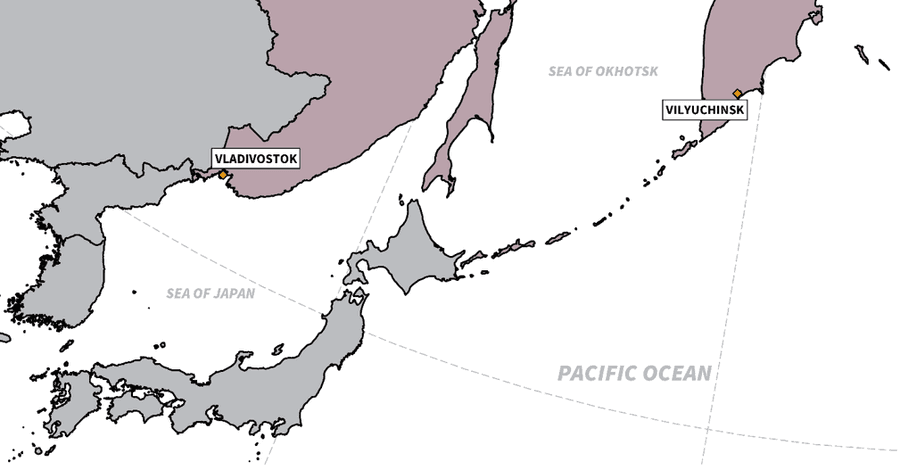
Further, Russia’s submarines are in strategically important areas. Russia’s nuclear-powered attack submarines are based outside the First Island Chain, at Vilyuchinsk on the Kamchatka peninsula, and its conventional attack submarines are at Vladivostok on the Sea of Japan. This provides Russian submarines a potential advantage in carrying out operations directed against key US ally and Australian partner Japan during a conflict between the United States and China in the Pacific. The explainer examines three plausible scenarios, grounded in activities China and Russia are already undertaking, including through joint exercises.
The explainer finds that Russia’s submarines are well placed to disrupt undersea data cables that connect the US mainland to Japan, South Korea, the Philippines and other Southeast Asian countries. It also argues that Russia is well positioned to interdict key sea lines of communication between the US and Japan, potentially complicating US efforts to use Japan as a base of operations during a Taiwan contingency. Finally, the explainer finds that Russia could employ its nuclear-powered submarines, equipped with cruise missiles, to strike key land targets such as ports and logistics nodes. Such actions, or even just the possibility of such actions, have a deterrent effect and complicate allied planning and potential responses.
This means that during a war over Taiwan, forces of the US and its allies forces could be drawn north to counter a Russian threat, potentially freeing Chinese submarines to concentrate efforts closer to Taiwan. Given Australia’s interest in maintaining a stable regional balance of power, the explainer finds that Australia and its allies should consider the Russian Pacific Fleet’s submarine arm when planning for a Pacific conflict involving China.
Russia’s growing economic and strategic dependence on China also gives Moscow a significant stake in the outcome of such a conflict. A Chinese defeat would have serious consequences for Russia’s own strategic ambitions, creating a plausible incentive for Moscow to support Beijing. Australia and its allies and partners should therefore consider not only how to account for potential Russian involvement, but how to deter it. As our defence ties with Europe deepen, Australia should explore greater coordination with European partners to strengthen deterrence cooperation on Russia’s eastern and western flanks.
Carl Janz is a research intern with ASPI’s Defence Strategy Program. Colin Karotam is a senior fellow at ASPI.
Map of Vladivostok and Vilyuchinsk, locations of Russian submarine bases in the Pacific: ASPI.
AI contributed no ideas to this article – Carl Janz and Colin Karotam.
This article appeared originally at The Strategist (ASPI).

Iranian Cyber Operations
By Michael Groen • RealClearDefense
Reflecting on an Epic Horse Campaign in the Mountains of Afghanistan
By Brian Glyn Williams • RealClearDefense
The Godfather of American Foreign Policy Realism Speaks to Today’s World
By Francis P. Sempa • RealClearDefense
In Pursuit of Nuclear Abolition
By Peter Huessy • RealClearDefense
Innovation Alone Won’t Prepare the U.S. for the Future Battlefield
By Joshua Segal • RealClearDefense

Navy Civilianizes Six Former Flag Billets, Reduces Six to Captains
By Mongilio, USNI N.
Raytheon's $8B Contract for Strategic Comms Terminal Modernization
By M+A El
America’s Maritime Moment Will Not Wait
By CDR Salamander
Armor Up?
By Marine Corps Compass Points
Who Shoots Down the Drone Over the Shipyard?
By John Ferrari & Dillon Prochnicki • RealClearDefense