
The Elite's Hypocrisy on Russia
Last updated 01:45 PM EDT • Read time: 4m
Since Russia’s full-scale invasion of Ukraine, the Western elite have moralized about doing the right thing in the conflict. They have posted videos of themselves speaking with Ukrainian President Volodymyr Zelenskyy, released statements glorifying Zelenskyy, and demonized any skepticism. Crises like these bring out strong emotions, and leaders using their charisma to inspire efforts is necessary in any war. But crises like these should also bring reflection of how the world got to this point and what its leaders can do to avoid it in the future. The global elite’s inability to discuss their role in enabling Vladimir Putin shows they are doomed to repeat the same mistakes.
Putin came to power at the turn of the century. Although the world might not have predicted that he would commit global atrocities, his start did not scream democracy. The outgoing president Boris Yeltsin launched Putin from relative obscurity as a former KGB agent and government official, into “acting president” to allow Putin to run as the incumbent.
About a year after Putin’s formal election, new U.S. President George W Bush met with Putin and famously said, "I looked the man in the eye. I found him very straightforward and trustworthy – I was able to get a sense of his soul." Two decades later, Bush, who has largely avoided political discussion on any of the contentious issues he championed as president, released a self-serving statement about how he met with Zelenskyy and called him the "Winston Churchill of our time." If that is true, does Bush’s earlier Putin comments make himself the Neville Chamberlain of our time?
Former President Barack Obama and his heir apparent President Joe Biden strived to outdo Bush in this regard. When Obama took office, then-Secretary of State Hillary Clinton went to Russia and gave them the “reset” button. It actually said “overcharge”. While that was embarrassing, it was not the worst part of the interaction. The idea that the U.S. (not Russia) needed “reset” was egregious. What exactly was the Obama administration trying to reset? The Bush administration had really not been that contentious with Russia. The Obama administration chose to blame America for the tension, even though Putin had started his crack down on journalists and dissenters.
In 2012, Obama mocked Romney for considering Russia a major threat. Obama also told Russian President Dmitry Medvedev he could deal better with Russia once he won re-election. There was no reason for Putin to take Obama seriously after these statements, and Putin did not. After Obama won re-election, Putin annexed Crimea and Obama failed to galvanize an international response. So much for being the leader of the free world.
Biden and his staff helped shape this policy in Obama’s administration, so they of course continued it when Biden took office. After Russian hackers attacked U.S. gas pipelines, Biden told Putin what places he would like Russia not to attack. Biden was really giving Bush a run for his money for this century’s Chamberlain. Biden also lifted sanctions on Russia’s Nord Stream 2 gas pipeline in a bid to appeal to European allies.
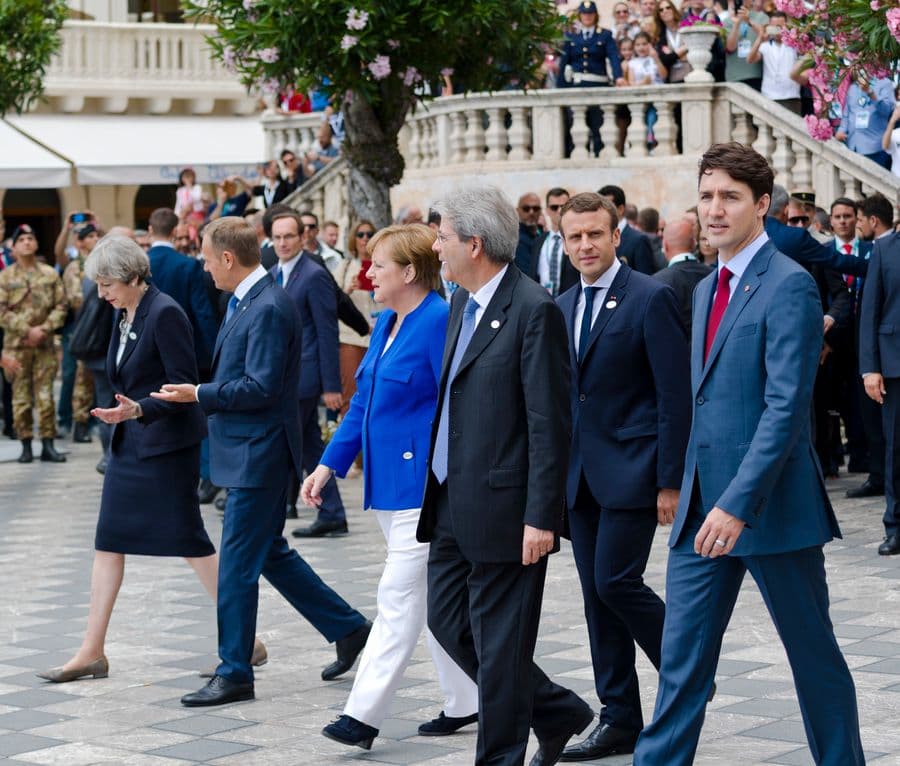
On that note, Europe’s elites have played the same role as their counterpart in the United States. Germany took on the role of the leader of Europe in the 2000s, and former German Chancellors Gerhard Schröder and Angela Merkel developed a strategy of relying on Russia for oil. Schröder has financially benefited from Russia, even amid the conflict, while Merkel refuses to acknowledge she did anything wrong. French Presidents Jacques Chirac, Nicolas Sarkozy, and Emmanuel Macron, cozied up to Putin and supported a reliance on Russia for energy.
Various European leaders and diplomats laughed at Trump when he urged Europe to do more to defend themselves and not be reliant on Russia for energy. And yet, Germany has no plan to wean itself off Russian oil. Politico recently ran a piece titled, “When will Europe learn to defend itself?”
With Russia, there is no going back in time; the world must accept these past mistakes. But Russia is not going to be the last threat the world deals with. In every region, there are emerging threats. Based on the track record of the “leaders” and their staffs described in this article, history is likely to repeat itself.
Todd Carney is a lawyer and frequent contributor to RealClearPolitics. He earned his juris doctorate from Harvard Law School.

Iranian Cyber Operations
By Michael Groen • RealClearDefense
Reflecting on an Epic Horse Campaign in the Mountains of Afghanistan
By Brian Glyn Williams • RealClearDefense
The Godfather of American Foreign Policy Realism Speaks to Today’s World
By Francis P. Sempa • RealClearDefense
In Pursuit of Nuclear Abolition
By Peter Huessy • RealClearDefense
Innovation Alone Won’t Prepare the U.S. for the Future Battlefield
By Joshua Segal • RealClearDefense

26th MEU – U.S. Needs Crisis Response MAGTF
By Marine Corps Compass Points
The Influence of History on a Sea Power
By CDR Salamander
Navy Civilianizes Six Former Flag Billets, Reduces Six to Captains
By Mongilio, USNI N.
Raytheon's $8B Contract for Strategic Comms Terminal Modernization
By M+A El
America’s Maritime Moment Will Not Wait
By CDR Salamander