
Is War in Ukraine Inevitable?
Last updated 07:10 AM EST • Read time: 10m
As the Ukraine crisis approaches its boiling point, NATO must reckon with Russia's actual incentives. Putin acts primarily not out of a sense of American or Allied weakness, nor neo-imperial or neo-soviet ambition. Rather, he is responding to a deteriorating Russo-Ukrainian situation that will shift against Russia in the next three years. Putin has identified a window of opportunity for preventive war to preclude a revision of the military balance that would jeopardize the separatist Donbas and undermine Russia’s hold on Crimea.
If Putin waits, he risks waging a riskier, costlier war on the eve of Russia's 2024 elections – a war that, if unsuccessful, could jeopardize his regime. NATO must take note. Short of a politically impossible major military deployment, Russia cannot be deterred from invading Ukraine. Atlantic Alliance policy should adapt accordingly, identifying the capabilities that terrify the Kremlin and exploit Russian military weaknesses. However, given the stakes for Russia, NATO must grasp the possibility of an expanded war, consider escalatory off-ramps before conflict begins, and maintain its political leverage in Ukraine over the next four months.
Russo-American negotiations stall because of a misunderstanding of Russian objectives and NATO's lack of clarity. Expansive Russian demands are non-starters. Yet Russia's central demand that Ukraine be excluded from consideration as a NATO member demonstrates the Kremlin's disingenuousness. NATO membership occurs by unanimous allied consent. France and Germany will not consent. Both have opposed Ukrainian NATO membership since 2008, a policy that has tracked across multiple governments, as Putin knows, and as serious Russian foreign policy intellectuals recognized during the spring 2021 force build-up. Moreover, Ukraine has courted China over the past five years, both through formal political arrangements and by accepting Chinese infrastructure development and trade support. Given Sino-American rivalry, even Washington will need to rethink the wisdom of extending NATO membership to Kyiv.
At every opportunity, even American policymakers and NATO officials have signaled that no plans exist to offer Ukraine Atlantic Alliance membership. In theory, NATO must maintain its "open door" policy, allowing any nation to join the alliance, risk a serious loss of face, and potentially be subject to revision of other treaty aspects like collective defense. However, Ukraine remains a crucial Russia-NATO buffer. Its reabsorption into Russia's sphere of influence – or its outright conquest – would expose NATO's vulnerable Balkan and Eastern European allies to direct Russian pressure. Romania, Hungary, and Poland would be Putin’s next targets. The armed forces of all these states would find it difficult to prevent Russian hybrid or conventional incursions. Hungary is particularly vulnerable, considering Viktor Orban's authoritarian affinities, while Poland would increase its border with Russian affiliates by a third, creating additional defense issues. NATO has an interest in Ukraine remaining sovereign and outside the Atlantic Alliance. Russia’s swallowing of Ukraine would dispatch Eastern Europe’s self-determination and political liberty as it would return the Cold War threat of authoritarian rule over the continent's western half.
However, Putin's immediate objective is not a revision of Europe's security structures. Despite Russia's propaganda emphasizing Kyiv's corruption, supposed affiliation with neo-Nazism, and Russo-Ukrainian ethnolinguistic unity, Putin fears Ukraine. His fear stems from Ukraine's economic growth, military competence, and the implications of an assertive Ukraine for Putin's domestic image.
Ukraine’s political class is corrupt, factional, and oligarchic. Yet since 2014, it has experienced economic growth akin to its post-Orange Revolution expansion. In 2015, only a year after Euromaidan, Ukraine’s economy was one-fifteenth of Russia’s. By 2020, it had grown to one-tenth of Russia's. Although GDP likely contracted during the pandemic, European and Chinese investment and a tech sector that survived COVID-19 relatively unscathed make continued growth likely. By contrast, Russian growth is projected to slow, with new sanctions further undermining the Russian economy.
Economic growth translates into military power. Ukraine cannot confront Russia independently. But even in 2014, poorly organized Ukrainian irregulars performed well against Russian-backed separatists and held Mariupol, the critical Azov Sea port city that Russia must capture to create a Donbas-Crimea land bridge, in the face of multiple offensives. Ukraine's military has greatly improved since 2014. It has received NATO training for eight years, $2.5 billion of American funding, and various missiles and combat vehicles.
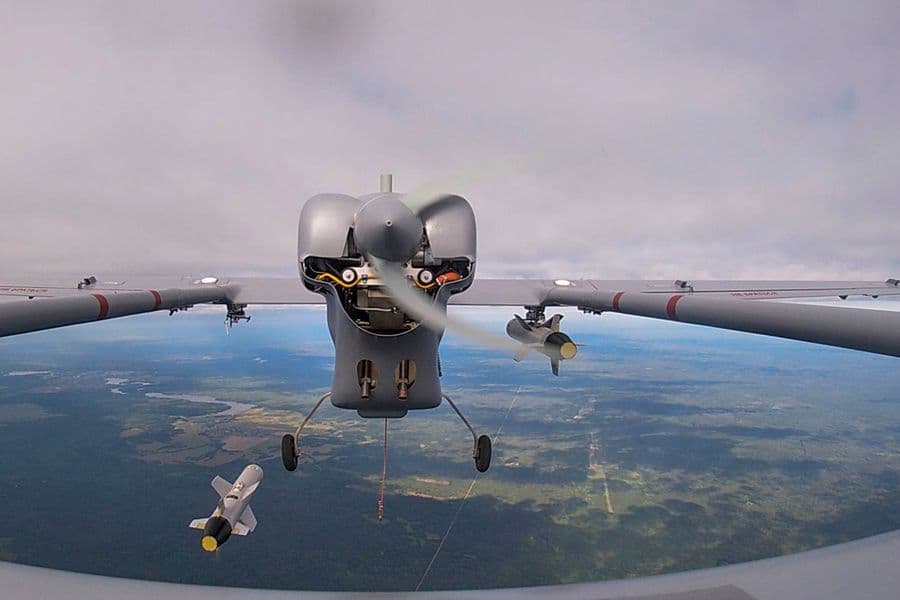
Most worryingly, Ukraine has deployed Turkish Bayraktar TB-2 Unmanned Combat Aerial Vehicles to the Line of Contact in Donbas, destroying separatist artillery. Turkish UCAVs proved extremely effective in the Nagorno-Karabakh War and Libya, in situations where neither combatant has robust traditional air forces. Ukraine will purchase another two dozen Turkish UCAVs, is now producing the TB2’s engines domestically, and allegedly reached a deal with Turkey in December 2021 to produce license-built Anka UCAVs of similar role to the US Predator drones. These will tip the balance in Ukraine's favor, enabling an offensive against Donbas.
Russia could not allow Donbas to collapse. Putin has faced endemic economic issues since the early 2010s. His response has been to recast himself as the avatar of traditionalism, sovereignty, and Russian great-power status. Ukraine is central to this image. Its ethnolinguistic similarities to Russia, position in Russian historical evolution, and the political capital expended on Donbas' separatists make it a core pillar of Putin's legitimacy. Ukrainian victory in Donbas would trigger a domestic political crisis, particularly if that victory came shortly before Russia's 2024 presidential election – a rigged contest but still important for Russian pretensions of legitimacy.
Moreover, the longer Russia waits, the greater the chance that Ukraine's military becomes a legitimate threat. Ukrainian missiles are improving. Ukraine will field its first R-360 Neptune cruise missile division in April, with plans for two more divisions by 2025. In the short term, this will complicate a Russian amphibious assault. In the long-term, enough R-360s and other cruise missiles and rocket launchers could allow Ukraine to attack Russian warships in the Black Sea or even bombard Russia's Crimean exclave, an exclave already encountering water shortages. If Putin waits two years, he may be forced to defend an exposed exclave without clear naval superiority while fighting a Ukrainian military capable of attacking targets within Russia. And intervening in response to a Ukrainian offensive complicates Russia's preferred operational approach with its emphasis on deception and informational manipulation.
Economics further encourages intervention. As it stands, China sees Ukraine as a junior enough Belt and Road partner to permit a Russian invasion. This may change by the mid-2020s as China's above-discussed investments come to fruition. Even now, signals exist that a Russian invasion before the Winter Olympics end would draw Chinese ire. Chinese propaganda outlets have not indicated China’s view on the crisis, nor has the Foreign Affairs Ministry clarified its position. At a minimum, Putin likely will wait to attack until his 4 February meeting with Xi Jinping. Indeed, Russian-Belarusian joint exercises are scheduled to end on 20 February, the Winter Olympics’ closing day, a possible signal to China about Russia's timetable. Putin seems to respect Xi's preferences. As Chinese economic interests in Ukraine grow, Russian action will become less viable, further jeopardizing a future Ukrainian offensive.
Russia’s Ukrainian policy has been reactive. Putin functionally caused Euromaidan, the months’ long protest against Kyiv’s proposal for closer ties with Moscow. Putin pushed Yanukovych to suspend Ukraine’s EU Association Agreement, sparking protests that toppled the government in early 2014. He took advantage of Ukraine's instability to snatch Crimea but was incapable of pushing much farther into Ukraine. Now that trends are shifting against him, Putin has chosen to act decisively before his window of opportunity closes and his military options narrow.
Three inferences flow from this assessment. First, there is not simply a possibility of war but a high probability of war. Putin's domestic and strategic incentives are too strong for him to let this final window of opportunity shut and risk a future confrontation on more adverse terms. Putin should be expected to pause until 20 February unless he and Xi strike an unforeseen deal during their upcoming meeting that enables an offensive. Waiting until 20 February times an offensive very close to the Ukrainian March thaw, after which the country will become a muddy plain that favors the defender. Putin may wait until early spring after the ground has dried out, launching his offensive in mid-April. Regardless, a delay until then does not indicate a shift in Russian strategic calculus. NATO should expect a Russo-Ukrainian war in the next twelve to sixteen weeks.
Second, NATO should prioritize the capabilities that most disrupt Putin’s plans, specifically UCAVs, anti-air and anti-tank missiles, medium-range rocket and missile launchers, and electronic warfare equipment. Russia will strike deep into Ukrainian territory during a war's initial phases, nullifying the Ukrainian Air Force and fixed air defenses. The trouble will come after once Russian forces face urban combat and encounter pockets of resistance behind the front line. The more distributed and mobile Ukraine's military can become before a conflict, the greater the chance that Russian troops get bogged down and experience unacceptable casualties.
Third, Putin’s incentive structure favors broader escalation if an attack fails. Russia has not fought a high-casualty engagement since the Second World War. Its deployments in Chechnya, Georgia, Ukraine in 2014, Syria, and Libya have been against grossly inferior adversaries. Its urban combat record is good, but in Syria and Libya, it could rely upon local partners and, if necessary, parastatal groups like Wagner to mask casualty counts. No such alternatives exist in Ukraine.
The Kremlin does not know how the Russian people will react to a long, brutal, high-cost war. A botched assault could intensify the Ukraine crisis’ immediate existential stakes for Putin's regime. Hence Russia is incentivized to escalate if NATO supports Ukraine during wartime. At a minimum, Russia will attack NATO transports resupplying Ukraine, along with NATO air, naval, and electronic forces that are seen to influence the conflict. The Atlantic Alliance must respond accordingly, deploying air defenses, tactical air forces, and naval units to the Black Sea coastline and Eastern Mediterranean, with a small ground contingent capable of holding a resupply corridor.
This third point raises a chilling implication. If NATO does support Ukraine during conflict, Putin will broaden the conflict, attempting to escalate his way out and break NATO's will. The Baltics are Putin's most reasonable target, given their lack of strategic depth and Russian regional superiority. Russia will also use naval pressure, for which its global naval exercises are in preparation. France’s impending election, Macron’s desire to carve out a European place in this crisis, and German qualms about confronting Russia provide the Kremlin with two pressure points. Forcing a crisis can exploit these vulnerabilities, ideally causing a NATO fracture. If NATO does not fracture, Russia will turn to its "escalate-to-terminate” doctrine, probably beginning with cyberattacks and conventional strikes but ultimately turning nuclear.
NATO naval forces can provide the Baltics with strategic depth, while the US' three Indo-Pacific aircraft carriers can pressure Russia in the east. NATO must therefore prepare an Eastern European deterrent force before Russia invades Ukraine. Pre-positioning air and ground forces in Poland and conducting carrier exercises in the Eastern Mediterranean are a start but nowhere near sufficient to deter Russian escalation.
Finally, NATO must also consider how to de-escalate. It may be able to satisfy limited Russian demands but not by any arrangement from which Kyiv is excluded. Without leverage over Kyiv's fate, NATO risks being unable to control a crisis or emerge from it intact. Unless NATO is willing to accept the Black Sea’s return to its former status as Moscow’s liquid prisoner, permanent Russian occupation of Mariupol and the Azov Sea’s coastline cannot be tolerated. NATO must remain engaged.
Seth Cropsey is founder and president of Yorktown Institute. He served as a naval officer and as deputy Undersecretary of the Navy.
Harry Halem recently received his MSc. from the London School of Economics.

Iranian Cyber Operations
By Michael Groen • RealClearDefense
Reflecting on an Epic Horse Campaign in the Mountains of Afghanistan
By Brian Glyn Williams • RealClearDefense
The Godfather of American Foreign Policy Realism Speaks to Today’s World
By Francis P. Sempa • RealClearDefense
In Pursuit of Nuclear Abolition
By Peter Huessy • RealClearDefense
Innovation Alone Won’t Prepare the U.S. for the Future Battlefield
By Joshua Segal • RealClearDefense

26th MEU – U.S. Needs Crisis Response MAGTF
By Marine Corps Compass Points
The Influence of History on a Sea Power
By CDR Salamander
Navy Civilianizes Six Former Flag Billets, Reduces Six to Captains
By Mongilio, USNI N.
Raytheon's $8B Contract for Strategic Comms Terminal Modernization
By M+A El
America’s Maritime Moment Will Not Wait
By CDR Salamander