
Ukraine to the Rescue: Homeland Defense in the Gulf
Last updated 06:12 AM EDT • Read time: 4m
Despite Well-Developed Plans, the U.S. still Failed to “Set the Theater” for the Iran Conflict
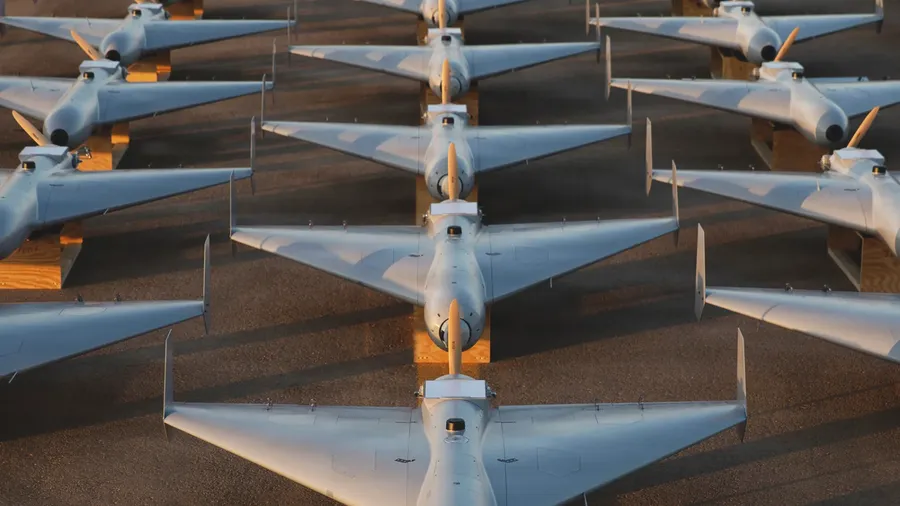
The ongoing conflict in the Gulf region reveals that the U.S. and its allies failed to adequately prepare for this contingency. Recent Russian tactics in Ukraine suggest a risk of friendly forces falling into an Iranian trap. Iran’s use of older Shahed attack drones to burn through Gulf interceptor stocks mirrors Russia’s tactics in Ukraine. This unsustainable interceptor burn rate, with insufficient replacements, could see Iran using more advanced Shaheds and ballistic missiles to overwhelm allied defenses once stocks are low. Russia may also export excess Shaheds to earn hard currency and support Iran. Ukraine’s drone fight roadmap and assistance should be integrated as soon as possible.
As a former military planner who contributed to relevant regional plans, I was surprised by the Gulf region’s apparent lack of point defense and societal preparedness after the initial Iranian counterattacks. Key issues include insufficient facility hardening, failure to deploy layered point defenses, and inability to procure inexpensive Shahed interception solutions. The U.S. and Gulf Allies failed to implement lessons learned from recent operations in Yemen, Israel, and Ukraine to prepare the theater for full-scale operations against Iran.
In military terms, the primary objective of the initial phase of a campaign plan is to “set the theater” before launching kinetic operations. Prudent planning involves preparing a geographic area to be able to be both resilient and support the capabilities to execute planned military operations. Most critically, it involves ensuring key facilities, terrain, and allies are prepared to defend against threats.
For Israel and the Gulf, collaborating with Allies on Iran-related planning involved developing layered air defenses. For years, the focus was on the ballistic missile threat, and defenses have proven robust until Iran adopts similar strategies to Russia or exhausts interceptor supply. Hopefully, the U.S. and allies are proactive, drawing on Kyiv’s experience, assuming Iran is aware of Russian mitigation mechanisms and uses interceptors only against ballistic threats.
Gulf states depend on the U.S., which has yet to master point defense against Shahed-type threats beyond traditional air power and expensive interception solutions. While Raytheon’s Coyote has been deployed, it seems insufficient to address the current threat, and its high cost prohibits use against low-cost Shahed-type threats. LUCAS, an American Shahed-inspired UAS, costs as much as its target.
Societal resilience preparations are lacking. In Ukraine, alarms, smartphone apps, jammed GPS, and acoustic sensors track threats, allowing the public to seek shelter or assess risk. Ukrainians understand what to do and where to go. However, Gulf state residents express frustration on social media about the lack of these civil defense measures. Civil resilience should be a central component of setting a theater. Given the Ukraine war’s fourth year, it’s puzzling why the U.S. and Gulf allies didn’t develop homeland defense measures sooner.
In contrast, the U.S. and its Allies’ C-UAS capabilities, planning, and resilience in the Gulf are underdeveloped compared to Ukraine and Iran’s extensive experience. All parties in the Ukraine conflict have moved beyond relying solely on electromagnetic spectrum operations and singular solutions. Russian tactics involve intricate, continuously evolving attacks aimed at overwhelming Ukrainian defenses. Consequently, Ukraine has adapted and developed solutions for various attack scenarios and vectors. Ukraine has multiple layers of defense against Shahids, including truck- and aircraft-mounted machine guns and cost-effective interceptor drones at an average cost of $1,000 to $2,000 per unit.
Electronic warfare renders American offensive weapons systems ineffective, except in limited cases, within three weeks of arriving at the Ukrainian front. Similarly, all C-UAS technologies have a half-life of 4-6 weeks on the battlefield, except for Eric Schmidt’s MEROPS. Most U.S. interceptors and FPV drone technologies fail to meet modern battlefield survival standards, disappointing Western investors who invested heavily in their developers.
All sides, including Iran, have learned these lessons and limitations. America’s Gulf allies rely on defense architectures and technology paradigms ill-suited to the Ukrainian battlefield’s dynamism.
In essence, it is imperative that the United States, NATO, and Gulf allies, along with a broader spectrum of their commercial defense enterprises, comprehend the transformative shift in cost, innovation, and dynamic frontline feedback manifesting in Ukraine, Russia, Iran, and China. U.S. Secretary of War Pete Hegseth has advocated for the United States to adopt a war footing, and the ongoing conflict will continue to underscore the shortcomings and gaps resulting from earlier planning and procurement decisions. When establishing the theater for potential conflicts in other global regions, the United States, its partners, and Allies must critically assess the performance of systems and defenses during its inaugural instance of sustained large-scale combat operations since the advent of the Ukrainian technical battlefield revolution.
Dr. Josh "Bugsy" Segal is former arms control negotiator, and retired military planner. He currently serves as freelance advisor to numerous Dept of War senior leaders and in nonresident associate fellow for Globsec.

In Pursuit of Nuclear Abolition
By Peter Huessy • RealClearDefense
Innovation Alone Won’t Prepare the U.S. for the Future Battlefield
By Joshua Segal • RealClearDefense
The sUAS Tactical Trifecta
By Bryan T. Woody • RealClearDefense
The Revolutionary War: When Strategic Options Share the Same Weakness
By Henry Yep • RealClearDefense
The Houthis Are Testing the Limits of Collective Defense
By Saima Afzal • RealClearDefense

Who Shoots Down the Drone Over the Shipyard?
By John Ferrari & Dillon Prochnicki • RealClearDefense
Northrop Grumman Breaks Out the Big Guns at AUSA
By Daniel Terrill, Defense News
Army Pursuing Diverse Array of New Anti-Air Interceptors
By Trevithick, The WarZoneWho Shoots Down the Drone Over the Shipyard?
By John Ferrari & Dillon Prochnicki, RCD
F-35C Lands for the First Time on a Ford-Class Aircraft Carrier
By The Aviationist