
Fixing Space
Last updated 05:45 PM EDT • Read time: 6m
This year’s National Defense Authorization Act (NDAA) took a historic first step in fixing our national security space enterprise. You will not see the words “space corps” in this Bill. You will, however, see something even more remarkable—a little piece of history tucked away into a seemingly innocuous provision about a major command with the Air Force called “Air Force Space Command.”
After months of rigorous oversight poring over 20 years’ worth of studies and unimplemented solutions, Congress moved to streamline space acquisition authorities within the Air Force and set us up for even further action in the future.
Taking our queues from the Air Corps Act of 1926 and the model of Naval Reactors we empower Air Force Space Command with sole authority to organize, train, and equip space forces within the Department of the Air Force. This means that Air Force Space Command (AFSPC) will be the single focal point for all space development, acquisition, unique training requirements and exercises, and space cadre development.
But remarkably, this is the first time that the Air Force has actually been given statutory authority for organizing, training, and equipping space forces. While many have assumed that the Air Force had this authority when you look at their founding documents, the National Security Act of 1947, and in Title 10 of U.S. Code, there is no mention of space.
This is the first step along the path of empowering the Air Force to really embrace and own space. It is not enough to say that your mission is to fly, fight, and win in air, space, and cyberspace when you don’t actually have the underlying authority to do so. We give Air Force Space Command that specific authority and we expect them to not only use that authority but to win with it.
This is a tremendous amount of responsibility to be granted to Air Force Space Command, and we believe they are up to the task if they embrace the tools that we have provided. The next step is to ensure that the rest of the Air Force realigns internal requirements, acquisition, and coordination processes to support AFSPC in their new role. We will be watching closely.
Air Force Space Command can only succeed if the rest of the corporate Air Force structure allow it to—success or failure of this endeavor depends squarely on Air Force leadership.
We terminate unnecessary bureaucratic oversight by eliminating the Defense Space Council (DSC), Principal Department of Defense Space Advisor (PDSA), and the Deputy Chief of Staff for Space Operations the A-11.
The Defense Space Council was never fully integrated into the major decision making processes in the Department of Defense like the Deputy’s Management Action Group (DMAG). It was a one-off body that withered into obscurity while the threats to our nation from adversary counterspace capabilities increased. With the DSC gone, hopefully, space will assume its rightful place on the regular DMAG agendas.
The Principal Department of Defense Space Advisor was a failed organization that had no real authority as yet another “advisor.” To avoid elimination in the past, it had been reorganized and renamed several times but never gained any decision-making authority. Additionally, PDSA’s budget oversight role presented a clear structural conflict of interest when executed by the Secretary of the Air Force. Its termination and reassignment will help ensure that the Air Force and Department appropriately resource AFSPC in light of their new authorities and responsibilities.
And the A-11 was a hastily developed half-measure initiated by Air Force which at best only added a box on the organizational chart and at worst was meant to detract from engaging with us on the substantive issues of space reform.
We hold the Deputy Secretary of Defense accountable for the successful implementation of these changes and task him with two reports. The first report is to identify a recommended organizational and management structure for the national security space components of the Department of Defense. The second report is really a plan to establish a separate military department responsible for the national security space activities of the DoD. We remain confident in the Deputy Secretary’s ability to produce these reports and deliver them to Congress on time. More importantly, we remain confident in his leadership in developing a good working relationship with Congress to fix these critical problems in the national security space enterprise.
I am tremendously proud of the language carried in this year’s NDAA on space acquisition, management, and oversight. But to be clear, this is only the beginning.
The time for denial is over and the time to embrace change is upon us. The Department should be well past the first six stages of grief and should be working with us in Congress to accept the tremendous amount of authority we have given Air Force Space Command and the Deputy Secretary of Defense. You can rest assured that we will continue to build upon our historic successes in this year’s NDAA to continue to press for space acquisition reform, space cadre development, adequate space requirements and resourcing, and joint space warfighting.
Over the next year, we will continue to engage productively with the Deputy Secretary of Defense and Air Force leadership to help ensure that national security space systems are delivered to our warfighters on time and on budget.
Here in the House, we have taken the first step towards the creation of an independent space military department. We challenge our counterparts on the Senate side to dedicate the time this legislative cycle to learn about very real increasing threats that we face from adversary space and counterspace systems and to join us helping to bring necessary reforms to the stagnant bloated national security space enterprise which imperils the entire joint force.
We will continue to fulfill our Constitutional responsibility to support the Air Force as they organize, train, and equip to fly, fight, and win in air, space, and cyberspace
Representative Mike Rogers (R-AL) serves as the Chairman of the Strategic Forces subcommittee of the House Armed Services Committee.

The U.S. Nuclear Deterrent Umbrella
By Peter Huessy • RealClearDefense
The Islamic Republic Can Lose the War and Still Win
By Nima Gholam Ali Pour • RealClearDefense
Talent Ecosystems: Building a Scalable National Security STEM Workforce
By Payuna Uday • RealClearDefense
The Underground Cloud
By Ben Poulin • RealClearDefense
Trump's Disrupt First, Negotiate Second: Greenland in Focus
By Meda Parameswara Reddy • RealClearDefense
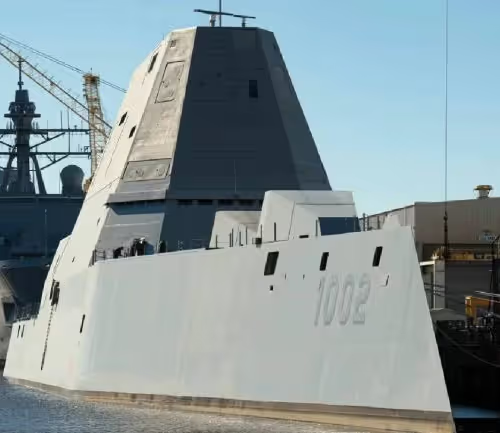
U.S. Navy to Begin Testing for USS Lyndon B Johnson (DDG 1002)
By Naval-Technology
Marine Corps Moves To Expand Maven Smart System Account Access
By DefScoop
Navy F/A-18 Spotted With New AIM-174B And AIM-260 Long-Range Missiles
By TWZ
Pentagon’s 6th Generation Stealth Fighter Will Control Drone Swarms
By Warrior M.
Air Force Needs 1,509 Combat-Ready Jets by 2035
By Michael Marrow, Breaking Defense