
Space Warfare
RealClear Context
Click below to continue reading this story, discover more Space Warfare stories from over 25 years of RealClear archives, or follow this topic to stay in the know.
U.S. Putting Weapons in Space: A Strategic Blunder?
Washington has conveyed to the world, particularly its adversaries, that it possesses advanced military capabilities in space and that any attempt to...
9h agoRead it on RealClearDefense
U.S. Putting Weapons in Space: A Strategic Blunder?
In December 2025, President Donald Trump issued Executive Order 14369, titled “Ensuring American Space Superiority.” The order clearly outlines U.S. priorities to secure and defend its national security interests in, from and through space. It calls for the development and prototyping of missile defense capabilities by 2028, countering orbital & cislunar threats and restructuring the national security space architecture. These priorities were further expanded by Under Secretary DiNanno in his remarks at the 9th Prague Space Security Conference in June 2026, where he emphasized the need to develop a wider range of military capabilities in the space domain. Together, these policy statements signaled a more assertive U.S. approach to space security, moving beyond traditional defensive measures. It was in this strategic context that U.S. Air Force Secretary Troy Meink announced on September 15, 2026, that the United States had deployed weapons in space.
Since the establishment of the U.S. Space Force in 2019, the United States has taken several significant steps to strengthen its military capabilities in space. These include increased funding for Space Force programs, the Golden Dome missile defense initiative and increased efforts to develop kinetic and non-kinetic counterspace capabilities. The creation of the Space Force was primarily intended to address existing and emerging threats in the space domain, particularly those posed by China and Russia. While these developments do not, in themselves, confirm an intention to deploy weapons in space, they indicate a broader shift toward preparing for military operations in this domain. The ongoing Russia-Ukraine war and the U.S. clash with Iran may have further reinforced Washington's concerns about potential hostile actions in space and the need to be prepared for them.
Space Industrial Base Stretched Thin Amid LEO Satellite Constellation Shift
A new report recommends the Defense Department set up enterprise-wide management of its space acquisition industrial base....
2d agoRead it on DefenseScoopThe Cosmos-ICEYE Incident: A Glimpse of the Past and the Future
A ground war rages in the heart of Europe for the first time in decades. As the conflict broadens, a Russian satellite positions itself near a...
1w agoRead it on Foreign Policy Research Institute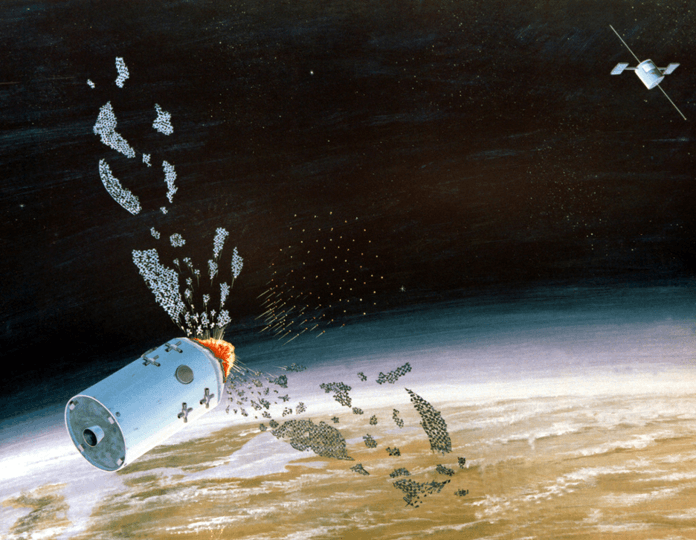
The Cosmos-ICEYE Incident: A Glimpse of the Past and the Future
A ground war rages in the heart of Europe for the first time in decades. As the conflict broadens, a Russian satellite positions itself near a US-owned reconnaissance satellite. The Russian satellite speeds towards the earth-observation satellite, prompting widespread concerns over potential anti-satellite weapons use. This, at first glance, is a zoomed-out description of the recent Cosmos 2612–ICEYE-X36 incident. The type of co-orbital confrontation we saw earlier this month may feel like a new development, yet such an attack is also a plot point in the 1986 Tom Clancy novel Red Storm Rising.
The scenario Clancy posited nearly came true, but the differences between the scenarios suggest what has and hasn’t changed about competition in space since the end of the Cold War. While reporting varies on just how proximate Cosmos 2612’s rendezvous operation came to ICEYE-X36, from 500 meters to as close as 26 meters, the incident underscores the enduring nature of the co-orbital antisatellite threat, as well as how commercialization is reshaping the threat environment in space, for better and for worse. We can expect to see more of this kind of behavior as US and allied militaries incorporate more commercial assets into their plans for conflict.
The Space Force Showed Us Its Weapons Used in Iran and Venezuela
Space Force electromagnetic warfare systems are playing a key role in U.S. military operations around the world. WSJ's Shelby Holliday visited a...
10/15/26Read it on The Wall Street JournalChina's Next Frontier
How Beijing Is Challenging Washington in Outer Space
10/15/26Read it on Foreign AffairsDon't Let a Commercial Space Grab Put American Aviation at Risk
The Federal Communications Commission (FCC) is right to ask what it will take to get there, including the radio spectrum that rockets and aircraft...
10/14/26Read it on RealClearDefense
Multi-Constellation Networks Need Multi-Constellation Ground Stations
Rightly, the Pentagon has decided that the future of military satellite communications should not depend on one network or supplier. But putting more satellites into orbit is only half the job. The military also needs a simple way to connect to them from the ground. The U.S. Space Force is developing a Space Data Network to connect different commercial satellite systems; at the same time, the Space Development Agency (SDA) is building its Proliferated Warfighter Space Architecture (PWSA). Its Transport Layer alone will eventually include between 300 and 500 satellites in low-Earth orbit (LEO).
There’s sound reasoning behind these initiatives. It’s harder to disable a distributed system built by a number of suppliers. It’s also easier to enlarge such a system, which isn’t dependent on any one company or technology. But more satellites do not by themselves make a military network more resilient. Resilience means that, when one network fails, troops can still reach another. That depends as much on the equipment on the ground as on the satellites in orbit.

Commercial Satellites in the Crosshairs
On July 9, 2026, a joint investigation by The Insider, Der Spiegel and Le Monde revealed contents of the documents allegedly from a secret Russia-China military forum in Guangzhou. Among these documents, a slideshow purportedly laid out a three-tier plan to neutralize Elon Musk’s Starlink constellation. It begins with diplomatic and regulatory pressure followed by jamming and orbital-slot denial and physical destruction of satellites as the final rung. Fast forward two months, on September 14, Air Force Secretary Troy Meink announced, the first official disclosure of its kind, that the United States has, "on-orbit space control weapons capable of defending the Joint Force against hostile adversary action." The causal link between the two developments is difficult to establish. However, they have certainly pushed the theoretical debate of space weaponization into the practical realm. It demands a closer scrutiny of their implications while also impinging the necessity to find a diplomatic common ground, sooner rather than later, vis-à-vis weaponization element of outer space.
The Pressure Is the Message: What Xi and Putin Faced in Shenzhen
By Emzari Gelashvili • RealClearDefense
China’s Revised Mobilization Law and the Expanding Reach of National Defense
By Muhammad Shoaib • RealClearDefense
U.S. Putting Weapons in Space: A Strategic Blunder?
By Ajey Lele • RealClearDefense
The Clearance Myth Is a Readiness Problem
By Elijah Fernandez • RealClearDefense
The Pentagon's Next Readiness Test Should Begin When the Cloud Goes Dark
By Colton Overcash • RealClearDefense
U.S. Putting Weapons in Space: A Strategic Blunder?
By Ajey Lele • RealClearDefense
U.S. Senate Seeks to Exchange Shipbuilding Funds for More Munitions
By Naval News
F-35C Completes First Launch and Recovery Trials on a Ford-Class Carrier
By Navy T.
USS George Washington Leaves Mideast As Trump Mulls Ending Iran War
By S&S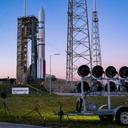
ULA’s Latest Launch Failure Spells Trouble for Space Force
By Greg Hadley, A&SF