
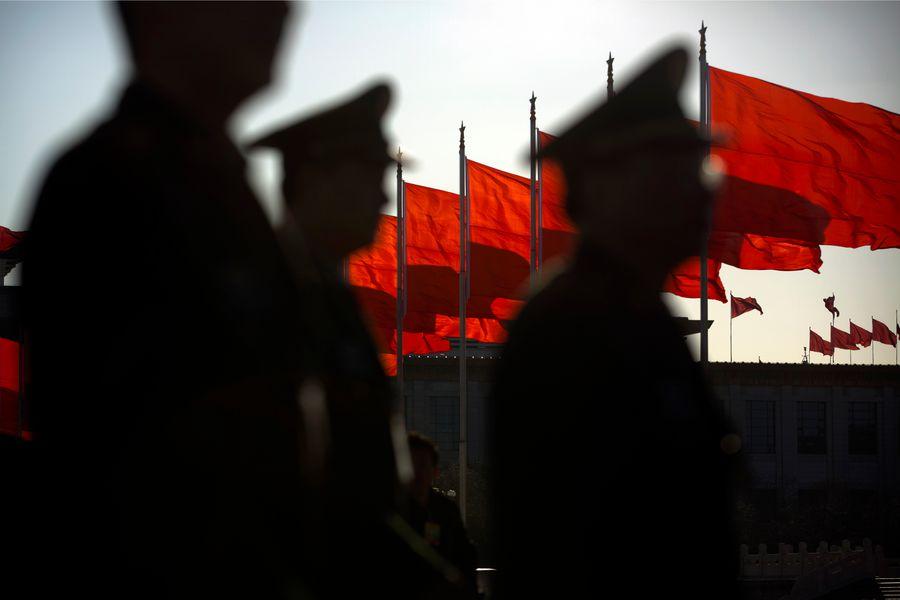
China’s Revised Mobilization Law and the Expanding Reach of National Defense
Published Nov. 20, 2026 • Read time: 10m
Join the Conversation
0China’s Expanding Mobilization Ambitions
China’s revised National Defense Mobilization Law (中华人民共和国国防动员法), which took effect on October 1, 2026, marks a significant development in China’s strategy of managing its national security and preparing for war. The substantially expanded 2026 law, which replaces the 2010 legislation, establishes a more comprehensive framework for organizing and coordinating China’s economic, technological, and human resources for national defense mobilization. Containing 82 articles across 14 chapters, the law provides an institutional mechanism for China to facilitate a rapid transition between peacetime and wartime conditions, converting economic and social resources into national defense capabilities.
Although Beijing has presented the reforms as necessary for the protection of China’s sovereignty and security interests, their implications extend beyond the country’s domestic defense administration. Against the backdrop of growing militarization of the South China Sea and Taiwan Strait, including the deployment of military and paramilitary forces, and intensifying competition between China and the United States (US), the revised law carries significant implications.
Beyond streamlining China’s defense administration and its functions, the revised law expands Beijing’s capacity to mobilize civilian resources, tighten coercive state control over society, and deepen regional insecurity. The revised framework could further extend Beijing’s control over the civilian population, place additional pressure on civil liberties and human rights, and expand the resources available for sustained military contingencies.
Redefining the Scope of National Defense
The revised law adopts a considerably broader definition of what constitutes a threat to national security. Articles 2 and 13 link defense mobilization to threats to China’s sovereignty, unity, and territorial integrity, as well as its security and development interests. This potentially extends the grounds for mobilization beyond traditional territorial defense, encompassing a wider range of perceived threats to China’s national interests.
Perceived and actual threats to national unity and development interests are not new features of China’s national defense legislation. These concepts were already present in earlier legislation, including the 2020 National Defense Law, which entered into force in 2021. The 2026 revision, therefore, did not introduce an entirely new concept, but rather incorporated existing security priorities into a more detailed and operationalized framework for mobilization.
The ambiguity surrounding the concept of development interests leaves considerable room for interpretation. This is compounded by the opacity of China’s political decision-making processes, often described as a “black box,” in which the relationship between the Chinese Communist Party (CCP) and state institutions can make it difficult for outside observers to determine how political priorities are translated into administrative decisions. Within this system, the discretion afforded to relevant authorities in applying the law creates considerable scope for expansive interpretation. This could allow the government to frame a wider range of domestic and external challenges as matters of national defense, potentially expanding the circumstances in which coercive measures, including the use of military force to advance international objectives, can be justified and implemented under the banner of national security.
Mobilizing Society, Expanding State Control
The amendments provide a more extensive legal basis for the Chinese state to forcefully mobilize civilian resources and direct aspects of civilian economic activity towards national defense. These powers include maintaining strategic reserves, organizing and controlling defense-related industries and transportation, and requisitioning civilian property through established legal procedures.
Following a decision to implement national defense mobilization, Article 58 of the revised National Defense Mobilization Law requires men aged 18–60 and women aged 18–55 to perform national defense service duties (国防勤务), subject to specified exemptions. These include personnel employed in childcare, elderly care, and other designated social welfare institutions; employees involved in teaching, management, and service provision within compulsory education; women during pregnancy and breastfeeding; and individuals whose illness or loss of working capacity prevents them from fulfilling such duties.
Expanded mobilization powers could have implications for civil liberties and economic autonomy by subjecting private enterprises, civilian infrastructure, and individual property to greater state direction during mobilization. Private enterprises could face operational disruptions as production capacity and resources are redirected towards military requirements. Civilian infrastructure, including transportation, telecommunications, energy networks, and water infrastructure, could likewise be incorporated into national defense mobilization arrangements and subjected to state direction in support of military requirements (Articles 60 and 73 of China's revised National Defense Mobilization Law).
Many countries maintain legislation and institutional frameworks that grant governments comparable emergency mobilization powers, including Finland’s Emergency Powers Act (2011) and Singapore’s Total Defence framework, although neither is directly equivalent to China’s law. Under established rule-of-law principles, the exercise of such powers is generally expected to comply with requirements of legality, proportionality, transparency, adequate compensation, and independent oversight.
China’s political system offers relatively few institutional avenues through which policies and decisions justified on national security grounds can be independently challenged or scrutinized. The amendments could further embed extraordinary mobilization powers within China’s ordinary governance structures, providing a broader legal basis for incorporating civilian economic and social activities into the national defense system.
Military Modernization and the Limits of Readiness
China’s recent military mobilization reforms have coincided with the sustained modernization of the PLA over recent decades. This modernization has been accompanied by substantial investment in a range of military capabilities, including air and maritime power, missile systems, cyber and space capabilities, and nuclear forces.
China's position as the world's second-largest military spender was reinforced in 2025, when military expenditure reached an estimated $336 billion, according to the Stockholm International Peace Research Institute (SIPRI). The country's officially announced 2026 defense budget amounted to approximately 1.94 trillion yuan, representing a 6.9% increase over the previous year's executed budget. In recent years, China has continued to expand and modernize its missile, air, naval, space, and other military capabilities, with an emphasis on strengthening its ability to contest military operations in the waters and airspace surrounding the country. These developments have complicated the ability of other militaries to intervene in a potential regional conflict.
Nevertheless, substantial investment in weapons systems and advanced technologies does not necessarily translate into readiness for large-scale warfare. Recent assessments by Taiwanese security experts offer a further qualification, suggesting that Xi Jinping's military purges could delay the PLA's preparations for a potential invasion of Taiwan, while simultaneously increasing the risk of unintended conflict arising from weakened command structures and inexperienced senior leadership.
Although the PLA possesses an extensive inventory of advanced weapons systems, questions remain about the doctrines, operational experience, and institutional capacity required to sustain large-scale military operations. Conducting joint operations across the land, maritime, air, cyber, and space domains is also highly complex and requires considerable operational integration.
The amendments also bring questions of institutional efficiency and combat readiness into sharper focus. The US Department of Defense (2025) acknowledged improvements in China’s military capabilities while highlighting uncertainties about the PLA’s ability to successfully execute a campaign against Taiwan, particularly in the event of US military intervention.
Rather than simply reflecting growing confidence in China’s ongoing military modernization, the amendments may also indicate Beijing’s recognition of existing institutional and operational limitations. They can therefore be understood as part of a broader effort to address deficiencies in mobilization, coordination, and the integration of civilian resources into contemporary military operations.
The integration of civilian technologies into China's defense capabilities also forms part of Beijing's broader military-civilian fusion strategy. Articles 7 and 8 address the role of data and advanced technologies in national defense mobilization, providing a legal basis for incorporating technological and civilian resources into defense-related activities in response to the increasingly technology-driven and interconnected nature of 21st-century warfare.
Taiwan and the Regional Security Dilemma
The Taiwan Strait represents one of the most consequential potential theaters for the application of China’s revised mobilization framework. Statements by Chinese leaders and official policy documents consistently identify reunification with Taiwan as a central national objective, while Beijing has repeatedly declined to rule out the use of force to achieve this goal.
The revised law could support the sustainment of prolonged military blockades, coercive operations, and larger-scale military campaigns by bringing China’s industrial capacity and logistics infrastructure more directly into national defense planning. An amphibious invasion of Taiwan would nevertheless present substantial operational challenges. Such an operation would require sustained control of the surrounding maritime and air domains, alongside the secure movement of personnel, equipment, and supplies across the Taiwan Strait. Maintaining these conditions in the face of Taiwanese resistance and potential US and allied intervention would pose considerable operational difficulties and carry significant risks of escalation.
The region is highly interconnected through trade and other forms of economic integration. Disruptions to major maritime routes would very likely have far-reaching consequences for regional and global supply chains, as well as wider patterns of international trade and economic activity. Any significant military confrontation would also risk drawing the United States into a wider military crisis with China, while prompting political and military responses across the region, potentially including economic sanctions and trade restrictions.
Institutionalizing national defense mobilization may also generate a strategic contradiction: measures intended to strengthen Chinese deterrence could reinforce threat perceptions among Taiwan, Japan, and other regional actors. SIPRI’s 2026 assessment points to rising defense expenditure across the region, reflecting intensifying strategic competition. Rather than alleviating insecurity, increasing Chinese defense preparedness could further exacerbate the regional security dilemma.
While China’s large export-oriented economy is deeply integrated into global markets, it also depends heavily on external sources for raw materials and other critical resources. A prolonged conflict would therefore expose China’s industrial production and economic growth to considerable disruption. Although the requisition of transportation and industrial assets could provide logistical advantages during mobilization, it would also disrupt civilian economic activity and potentially reduce productivity. Expanding mobilization obligations could further increase administrative burdens, generate public dissatisfaction, and complicate the coordination and allocation of civilian and military resources.
While China’s centralized political system offers considerable advantages in prioritizing and allocating national resources, limited institutional oversight, transparency, and independent assessment may constrain the reliability of official evaluations of military preparedness. Ultimately, the effectiveness of a wartime mobilization system depends on the state’s ability to translate economic and industrial resources into sustained logistical support for military operations.
The Strategic Risks of Mobilization
The amendments to China’s National Defense Mobilization Law consolidate government authority over state resources and expand the institutional framework for preparing for a wider range of security contingencies. This framework could support both defensive preparations and a wider range of coercive military options, expanding China’s capacity to mobilize resources for national defense while supporting a wider range of coercive military options. The integration of civilian economic and social structures into national defense planning creates a more expansive security framework, with implications for domestic state control and the regional strategic environment.
Despite continued military modernization, operational uncertainties, logistical constraints, and institutional limitations remain important considerations in assessing China’s military preparedness. Economic vulnerabilities will also remain relevant in the context of a potential conflict over Taiwan.
The more consequential risk may lie not simply in the expansion of China’s military capabilities, but in the possibility that stronger mobilization institutions could generate greater confidence in the use of coercive military options to address political and economic disputes. Such confidence could exceed China’s actual capacity to manage the operational and logistical demands of a prolonged conflict.
Muhammad Shoaib is a lecturer at the University of Okara, Pakistan; Research Fellow, School of Politics and Public Administration, Shandong University, Qingdao, China.
Muhammad Ali Baig is the deputy director at the Centre for Countering Terrorism and Violent Extremism Studies (CCTVES), Institute of Regional Studies, Islamabad, Pakistan.
Scott N. Romaniuk is a senior research fellow at the Centre for Contemporary Asia Studies, Corvinus Institute for Advanced Studies (CIAS); Department of International Relations, Institute of Global Studies, Corvinus University of Budapest, Hungary.
The Pressure Is the Message: What Xi and Putin Faced in Shenzhen
By Emzari Gelashvili • RealClearDefense
China’s Revised Mobilization Law and the Expanding Reach of National Defense
By Muhammad Shoaib • RealClearDefense
U.S. Putting Weapons in Space: A Strategic Blunder?
By Ajey Lele • RealClearDefense
The Clearance Myth Is a Readiness Problem
By Elijah Fernandez • RealClearDefense
The Pentagon's Next Readiness Test Should Begin When the Cloud Goes Dark
By Colton Overcash • RealClearDefense
U.S. Putting Weapons in Space: A Strategic Blunder?
By Ajey Lele • RealClearDefense
U.S. Senate Seeks to Exchange Shipbuilding Funds for More Munitions
By Naval News
F-35C Completes First Launch and Recovery Trials on a Ford-Class Carrier
By Navy T.
USS George Washington Leaves Mideast As Trump Mulls Ending Iran War
By S&S
ULA’s Latest Launch Failure Spells Trouble for Space Force
By Greg Hadley, A&SF