
NATO Summit Offers No Solution to Afghanistan's Security Problems
Last updated 08:12 PM EDT • Read time: 5m
Instead, engaging religious leaders is the only way to avert civil war
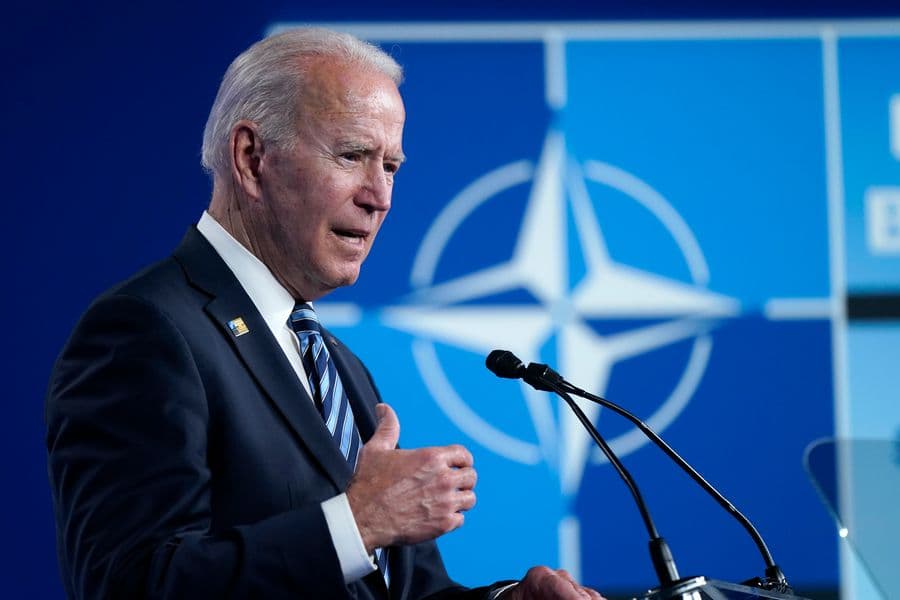
At this week's NATO Summit, U.S. President Joe Biden and his NATO counterparts bid a symbolic farewell to Afghanistan before the much-anticipated U.S. military pulls out of its longest-ever war.
But NATO's planned departure raises more questions than answers. How will security be assured at major embassies, along major transport routes, Kabul's medical facilities, and Kabul's airport? In short – how can NATO help secure the nation's future from afar?
The concerns are justified. Just last week, terrorists attacked an international demining charity – killing 10. And in 2019, terrorism took 8,681 Afghan lives. It could be a foreshadowing of what is to come.
Which begs the question - with the threat of major foreign military pressure off the table, how else will the extreme militant fringes of Afghan society be kept in check and their influence curtailed?
Plans to have advisors bolster Afghan security are not just flimsy, they indicate President Biden and other world leaders are desperately out of touch with the scale of the problem and the very real prospect of civil war.
Instead, the time has come for fresh thinking.
For new perspectives.
This is why the Muslim World League, one of the world’s largest Islamic NGO’s, gathered top political representatives, Islamic scholars and religious leaders from Afghanistan and Pakistan in Mecca this week - including from the region’s most influential religious institutions, like the Council of Senior Scholars in Afghanistan, and the Pakistani Ulema Council. The result? An official Peace Declaration that proposes a new path to peace..
Not through armed force or bombing campaigns but through the persuasive and moral power of religious leadership and values.
This is not merely an optional route to long-lasting peace. Islam is so central to Afghan society that any conflict emanating from religious discord cannot be resolved without the leadership of religious scholars.
It is the inclusion of such scholars that makes this Peace Declaration more than just an empty sentiment. The scholars backing it wield significant influence over disputing parties, enabling them to play a direct and crucial role in regional conflict preemption and resolution. And not merely for the short term either - a permanent commission overseeing the implementation of a long-lasting peace will hold periodic meetings in the Holy city of Mecca - regularly attended by Pakistani and Afghan scholars capable of averting any emerging crisis. And to ensure decisions made by the Commission carry weight locally, they will be implemented via local executive committees in Pakistan and Afghanistan.
In short, with the help of the region’s most influential religious leaders, the declaration presents a real opportunity to create a new narrative of peace, reconciliation, and anti-extremism for the region – one imbued with the religious values that all Afghans can get behind. The model of engagement represented at this conference - patroned by the Kingdom of Saudi Arabia and hosted by the Muslim World League in Islam’s holiest city - offers the most promising opportunity to thwart the long-term ambitions of the regional extremist groups.
It is – effectively - a path to peace through faith.
While skeptics might point out that previous peace agreements eventually failed, these suffered at least three major problems. First, as in the case of the 2020 U.S. and Taliban peace agreement, that which is formed under military pressure is likely to fail. Second, they neglected to comprehensively address the economic, social, and political needs of the Afghan people, which this Declaration places front and center instead. The Peace Declaration outlines extensive assistance for development efforts and presents robust, organic, and sustainable plans to counterterrorism and extremism.
Finally, this Declaration engages Pakistan, arguably Afghanistan’s most important neighbor. Through the Declaration, Pakistan will have an important role to play in rebuilding war-torn Afghanistan and assisting the 3 million refugees who now reside in Pakistan’s borders.
But ultimately, the great difference between this and prior peace attempts is the strong respect and responsibilities accorded to religion and the religious. Rightly so: There is no other more powerful force in Afghan society. And with NATO drawing down its military presence, the role of local religious leaders to offer a powerful rebuttal to the narrow agendas of extremist groups is more urgent than ever.
Why then the absence of support for such an approach from NATO and G7 members?
Western efforts at peacebuilding in the region are, of course, to be welcomed. But without backing efforts that acknowledge the necessary - indeed central - role religion must play in any lasting peace, Afghanistan could well be destined for spiraling civil unrest instead of the stability it desperately needs. It is a risk the international community is dangerously failing to fully appreciate.
That is why we, at the Muslim World League, extend the hand of partnership to the western world in an effort to fill the void left by NATO - not via measures that have been tried and failed - but by engaging religious leadership and encouraging narratives of peacebuilding aligned to the values of all Afghans. The Afghan people have endured nearly forty years of constant war, invasion, and occupation that cannot come soon enough.
Dr. Al-Issa is Secretary General of one of the world's largest Islamic non-governmental organizations, the Muslim World League. He is also one of the world's leading and most influential Islamic clerics. He made global news after making an inter-faith trip to Auschwitz and meeting Pope Francis. Dr. Al-Issa is also a diplomat and led a summit with over 1,200 Islamic scholars, creating the historic Charter of Makkah, which advances and enshrines human rights and planetary welfare.

Putin, Plague, and America’s Biodefense Gap
By Ryan Kane • RealClearDefense
From Hormuz to the South China Sea: Defending Freedom of Navigation in Contested Waters
By David F. Lasseter • RealClearDefense
Checklist for Modern Conflict Readiness
By Sergey E. Ivashchenko • RealClearDefense
AUTOWARCOM Is Heading for a Command-and-Control Collision
By Michael Carvelli • RealClearDefense
The Unfinished Reform
By Mark W. Castillon • RealClearDefense
U.S. and Japan Begin Naval Exercises Near Taiwan
By Mari Yamaguchi • Associated PressFrom Hormuz to the South China Sea: Defending Freedom of Navigation in Contested Waters
By David F. Lasseter • RealClearDefense
National Guard Soldier Shot While Breaking Up Fight in Washington D.C.
By Military.com
‘No Marine Fights Alone’
By Gidget Fuentes, USNI News
Sea Services Weigh How to Embrace Autonomous, Attritable Tech
By Reeves, NatDef