
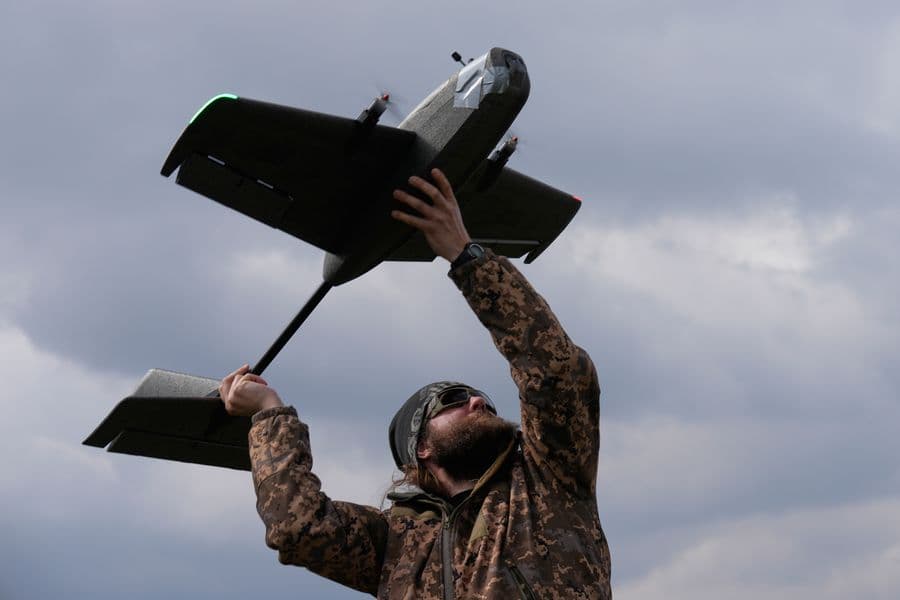
In this file photo taken Thursday, March 19, 2026, a student soldier of the Yatagan School for Unmanned Aerial Systems launches a drone during drills in the Kyiv region, Ukraine. (AP Photo/Efrem Lukatsky)
Checklist for Modern Conflict Readiness
Last updated 05:45 AM EDT • Read time: 14m
Modern security environments are characterized by rapidly evolving threats that can shift from covert pressure to open conflict with minimal indicators of escalation. Ensuring strategic readiness requires a framework that enables timely decision‑making, resilience of critical infrastructure, coordinated action among allies, and the ability to mobilize national resources without delay. The structure presented in this document provides a concise outline of priority directions; it does not represent the sequence in which these measures must be implemented, as many of them can be pursued simultaneously depending on available resources and operational priorities. Each direction can be expanded into detailed planning guidance for both individual states and coalitions of states, forming a unified basis for preparing for potential large‑scale conflict and countering covert escalatory behavior.
Section I — Strategic Response
1.1. Doctrinal Acceptance of the Rapid Nature of a Future Conflict
In conditions of a potentially fast‑developing situation, it is necessary to proceed from the requirement for an immediate and decisive response that deprives the adversary of the ability to shift the conflict into a prolonged phase. Delay leads to increased social tension and economic exhaustion. Rapid and decisive actions are required to prevent the adversary from prolonging the conflict. Measures are needed to reduce pressure on society and prevent internal destabilization.
References:
1.2 (probabilistic scenario planning)
1.7 (response to covert escalation by the adversary)
4.1 (rapid deployment of mobilization measures)
1.6 (comprehensive strengthening of all types of intelligence)
1.2. Planning Actions Based on Probabilistic Scenarios
Strategic planning must rely on a system of probabilistic scenarios that allow for advance calculation of possible courses of action by the adversary and identification of indicators pointing to a transition into more dangerous phases of the conflict. A gradation of threat levels is required, including various forms of aggressive actions by Russia, in order to prevent delays in response. Pre‑prepared courses of action are needed to ensure a rapid transition from observation and analysis to the execution of specific tasks.
References:
1.6 (comprehensive strengthening of all types of intelligence)
1.1 (doctrinal acceptance of the rapid nature of a future conflict)
2.3 (classification of allies by levels of combat readiness)
1.4 (analysis of the intentions and actions of Russia’s allies)
1.7 (response to covert escalation by the adversary)
1.3. Objective Assessment of the Actual Condition of Russia’s Armed Forces
A comprehensive assessment of the combat capability of Russia’s armed forces is necessary for an accurate understanding of the adversary’s real military potential, including the degree of obsolescence of weapon systems and their actual usability. It is required to take into account the prolonged absence of full‑scale nuclear testing and the condition of the infrastructure that ensures the practical readiness of the arsenal. It is important to analyze various forms of propagandistic claims about “unparalleled” systems and unsuccessful tests in order to prevent their influence on operational decisions.
References:
1.6 (comprehensive strengthening of all types of intelligence)
2.6 (blocking external channels of support for the aggressor)
1.7 (response to covert escalation by the adversary)
1.2 (probabilistic scenario planning)
1.4 (analysis of the intentions and actions of Russia’s allies)
1.4. Assessment of the Intentions and Actions of Russia’s Allies
To form a comprehensive understanding of possible directions of escalation, it is necessary to consider the intentions and statements, as well as the actions, of Russia’s allies in conjunction with Russia’s own rhetoric and behavior. It is required to form an integrated picture of possible escalation pathways, including various forms of their manifestation, in order to prevent errors in assessing the situation and delays in response.
References:
2.1 (coalition joint combat exercises)
1.2 (probabilistic scenario planning)
2.6 (blocking external channels of support for the aggressor)
2.2 (advance distribution of functions among allies)
1.7 (response to covert escalation by the adversary)
1.5. Strengthening the Satellite Constellation
The space configuration of forces must ensure such a structure of orbital assets in which military spacecraft of different classes form not only the operational constellation but also an orbital reserve — through the gradual increase of density, placing part of the satellites into higher orbits, and subsequently lowering their trajectories in the event that active systems fail or are destroyed by the adversary. Such an architecture integrates reconnaissance, navigation, interceptor, and strike space platforms with sufficient density and functionality to provide continuous situational monitoring and operational support.
References:
1.6 (comprehensive strengthening of all types of intelligence)
1.7 (response to covert escalation by the adversary)
1.2 (probabilistic scenario planning)
3.1 (protection of maritime lines of communication and underwater infrastructure)
1.8 (counter‑terrorist protection of critical infrastructure)
1.6. Strengthening All Types of Intelligence
The increasing complexity of threats requires expanding the capabilities of all types of intelligence through the use of the widest possible range of available means. It is necessary to ensure timely identification of threats and the adversary’s intentions, including various forms of their manifestation, in order to prevent delays in response and improve the accuracy of situational assessment.
References:
1.2 (probabilistic scenario planning)
1.3 (objective assessment of the combat capability of Russia’s armed forces)
1.7 (response to covert escalation by the adversary)
2.5 (Ukrainian–Russian combat innovations)
1.4 (analysis of the intentions and actions of Russia’s allies)
3.1 (protection of maritime lines of communication and underwater infrastructure)
1.7. Response to Covert Escalatory Actions
Russia’s attempts to test the limits of collective defense require an immediate and unequivocal response that prevents the gradual erosion of the threshold for invoking Article 5 of the North Atlantic Treaty. It is necessary to proceed from the requirement to suppress any forms of covert escalation, including hybrid actions aimed at testing the readiness of allies for collective defense.
As part of the analysis of such gradual and covert forms of pressure, an author‑defined term “dosed aggression” is introduced, denoting a controlled, phased, and deliberately limited form of hostile actions employed by the adversary to gradually shift the threshold of the acceptable, test the reaction of the opponent, and erode the boundaries of escalation without transitioning to a full‑scale conflict, though not excluding such a transition subsequently.
It is required to suppress any gradual, including hybrid, escalatory actions and provocations aimed at testing the readiness of allies for collective defense. It is important to promptly identify and neutralize actions aimed at covert escalation of the conflict, regardless of the tactics chosen by the adversary, in order to prevent delays in decision‑making.
References:
1.1 (doctrinal acceptance of the rapid nature of a future conflict)
2.6 (blocking external channels of support for the aggressor)
1.6 (comprehensive strengthening of all types of intelligence)
1.3 (objective assessment of the combat capability of Russia’s armed forces)
1.2 (probabilistic scenario planning)
1.8. Counter‑Terrorist Exercises for the Protection of Critical Infrastructure
Increasing the resilience of critical infrastructure to hybrid threats requires regular force‑based exercises with testing of readiness to repel sabotage, including the conduct of counter‑terrorist activities aimed at protecting key facilities, practising anti‑drone measures, and identifying enemy agents within allied countries. Such exercises must test the readiness of forces to operate under hybrid threats, identify vulnerabilities, and ensure the ability to immediately suppress attempts at interference.
References:
3.4 (resilience of energy infrastructure during wartime)
3.1 (protection of maritime lines of communication and underwater infrastructure)
4.3 (readiness of bomb shelters and civil defense systems)
1.6 (comprehensive strengthening of all types of intelligence)
3.2 (dispersal of defense industries and strategic reserves)
Section II — Coalition Integration
2.1. Regular Joint Exercises of Allies
Maintaining high coalition readiness requires systematic conduct of joint exercises of allies, including practicing defensive actions and, when the situation deteriorates, preventive offensive operations. It is necessary to ensure flawless coordination of planning, compatibility of procedures, and readiness for a rapid transition from training activities to the execution of real combat tasks.
References:
2.2 (advance distribution of functions among allies)
2.3 (classification of allies by levels of combat readiness)
4.1 (rapid deployment of mobilization measures)
2.5 (Ukrainian–Russian combat innovations)
1.4 (analysis of the intentions and actions of Russia’s allies)
2.2. Advance Distribution of Functions Among Allies
The coherence of coalition actions during wartime relies on a pre‑determined distribution of functions among allies, taking into account their geographic proximity to areas of hostilities, specialized competencies, and the ability to perform specific combat tasks most effectively. It is necessary to ensure clear delineation of responsibilities, coordination of joint efforts, and readiness for rapid execution of assigned actions.
References:
2.1 (coalition joint combat exercises)
2.3 (classification of allies by levels of combat readiness)
3.2 (dispersal of defense industries and strategic reserves)
2.4 (unified coalition authority for armaments management)
1.4 (analysis of the intentions and actions of Russia’s allies)
2.3. Classification of Allies by Levels of Combat Readiness
Effective coalition planning relies on a clear classification of allies by levels of combat readiness, taking into account the branches of service, the level of personnel training, and the ability to rapidly increase weapons production. Creating such a structure will allow for the prompt determination of each country’s contribution to coalition actions and ensure optimal distribution of tasks during wartime.
References:
2.2 (advance distribution of functions among allies)
2.1 (coalition joint combat exercises)
2.4 (unified coalition authority for armaments management)
1.2 (probabilistic scenario planning)
4.1 (rapid deployment of mobilization measures)
2.4. Unified Coalition Authority for Armaments Management
Effective management of defense resources is possible only with the existence of a unified operational coalition authority for armaments control, responsible for accounting for armaments, coordinating their production, and accelerating the expansion of defense capacities. Such an authority must ensure centralized decision‑making, synchronization of actions among allied countries, and the ability to rapidly reallocate resources when the situation changes.
References:
3.3 (formation of strategic reserves of armaments)
3.2 (dispersal of defense industries and strategic reserves)
2.3 (classification of allies by levels of combat readiness)
2.6 (blocking external channels of support for the aggressor)
4.1 (rapid deployment of mobilization measures)
2.5. Ukrainian and Russian Combat Innovations in Coalition Planning
The experience of the current war demonstrates the presence of significant combat innovations on both sides, requiring systematic analysis to form a realistic understanding of modern warfare. Russian practices — including the extensive use of loitering munitions, adaptations in artillery employment, the development of suppression capabilities, specific features of operational structuring, and a demonstrated readiness to employ coercive and terror‑inducing actions against civilian populations — constitute important material for studying the strategy and tactics of a potential adversary. Their assessment enables the identification of vulnerabilities, the anticipation of future approaches, and the development of the most effective countermeasures.
Ukraine, in turn, has produced a broader and more flexible set of solutions: the creation of new classes of maritime, aerial, and ground unmanned systems; the formation of new‑type assault units; and the implementation of combined combat tactics. Particular attention should be given to the effectiveness of Ukrainian strikes against the adversary’s rear areas, grounded in precise target selection logic, the advance calculation of both operational and strategic consequences, and the optimal choice of strike systems that deliver high accuracy and meaningful operational impact.
The integration of both sides’ experience into coalition planning must take into account Russia’s often outdated and largely predictable tactical and operational approaches, while relying primarily on Ukraine’s developments as more structurally significant and validated in practice. This includes the employment of autonomous platforms, the support of offensive actions with unmanned systems, and the use of contemporary approaches to warfare.
References:
1.6 (comprehensive strengthening of all types of intelligence)
2.1 (coalition joint combat exercises)
3.3 (formation of strategic reserves of armaments)
1.2 (probabilistic scenario planning)
1.7 (response to covert escalation by the adversary)
4.3 (readiness of bomb shelters and civil defense systems)
2.6. Blocking External Channels of Support for the Aggressor
Deterring Russia’s military machine is impossible without systematic efforts to block external sources of its support, including states capable of supplying Russia with weapons, raw materials, or manpower. It is important to identify such countries in advance, reduce their willingness to support the aggressor, and create conditions under which participation in its military plans becomes politically, economically, and strategically risky for them.
References:
1.3 (objective assessment of the combat capability of Russia’s armed forces)
1.7 (response to covert escalation by the adversary)
2.4 (unified coalition authority for armaments management)
1.4 (analysis of the intentions and actions of Russia’s allies)
1.6 (comprehensive strengthening of all types of intelligence)
Section III — Infrastructure Resilience
3.1. Protection of Maritime Lines of Communication
The resilience of underwater infrastructure is a key factor in strategic security, which makes the protection of maritime lines of communication a task of primary importance, including enhanced security of undersea communication cables, expansion of patrol zones, and the use of specialized monitoring systems to detect attempts at covert interference or sabotage. Maritime communications must be regarded as objects of elevated significance and vulnerability, requiring continuous monitoring and readiness for immediate suppression of any attempts at interference.
References:
1.8 (counter‑terrorist protection of critical infrastructure)
1.6 (comprehensive strengthening of all types of intelligence)
1.5 (architecture of the orbital military constellation)
1.7 (response to covert escalation by the adversary)
3.2. Advance Dispersal of Defense Industries and Strategic Reserves
The resilience of the defense industry during wartime is formed through the advance dispersal of production capacities and strategic reserves, including raw materials, equipment, and fuel. Advance preparation of personnel will allow for maintaining the stability of production processes and the ability of industry to continue operating under conditions of military pressure and potential strikes on infrastructure.
References:
2.2 (advance distribution of functions among allies)
2.4 (unified coalition authority for armaments management)
3.3 (formation of strategic reserves of armaments)
4.2 (civil strategic support reserves)
1.8 (counter‑terrorist protection of critical infrastructure)
3.3. Military Strategic Reserves of Armaments
Operational readiness of forces during wartime relies on pre‑established strategic reserves of armaments that ensure immediate deployment of forces, including already‑produced weapons systems maintained in full operational condition. Their nomenclature and volumes must correspond to the real experience of modern combat operations, including actual rates of expenditure of munitions and means of destruction. These reserves form the foundation of operational readiness and allow forces to begin executing tasks without delays associated with production cycles or logistical constraints.
References:
2.4 (unified coalition authority for armaments management)
2.5 (Ukrainian–Russian combat innovations)
4.1 (rapid deployment of mobilization measures)
3.2 (dispersal of defense industries and strategic reserves)
1.2 (probabilistic scenario planning)
3.4. Ensuring the Resilience of Energy Infrastructure
The resilience of the energy system during wartime is determined by the state’s ability to protect critical facilities of energy generation, transmission, and storage from strikes and sabotage. Advance fortification of vulnerable segments, the creation and continuous expansion of backup supply schemes, and the preparation of emergency response teams make it possible to minimize the consequences of potential attacks and ensure uninterrupted operation of the energy infrastructure even under significant external pressure.
References:
1.8 (counter‑terrorist protection of critical infrastructure)
1.6 (comprehensive strengthening of all types of intelligence)
3.2 (dispersal of defense industries and strategic reserves)
4.2 (civil strategic support reserves) 1.7 (response to covert escalation by the adversary)
Section IV — National Mobilization
4.1. Rapid Deployment of Mobilization Measures
The state’s ability to immediately increase force levels in the pre‑war period relies on pre‑prepared mechanisms for rapid deployment of mobilization measures, including accelerated training of personnel and systematic involvement of reservists in the pre‑war period. Reservists must regularly participate in training programs and exercises, ensuring combat cohesion, readiness for deployment, and integration with active units. Mobilization structures must operate in a state of constant readiness, ensuring timely force build-up and eliminating delays that could affect the pace of troop deployment.
References:
1.1 (doctrinal acceptance of the rapid nature of a future conflict)
2.1 (coalition joint combat exercises)
3.3 (formation of strategic reserves of armaments)
1.2 (probabilistic scenario planning) 1.7 (response to covert escalation by the adversary)
4.2. Civil Strategic Support Reserves
The state’s ability to maintain vital functions in the event of a prolonged conflict relies on pre‑established civil strategic support reserves, including food, water, medicines, clothing, generators, fuel, and construction materials. Timely inventory and replenishment of these reserves must be ensured. They form the foundation of population and infrastructure resilience during wartime and allow vital functions to be sustained in the event of disrupted logistics or strikes on critical facilities.
References:
3.2 (dispersal of defense industries and strategic reserves)
3.4 (resilience of energy infrastructure during wartime)
4.3 (readiness of bomb shelters and civil defense systems)
1.8 (counter‑terrorist protection of critical infrastructure)
1.6 (comprehensive strengthening of all types of intelligence)
4.3. Readiness of Civil Defense Facilities and Civil Defense Systems
The readiness of civil defense facilities and civil defense systems must be maintained at a level that allows for the immediate protection of the population in the event of a threat. Information campaigns must train citizens in the use of personal protective equipment, the provision of first aid, and actions in the event of debris blockage. Preparation of the population is a key element of resilience and must be conducted regularly, ensuring people’s ability to act confidently and in an organized manner under conditions of military pressure.
References:
4.2 (civil strategic support reserves)
1.1 (doctrinal acceptance of the rapid nature of a future conflict)
1.7 (response to covert escalation by the adversary)
Effective preparation for potential conflict requires the ability to act decisively, coherently, and proactively across all domains. The measures outlined here form an integrated system that strengthens early threat recognition, enhances infrastructure resilience, improves allied coordination, and ensures national readiness for rapid mobilization. Taken together, these directions provide a foundational framework that enables both individual states and coalitions to reduce the risks of covert escalation, reinforce collective defense, and maintain the capacity to respond with clarity and speed in a rapidly changing strategic environment.
Sergey E. Ivashchenko is a strategic analyst working at the intersection of escalation dynamics, information strategy, and long‑range strategic forecasting.

Putin, Plague, and America’s Biodefense Gap
By Ryan Kane • RealClearDefense
From Hormuz to the South China Sea: Defending Freedom of Navigation in Contested Waters
By David F. Lasseter • RealClearDefense
Checklist for Modern Conflict Readiness
By Sergey E. Ivashchenko • RealClearDefense
AUTOWARCOM Is Heading for a Command-and-Control Collision
By Michael Carvelli • RealClearDefense
The Unfinished Reform
By Mark W. Castillon • RealClearDefense
From Hormuz to the South China Sea: Defending Freedom of Navigation in Contested Waters
By David F. Lasseter • RealClearDefense
National Guard Soldier Shot While Breaking Up Fight in Washington D.C.
By Military.com
‘No Marine Fights Alone’
By Gidget Fuentes, USNI News
Sea Services Weigh How to Embrace Autonomous, Attritable Tech
By Reeves, NatDef
Lockheed Delivers C-130J to Become Navy’s TACAMO Plane
By Stephen Losey, A&SF