
Stop Sending Terrorists to College
Last updated 05:45 AM EST • Read time: 5m
U.S. lack of policy fosters ISIS resurgence
The bloody skirmish that began as a prison break in the Syrian city of al-Hasakah has ended as a tactical defeat for IS, which failed to reconstitute its ranks with hundreds of prisoners – but a propaganda victory, demonstrating that the Islamist group still poses a considerable threat to the world. Since January 20, when a handful of IS suicide bombers breached the entrance of the prison that held 3,500 of their members and affiliates, 500 people – including young boys whom the escaping prisoners used as human shields – have been killed, and according to the UN, 45,000 civilians in the area were displaced.
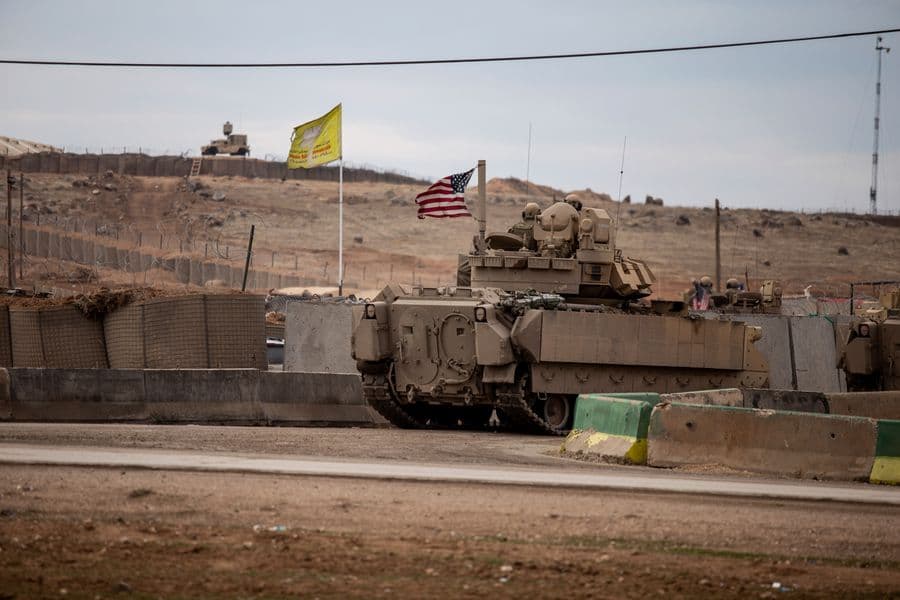
U.S. military leaders and their allies had long predicted such an attack: Tens of thousands of captured IS combatants, along with their family members, live in limbo in northeastern Syria, either at prisons overseen by the Syrian Democratic Forces (SDF) and the local police forces (Asayish), or in camps run and supported by the international community, such as al-Hawl.
For decades, we had seen terrorist leaders emerge from prison more dangerous than when they arrived. Nine members of the Islamic State’s top command did time in “prison camps," including Abu Bakr al-Baghdadi; his deputy, Abu Muslim al-Turkmani; Haji Bakr, a senior military commander and Abu Musab al-Zarqawi. These prisons were operated and secured by the United States, which has substantially more resources than the SDF.
The United Nations, U.S. Central Command and others have warned that the tens of thousands of children held at the detention camps are “susceptible to ISIS message, coercion and enticement.” In April of 2021, Gen. Kenneth F. McKenzie Jr., CENTCOM Commander, warned that history was about to repeat itself at al-Hawl: “unless we find a way to repatriate them, reintegrate them and de-radicalize them, we're giving ourselves a gift of fighters five to seven years down the road.”
Breaking the Status Quo
On January 30, National Security Advisor Jake Sullivan released a brief statement congratulating SDF and Coalition forces on retaking control of the al-Sina’a prison and reaffirming the conviction that “nations must work together to address the thousands of ISIS detainees in inadequate detention facilities.”
However, the statement offered no specifics about how this might be done. History – including the Coalition’s recent efforts in Iraq and Afghanistan – suggests that wiping out a regime, throwing money at a provisional government, and then leaving is not a solution. It creates a dependent relationship and invites corruption.
Northeast Syria has a fully functional political structure in place: The Autonomous Administration of North and East Syria (AANES), a confederation of seven regional governments. But the security forces of the AANES, the SDF and Asayish, have neither the resources nor expertise to do much more than maintain the status quo under the strict sanctions imposed by Western allies on Syrian enterprises since 2011.
So what are the solutions?
In his April address, Gen. McKenzie proposed a “whole of nations approach” to the problem. “Nations need to take back their citizens,” he said, “. . . and we need to find and develop ways that actually allow you to achieve deradicalization.”
The international community has always advocated for repatriation but IS fighters’ countries of origin have taken all the people they’ve been willing to accept. By now, it’s obvious that the prisoners aren’t going anywhere.
The U.S. has to assume a leadership role and develop with the AANES a practical and effective plan. This is a governance issue; therefore, this can not be solved by engaging only with the SDF. The AANES has advanced several practical solutions for this whole-of-nations approach.
The United States and the international community can help ease the pressure on AANES. Sanctions must be selectively lifted to enable the AANES to deliver key services to constituents, including better security and conditions at prisons. Targeted sanctions enforcement has recent precedents – in 2011, for example, the U.S. government confirmed that its sanctions regime in Sudan no longer applied to South Sudan.
A group of penal experts needs to be set up to review the existing conditions in prisons, develop a reorganization plan, and layout the funding requirements.
If foreign IS combatants are not returned to their native countries within a designated time period, they must stand trial in northeast Syria, under laws legislated by elected officials, in cases adjudicated by judges appointed under the terms of the AANES Charter of the Social Contract. While prosecutors and judges can avail themselves of expert advice, it must ultimately be Syrian officials who try and resolve cases where the victims were mostly Syrians and the crimes were committed on Syrian land.
Large camps and prisons must be divided into smaller, safer, more secure facilities, with prisoners or detainees assigned according to their place of origin. Once organized into more manageable groups, the long work of deradicalization, rehabilitation, education and training can begin, but it must be life in prison for the irredeemable.
In 2004, when the 9/11 Commission began presenting its recommendations to Congress, commissioner Richard Ben-Veniste warned: “We are killing terrorists, but Bin Ladin and other organizations are recruiting them faster than we can kill them.”
Bin Ladin is dead now – and so is the former head of IS, Abu Ibrahim al-Hashimi al-Qurayshi, killed during a U.S.-led raid on February 3. But as Gen. McKenzie pointed out in his April address, the prisons and detention camps of northeastern Syria are now perfectly arranged to produce more people just like them. “It will be a military problem in a few years,” he said, “if we don’t fix the non-military aspects of it now.”
Dominique L. Plewes is special advisor to Freedom Research Foundation and founder of 501(c)3 Special Operations Forces (SOF) Support Foundation, dedicated to educating Americans on the purposes and uses of our special operations forces.

Reflecting on an Epic Horse Campaign in the Mountains of Afghanistan
By Brian Glyn Williams • RealClearDefense
The Godfather of American Foreign Policy Realism Speaks to Today’s World
By Francis P. Sempa • RealClearDefense
In Pursuit of Nuclear Abolition
By Peter Huessy • RealClearDefense
Innovation Alone Won’t Prepare the U.S. for the Future Battlefield
By Joshua Segal • RealClearDefense
The sUAS Tactical Trifecta
By Bryan T. Woody • RealClearDefense

Navy Civilianizes Six Former Flag Billets, Reduces Six to Captains
By Mongilio, USNI N.
Raytheon's $8B Contract for Strategic Comms Terminal Modernization
By M+A El
America’s Maritime Moment Will Not Wait
By CDR Salamander
Armor Up?
By Marine Corps Compass Points
Who Shoots Down the Drone Over the Shipyard?
By John Ferrari & Dillon Prochnicki • RealClearDefense