
The National Guard – Force-Multiplier in Countering Our Drug Crisis
Last updated 06:52 AM EDT • Read time: 6m
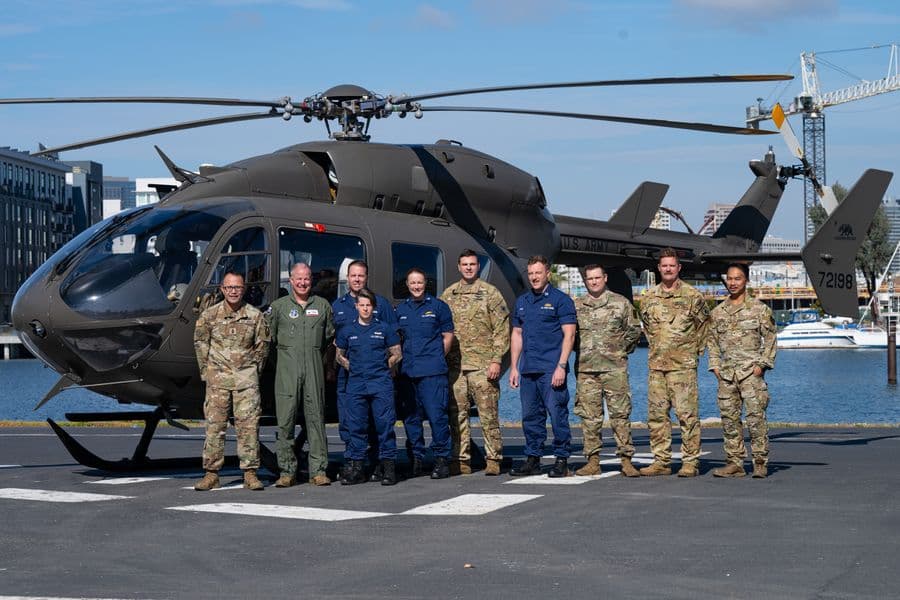
U.S. Coast Guard members poses for a group photo with members from the Air Force and Army California National Guard on Coast Guard base Alameda, Calif. Oct. 25, 2022. District 11 Response and Enforcement hosted the Air Force and Army California National Guard as part of an ongoing partnership under the Counter-drug Task Force (CDTF). (U.S. Coast Guard photo by PO3 Hunter Schnabel)
To suggest that the Nation is reeling from a toxic combination of rampant crime, instability, eroding social cohesion and runaway drug abuse is to remind the public of the painfully and devastatingly obvious. Nonetheless, it is a harsh truth that must be reiterated lest we get distracted, unfocused and ignore or marginalize the problem. In fact, the sweeping epidemic of drug abuse here in 2023 shows virtually no indication of slowing – and the social and mental health disruption pushed upon our society from the pandemic has only exacerbated what was already a tough challenge. And, the indications based on provisional data for 2022, are that the level of drug overdose deaths in the U.S. is as high as it was in 2021 – itself a record-breaking year.
Fortunately, we don’t have to create whole new bureaucracies or re-invent the wheel to address these issues in a meaningful way. To be perfectly honest, we’ve already got most of the appropriate counter-threat infrastructure in place – from legal authorities and criminal codes to treatment courts and law enforcement agencies. Additionally, we have robust technical capabilities, deep knowledge about drugs and drug crime, and a tried-and-tested playbook for planning and execution.
However, what we have not had to date is consistent support for some of the most important behind-the-scenes entities that have been diligently working on this problem-set in our communities. One of these players is the U.S. National Guard – and more specifically, the U.S. National Guard Counterdrug Program (NG CDP). It may be an eyebrow-raising revelation to most Americans that the National Guard plays a role in tackling the drug and organized criminal threat in the country. In fact, the role they play is quite active and consequential – Guardsmen and women are deployed across the land to support the nation’s law enforcement agencies at all levels in stopping the deadly and exploitative activities of gangs, trafficking groups, and criminal networks.
What the National Guard brings to the drug and crime fight are DoD-centric skill sets, capabilities, and experiences, backed by their unique legal authorities to support law enforcement agencies in the field in a way that law enforcement agencies do not necessarily possess organically. In turn, National Guard counterdrug soldiers and airmen can later apply technical acumen, specialized approaches, and trial-tested procedures toward other defense missions, such as combatting terror networks or prosecuting counter-insurgency operations abroad. In this interesting way, the efforts of NG CDP help enhance the effectiveness of the Guard itself, as well those who work closely with NG CDP personnel. Interoperability is enhanced, and this becomes a force-multiplier during responses to national emergencies such as flooding, hurricanes, or cyber-attacks on public utilities (think hackers or EMP).
Additionally, when performing counterdrug functions here at home, National Guardsmen and women are actively working a real threat to the U.S. homeland, and not simply performing simulated exercises. In fact, the dynamics and stress encountered during real-world action cannot be simulated, and it is best to train and test in these relatively low-risk events and then adapt tactics from lessons learned than to do so in combat. Whether discussing intelligence analysts working cases with investigative task forces or helicopter pilots flying air ops, Guardsmen and women maintain a high degree of core operational readiness as they work to actively tackle the drug threat. Given these cross-contributing factors, the National Guard counterdrug program is one of the more innovative and cost-effective elements we have in our national defense.
With the rising threat posed to America from a combination of narcotics trafficking, related criminal activity, resultant social instability and eroding public health, the need for consistent and robust funding for NG CDP is critical. Moreover, consistent, and more robust year-over-year funding for NG CDP will be increasingly imperative for a wide array of reasons – from accurate threat identification, long-term planning, and efficient program execution to personnel deployment, accurate budgeting, maintaining consistent operational tempo against the threat, and providing reliable and credible support to our nation’s law enforcement agencies.
Fortunately, the 118th U.S. Congress – which has introduced a robust degree of legislation aimed at fentanyl and the larger drug problem – also seems to agree that NG CDP represents a key element in the counterdrug effort. For FY24, the House has recommended $300,000,000 for NG CDP, which is significantly higher than the President’s Budget Request. Of course, the Senate will be looking at this issue as well – and hopefully, the upper chamber will also recognize the merit of NG CDP as a force for good against the distressing plight of organized drug crime and follow the House lead on supporting this program. Given the indiscriminate way that crime and addiction plague the nation, supporting this counter-threat effort really should not be another tiring exercise in partisanship.
Certainly, America’s drug crisis is nothing new. It is a problem that we’ve struggled with for decades; we even tally up major levels of social damage, injury, poor health, property destruction and death every year from substances that are entirely legal for the adult population. And our substance abuse issue is not a problem that will ever be managed with one avenue of approach – it’s going to take the right combination of community involvement, individual discipline, awareness, mentorship, and compassion to arrive at a level of acceptable containment.
But with the threat of narcotics imperiling the nation at record high levels, as well as related problems with border security, rising crime and eroding social stability, 2023 stands as a critical year to try and get ahead of these trends. It also stands as a vital year for policymakers in DC to fully support the NG CDP in their fight against the scourge of narcotics that is crushing our country. Formed and driven at root by the patriotic dedication of National Guardsmen and women, who work continuously to protect their communities and promote the wellbeing of America, the National Guard Counterdrug Program is an effective, contributive force-multiplier for our nation’s overall health and national security. 2023 should be the year we dig in hard and support those who face down this terrible problem every day.
Miguel Alejandro Laborde is a former NCO in the 160th SOAR (A), and a subject matter expert on defense aviation programs, capabilities, and platforms, with decades’ worth of experience in the aerospace industry supporting the joint force.

The U.S. is Overpaying for Missiles
By Alex Lee • RealClearDefense
The U.S. Nuclear Deterrent Umbrella
By Peter Huessy • RealClearDefense
The Islamic Republic Can Lose the War and Still Win
By Nima Gholam Ali Pour • RealClearDefense
Talent Ecosystems: Building a Scalable National Security STEM Workforce
By Payuna Uday • RealClearDefense
The Underground Cloud
By Ben Poulin • RealClearDefense
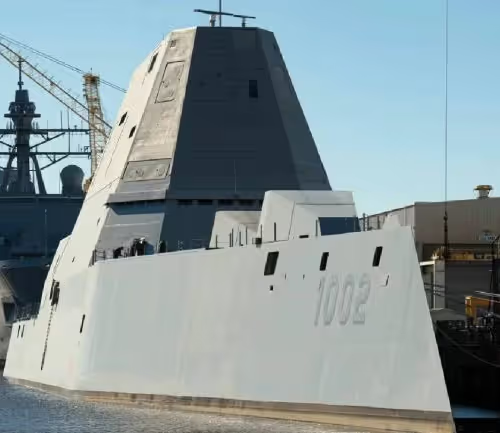
U.S. Navy to Begin Testing for USS Lyndon B Johnson (DDG 1002)
By Naval-Technology
Marine Corps Moves To Expand Maven Smart System Account Access
By DefScoop
Navy F/A-18 Spotted With New AIM-174B And AIM-260 Long-Range Missiles
By TWZ
Pentagon’s 6th Generation Stealth Fighter Will Control Drone Swarms
By Warrior M.
Air Force Needs 1,509 Combat-Ready Jets by 2035
By Michael Marrow, Breaking Defense