
U.S. Space Force
RealClear Context
Click below to continue reading this story, discover more U.S. Space Force stories from over 25 years of RealClear archives, or follow this topic to stay in the know.
When the Network Goes Dark, Who Controls the Battlefield?
The Pentagon must account for who controls access, what restrictions govern use, and whether missions can continue when those conditions change....
6h agoRead it on RealClearDefense
When the Network Goes Dark, Who Controls the Battlefield?
Ukraine’s military encountered an unusual vulnerability in its satellite communications this October. Certain drones equipped with Starshield terminals lost connectivity when traveling faster than 160 kilometers per hour. The equipment had not been destroyed, and the network remained operational. A service restriction prevented the terminals from maintaining their connections at higher speeds.[1]
The limitation disrupted Ukrainian drone operations, including attempts to intercept Russian drones. Ukrainian officials said the restriction appeared without warning and began discussions with SpaceX and the U.S. government to restore the affected capability. The decision-making process remains disputed. SpaceX chief executive Elon Musk has maintained that the U.S. government controls Starshield operations, while President Donald Trump denied ordering the restrictions.[1]
Inside the Pentagon, the Pressure Is On To Find a Home for a New Spaceport
Space Force considering options: public-private, federal installation, state land....
3d agoRead it on Ars TechnicaU.S. Military Gives Elon Musk’s SpaceX Access to Sensitive Tracking Data
This gives the company an advantage in tracking objects in orbit, raising national security concerns and fears of greater control over the space...
4d agoRead it on The GuardianSpace Force’s Commercial Augmentation Space Reserve (CASR) Initiative
Space Systems Command officials said the contracts are an initial step for the Commercial Augmentation Space Reserve (CASR) initiative, and don't...
4d agoRead it on Breaking DefenseSpace Force Shifts Into High Gear on Cislunar Warfare
Gen. Stephen Purdy, the Space Force’s portfolio acquisition executive for advanced programs, said the service wants to field cislunar capabilities by...
1w agoRead it on Breaking Defense
Faster Simulations, Better Defense Decisions
Every system the U.S. military fields carries a line item that never appears in a budget justification book. No program office tracks it, and no auditor asks about it. It is the cost of the analysis that was never run.
In mission-critical engineering, teams face a choice they rarely say aloud: fast or accurate. A single high-fidelity simulation of a complex physical system can take days or weeks. One aircraft component can require on the order of 10,000 simulations to understand across its operating conditions, and an aircraft has millions of components that all have to work together.
SDA Transport Satellite Constellation Grows Larger As Integration Lags
With more than 80 satellites aloft, the U.S. Space Development Agency faces an integration challenge as future users count on the forthcoming mesh...
1w agoRead it on Aviation Week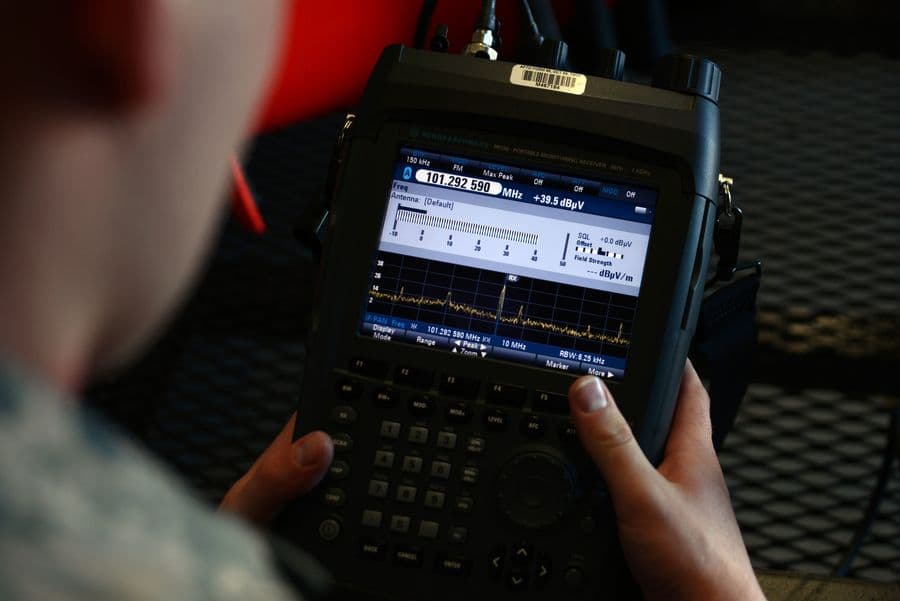
Don't Let a Commercial Space Grab Put American Aviation at Risk
The Trump Administration deserves credit for its National Space Transportation Policy, which calls for more than 1,000 U.S. launches and reentries a year by 2030, cementing American leadership in space for a generation. The Federal Communications Commission (FCC) is right to ask what it will take to get there, including the radio spectrum that rockets and aircraft depend on for communications, tracking and telemetry.
However, buried inside this same review is a petition that has nothing to do with expanding opportunity, and everything to do with a land grab. A commercial space trade group, the Commercial Space Federation (CSF), is petitioning to dismantle the longstanding coordination system used to manage spectrum for flight testing of America’s fighters, bombers, missiles, passenger jets, and advanced air mobility systems. The FCC should reject this petition outright.

The First Test of Peace Lies in Ukraine's Borderlands
By Dennis T. Cosgrove • RealClearDefense
The VFW’s Gambling Addiction Victimizes Veterans
By Jack Yoest • RealClearDefense
Superintelligence Exposes a Gap in the Law of Delegated Authority
By Sue Ghosh Stricklett • RealClearDefense
When the Network Goes Dark, Who Controls the Battlefield?
By Jonathan K. Corrado • RealClearDefense
We Cannot Build Tomorrow's Weapons With Yesterday's Alloys
By Joseph F. Krause • RealClearDefense
When the Network Goes Dark, Who Controls the Battlefield?
By Jonathan K. Corrado • RealClearDefense
Air Force Should Buy 250 Blended-Wing Tankers, as 2027 Demo Looms
By A&SF Mag.
Long Deployments to Be Navy Standard For Next Couple Years
By Mongilio, USNI NewsWhen the Network Goes Dark, Who Controls the Battlefield?
By Jonathan Corrado, RCD
Marines Deploy Neros Archer Drone in Live Fire Exercise for First Time
By USNI News