
Sea (Maritime, Naval Operations)
RealClear Context
Click below to continue reading this story, discover more Sea (Maritime, Naval Operations) stories from over 25 years of RealClear archives, or follow this topic to stay in the know.
Nonlethal Weapons Bridge the Gap
Asymmetric tactics present a challenge to U.S. and allied maritime forces seeking to defend home waters, as well as navigate globally in a free and...
11/09/17Read it on Proceedings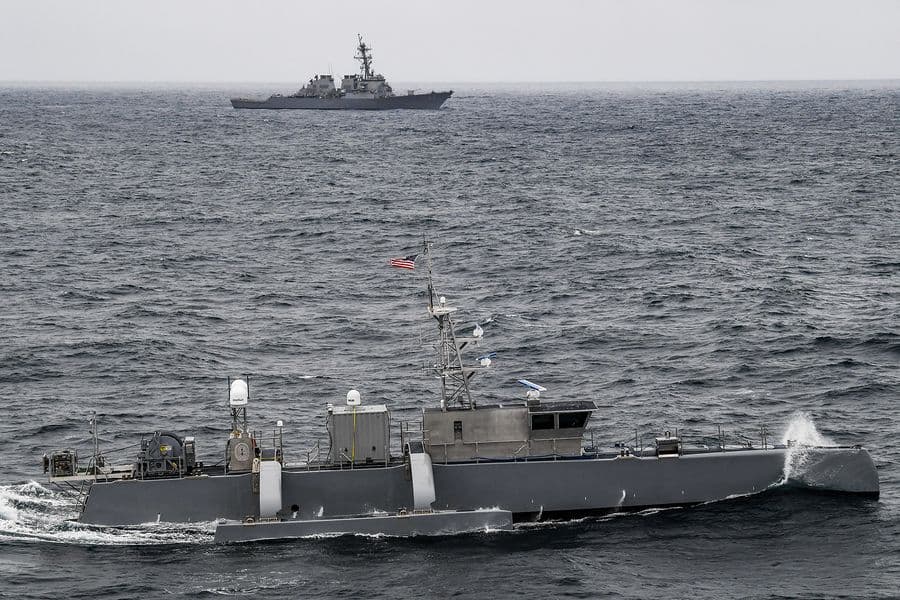
Not Like the Old Days: Modern Sea Control Will Be Episodic and Local
A new combination of surveillance, drones and precision strike is eroding the old assumption that navies could generate sea control through superior ships, vessels, aircraft and operational skills alone. Geography still matters, but the new combination of systems exploits it to compress manoeuvre space, shorten warning time and make maritime operations more exposed and risky.
Increasingly, we will see not classic sea control – exerted by a largely unchallenged navy for long durations and over wide areas – but something far more intermittent, contested and geographically constrained.
Not Like the Old Days: Modern Sea Control Will Be Episodic and Local
A new combination of surveillance, drones and precision strike is eroding the old assumption that navies could generate sea control through...
2w agoRead it on The Strategist (ASPI)Why the U.S. Navy Needs Escort Carriers
To deter China in the Pacific, the U.S. Navy needs a force of smaller, specialized, and more agile aircraft carriers.
3w agoRead it on The National InterestVIDEO: Former U.S. Frigate Sunk in Exercise with U.S., Royal Navies
Austal, AUKUS and an Ownership Mud Wrestle
Hanwha brings technical excellence to shipbuilding, which is an obvious benefit to Australia and the U.S.. But naval programs, particularly nuclear...
3w agoRead it on Strategic Analysis Australia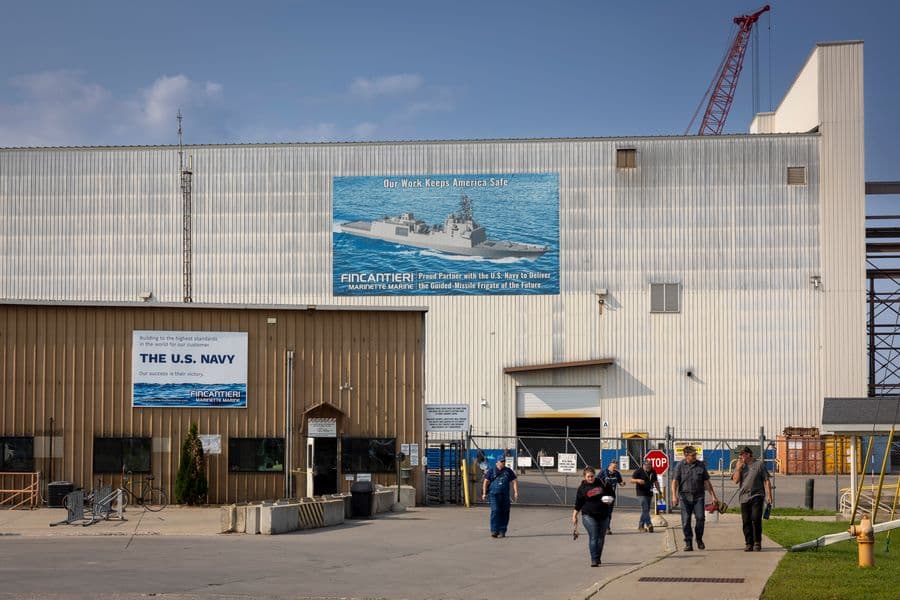
To Build Golden Fleet Frigate Fast, Two Shipyards are Needed
In 1798, while at war with France, an exasperated British Lord Nelson exclaimed, “Were I to die at this moment, ‘want of frigates!’ would be stamped on my heart.” It’s a perennial problem: Frigates formed the backbone of navies in Nelson’s time and do so today as well, and there seldom seems to be enough. The U.S. Navy’s ambitious Golden Fleet shipbuilding plan aims to fill a frigate gap but will require shipyard capacity that today the nation lacks.
The Navy’s 2026 shipbuilding plan plans a fleet of 66 frigates. By 2031, two Constellation-class frigates are to be completed at the Marinette, Wisc. shipyard and a modified U.S. Coast Guard National Security Cutter at the Ingalls, Miss. shipyard. But to meet the Navy’s goal, a sustained delivery of more than three frigates per year will be needed by 2037. Such a production schedule is unlikely with one shipyard, and the plan all along was to have two frigate-producing shipyards.

The Services Do Not Need a Four-Star Autonomous Warfare Command
By Steven Wills • RealClearDefense
Honor Them While There Is Still Time
By Jeffrey Rosales • RealClearDefense
From Siberia to Fairford: How Operation Spider’s Web Has Changed the Rules of Airpower
By Frank A. Rose • RealClearDefense
Faster Simulations, Better Defense Decisions
By Rut Lineswala • RealClearDefense
Will HASC Have an Oversight Subcommittee in the Next Congress?
By Christopher J. Bright • RealClearDefense

Hegseth Barred Trans Troops. Military Boards Are Rejecting Those Orders.
By NYT
Closing the Sea: Lessons from Ancient Mediterranean Blockades
By DeCasien, CIMSECFrom Siberia to Fairford: How Operation Spider’s Web Has Changed the Rules of Airpower
By Frank A. Rose • RealClearDefenseFaster Simulations, Better Defense Decisions
By Rut Lineswala • RealClearDefense
Bombers Could Have a Major Air-to-Air Combat Role
By Joseph Trevithick, The WarZone