
Military Strategy
RealClear Context
Click below to continue reading this story, discover more Military Strategy stories from over 25 years of RealClear archives, or follow this topic to stay in the know.
Falling into the Adaptation Gap
Is the U.S. military adaptable enough to prevail in the wars of the 21st century?We've spent the last four years thinking about this question,...
09/29/20Read it on War on the RocksIs Mission Command Dead?
How Transparent is the Modern Battlefield?...
4h agoRead it on Warfare Mastery InstituteFour Principles to Lift the Academic Fog Around War
When evaluating how technological changes affect the conduct of warfare, caution is essential....
4h agoRead it on The National InterestChecklist for Modern Conflict Readiness
Modern security environments are characterized by rapidly evolving threats that can shift from covert pressure to open conflict with minimal...
1d agoRead it on RealClearDefense
Checklist for Modern Conflict Readiness
Modern security environments are characterized by rapidly evolving threats that can shift from covert pressure to open conflict with minimal indicators of escalation. Ensuring strategic readiness requires a framework that enables timely decision‑making, resilience of critical infrastructure, coordinated action among allies, and the ability to mobilize national resources without delay. The structure presented in this document provides a concise outline of priority directions; it does not represent the sequence in which these measures must be implemented, as many of them can be pursued simultaneously depending on available resources and operational priorities. Each direction can be expanded into detailed planning guidance for both individual states and coalitions of states, forming a unified basis for preparing for potential large‑scale conflict and countering covert escalatory behavior.
When Presidents Fight the Last War
In Bryan Groves’s laudable exposition, he focuses on one of the toughest problems facing an American president: when to escalate or terminate a...
5d agoRead it on Military ReviewIn Pursuit of Nuclear Abolition
We have had the last seven Presidents advocate for either major reductions in nuclear weapons or their near abolition, but almost no analysis has...
5d agoRead it on RealClearDefenseWhen Strategic Options Share the Same Weakness
As America marks 250 years of independence and commemorates the 245th anniversary of the British surrender at Yorktown, that victory remains one of...
5d agoRead it on RealClearDefense
In Pursuit of Nuclear Abolition
We have had the last seven Presidents advocate for either major reductions in nuclear weapons or their near abolition, but almost no analysis has been forthcoming as to what reductions have secured for U.S. security, and whether one should try practically to get to or toward abolition. When such an analysis is completed, the maze of contradictions in the arguments for complete abolition became apparent as does the troubling impact such abolition narratives have on the current nuclear strategic balance including arms reductions.
It is true that even before the use of atomic weapons against Japan ended World War II, there were those who wished nukes could be banned altogether. After August 1945, and absent abolition, there were calls for such weapons and all uranium mining and research to be controlled by a UN organization under what was known as the 1946 Baruch Plan. All nations would allow inspections by a UN authority to ensure nuclear activity was peaceful. The U.S. would unilaterally give up its nuclear capability while Russia promised they would do so some time in the future.

The Revolutionary War: When Strategic Options Share the Same Weakness
As America marks 250 years of independence and commemorates the 245th anniversary of the British surrender at Yorktown, that victory remains one of the Revolution’s clearest examples of a military success producing a decisive strategic outcome. It also offers a less obvious lesson for modern leaders thinking about war and strategy. Having several options on paper does not always mean having several independent ways forward.
Engineers face a similar problem when redundant systems that appear independent share the same vulnerability. Three backup generators may look reassuring until the same flood reaches all three. Each may work exactly as designed and still provide no real redundancy against that shared hazard. Engineers call the resulting loss of multiple systems from a shared cause a common-cause failure—a failure that can undermine the protection that redundancy is supposed to provide.
Project Meridian To Take On Major Foundational Changes for the Military
The Pentagon's newly announced Future of Warfare initiative will aim to fundamentally transform U.S. military doctrine and deliver a blueprint for...
6d agoRead it on The Washington Times
Trump's Disrupt First, Negotiate Second: Greenland in Focus
By Meda Parameswara Reddy • RealClearDefense
In Seeking Peace With Beijing, Taipei Is an Asset, Not a Burden
By Alexandru Filip • RealClearDefense
Strike First: Israel's Inevitable Doctrine for the Iranian Axis
By Lance Gordon • RealClearDefense
It’s Not President Trump but Thomas Friedman Who Should Be Ashamed
By Francis P. Sempa • RealClearDefense
Putin, Plague, and America’s Biodefense Gap
By Ryan Kane • RealClearDefense

U.S. and Japan Begin Naval Exercises Near Taiwan
By Mari Yamaguchi • Associated PressU.S. and Japan Begin Naval Exercises Near Taiwan
By Mari Yamaguchi, AP
U.S. Navy, Gecko Robotics Surge AI Maintenance Contract
By Ceder, Simkins, Navy T.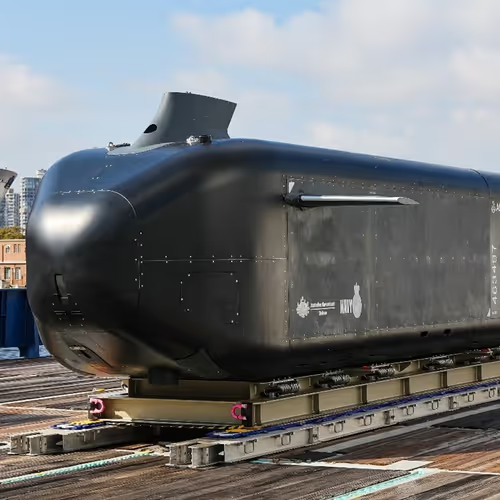
Ghost Shark XL-AUV Payload Bay Seen For First Time
By Thomas Newdick, The WarZone
Dakota Meyer Tapped As Barracks Task Force Senior Advisor
By C. Stassis, MC Times