
Critical Minerals
RealClear Context
Click below to continue reading this story, discover more Critical Minerals stories from over 25 years of RealClear archives, or follow this topic to stay in the know.
Will China Win the Race for Seabed Riches?
It turns out another large, seagoing nation is firmly ensconced on the cutting edge of deep-seabed mining: China. Why has America's big rival...
10/30/23Read it on BloombergThe Missing Critical Minerals Investment
To Catch Up to China, America and Its Allies Must Dig...
6d agoRead it on Foreign AffairsEnding China’s 60-Year Grip on Critical Minerals
The U.S. and Europe allowed China to corner the market in critical minerals that enable modern life. Now, they must work together to secure a supply...
1w agoRead it on CEPA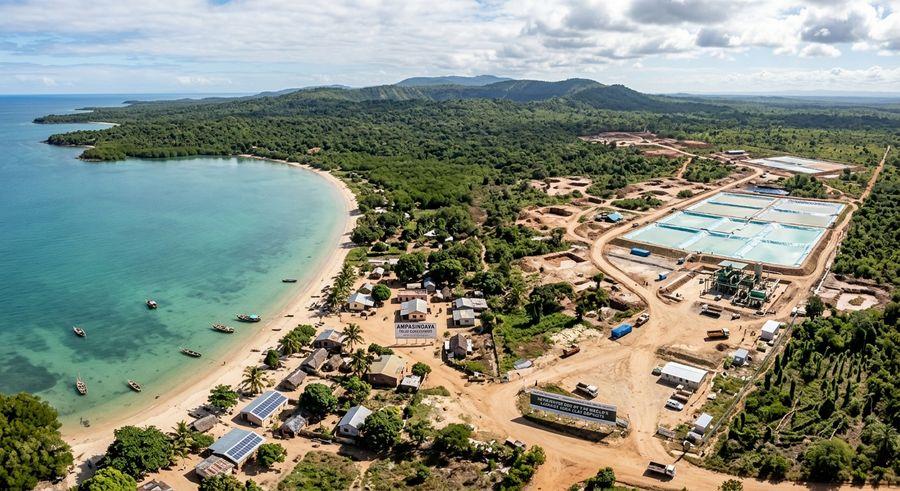
Mining Is Not a Supply Chain
On July 22, 2026, the Australian mining company Harena announced it had signed a Project Development Funding Agreement with the U.S. International Development Finance Corporation (DFC) for up to $4.84 million. The money will fund permitting, environmental and social studies, laboratory work, and pilot-plant development at Ampasindava, a rare-earth deposit on the northwest coast of Madagascar. On paper, American capital backing a non-Chinese source of the minerals needed for everything from fighter jets to wind turbines is a great success, but zooming on the deal exposes critical oversights in Washington’s strategy.
The United States is increasingly backing African critical-mineral projects to reduce its dependence on China. But Ampasindava shows why securing access to ore is not the same as securing access to usable rare-earth materials. Washington is addressing the former much faster than the latter.
Mining Is Not a Supply Chain
The Weak Link in America's Rare-Earth Strategy in Africa
10/13/26Read it on RealClearDefenseChina's Sneak Attack on the Battery American Taxpayers Paid For
Technology that is developed with U.S. taxpayer money should be manufactured in America, not China.
10/06/26Read it on The National InterestWhy the Pentagon Just Dropped $450M on Tungsten Mining

America's Freedom to Slow AI Is Priced in Magnets
For a week in May 2025, Ford stopped building Explorers in Chicago because it could not get rare-earth magnets. China had restricted their export the month before. Two months later, Washington moved to resume sales to China of Nvidia's H20 AI chip, which it had restricted in April. Commerce Secretary Howard Lutnick tied the reversal to the rare-earth negotiations: "We put that in the trade deal with the magnets." An AI-chip restriction and a car part had been exchanged for each other. That trade, not the state of the technology, is the real test for anyone who wants America to slow the development of its most advanced AI systems.
In September, Anthropic Chief Executive Dario Amodei argued for pacing advances in frontier AI so that safety work has time to catch up. An extra year or two, he suggested, could help. Progress would not stop; its leading edge would be held back. But the proposal is feasible only if America keeps its lead over China, and America keeps its lead partly through restrictions on advanced chips, chipmaking equipment, and access to computing power.
Partnering With the Taliban
A Mutual Benefit Agreement
09/29/26Read it on RealClearDefenseAmerica's Freedom to Slow AI Is Priced in Magnets
Having a lead and keeping the policies that protect it are different problems, and they run on different clocks
09/29/26Read it on RealClearDefense
Memory Chip Shortage Requires Investment and Teamwork
Artificial intelligence (AI) data centers are popping up across the country. The AI infrastructure buildout is critical to our economy, our technological leadership, and our national security, and the Trump administration is right to encourage historic investments in America’s future. But as we build, Washington and industry need to address a fast-emerging constraint that could slow that progress and raise costs for American families: a shortage of memory chips.
Graphics processing units (GPUs) and central processing units (CPUs) from Nvidia and other chipmakers are the central brains of an AI system. But they need to be surrounded with large volumes of memory chips to do their work. Memory chips are also used in virtually every piece of electronics, including laptops, smartphones, home routers, and of course the large servers that go into AI data centers. The shortage of memory chips has emerged as the largest bottleneck for the AI buildout.

The Gulf of Finland’s Forgotten Islands
By Ben Poulin • RealClearDefense
NATO’s New Spending Pledge Must Buy Real Energy Resilience
By Chuck Dockery • RealClearDefense
The Army Needs a Data Logistics Discipline Before the Next Surge
By Steve Ferenzi • RealClearDefense
2949 Marine Prisoners, Hostages, and Peacetime Governmental Detainees Since Our Corps' Founding
By Jon Couch • RealClearDefense
America Must Win the Biotech Race Against China
By Rob Maness • RealClearDefense

U.S. Air Force To Arm C-17 Cargo Aircraft With Cruise Missiles
By C. Jones, Defence Blog
How Marine Vet Ernest Langdon Became a Renowned Shooter & Gunsmith
By WATM
In First, Two CCAs Fly Air Combat Maneuvers Using Autonomy Software
By A&SF
Space Force Launches Mission Operations Center
By Jon Harper, DefenseScoop
Pentagon Mulls Placing Fleet of Military Satellites Around the Moon
By Ars Technica