
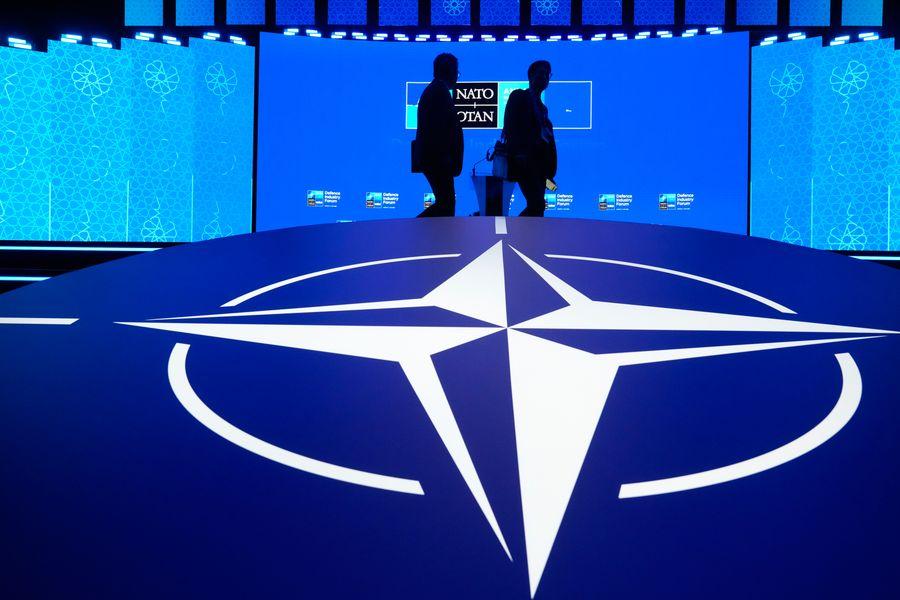
NATO’s New Spending Pledge Must Buy Real Energy Resilience
Last updated 04:23 AM EST • Read time: 7m
Join the Conversation
0Ukraine has shown that the power grid, fuel network, and people who keep them running are part of the battlefield.
When NATO leaders agreed at The Hague in 2025 to a new defense investment target, the headline was 5 percent of GDP. But one of the most consequential parts of that commitment sits outside traditional military spending: up to 1.5 percent of GDP for critical infrastructure, networks, civil preparedness, resilience, innovation, and the defense industrial base.
That money could become one of the Alliance’s most important security investments of the next decade. Energy should be at the center of that effort. Our recent Atlantic Council report titled, “Connecting Capital to Capability: An energy security investment framework to optimize the NATO 1.5 percent investment commitment,” highlights the necessity of doing so and the pathway to accomplishing this under a new investment framework.
The lessons learned from war are legion. Russia’s war against Ukraine has painfully demonstrated that a modern energy system is not simply economic infrastructure. It is part of a nation’s capacity to fight, endure, recover, and continue governing under attack. Ukraine’s experience points to a straightforward lesson for NATO: energy resilience is an essential defense capability.
Russia began probing Ukraine’s energy vulnerabilities years before the full-scale invasion, including the 2015 cyberattack that cut power to over 200,000 people. Since 2022, the campaign has become kinetic and sustained. Ukraine’s Ministry of Energy recorded approximately 4,500 strikes on energy infrastructure in 2025 alone. Generation plants, substations, transformers, fuel facilities, and gas infrastructure have all become targets.
Ukraine has survived because it has smartly adapted. Engineers rerouted and repaired electricity capabilities when critical transmission nodes were destroyed by Russian attacks. Distributed generation and microgrids reduced dependence on concentrated assets. Dispersed and hardened gas storage proved difficult to disable. Repair crews repeatedly restored systems under attack.
These are not merely Ukrainian wartime improvisations. They offer a blueprint for NATO energy resilience built around three priorities.
First, NATO needs energy systems that are harder to break. That means reinforcing and better interconnecting Europe’s grid while reducing single points of failure. Grid-enhancing technologies can increase the capacity of infrastructure that already exists. Smart-grid systems can identify faults and reroute power rapidly. Microgrids, long-duration storage, distributed generation and nuclear power can provide diverse and dispatchable electricity while making it harder for an adversary to achieve strategic effects by striking a handful of facilities. Physical hardening must be matched by cybersecurity as an increasingly digital grid creates a larger attack surface.
Second, NATO needs logistical depth. The Alliance has spent decades thinking about military fuel, but the energy system supporting civilian society and military operations is broader than fuel alone. Europe faces vulnerable import infrastructure, gaps in fuel distribution and long lead times for critical grid equipment. Transformer lead times, for example, are now measured in years.A resilience strategy should therefore include dispersed and protected stocks of transformers, switchgear, and other critical repair equipment. Multiyear procurement could simultaneously build reserves and give manufacturers the demand certainty needed to expand production. This is an excellent space into which the U.S. and Canada can invest, as it exploits the tyranny of distance.
The same logic applies to fuel. Europe’s shift away from Russian pipeline gas has increased the strategic importance of LNG terminals, ports, pipelines, storage, and sea lanes.Recent attacks and sabotage affecting Baltic infrastructure demonstrate that cables, pipelines, and coastal infrastructure now sit squarely within the security problem. NATO’s energy resilience therefore extends from the North American continent to the eastern flank, and beneath the sea.
Third, NATO needs to invest in people and organization, not just hardware. Ukraine’s grid has remained functional because trained crews can repair what is destroyed. Yet much of Europe’s mutual-assistance architecture was designed for storms and accidents, not sustained wartime attacks. Utilities need standing cross-border agreements allowing crews and heavy equipment to move rapidly during conflict. Member states should fund reserve repair teams and training pipelines, while energy operators should participate routinely in NATO exercises alongside military planners.
None of this requires NATO to become an energy regulator or infrastructure bank. The European Union and national governments already possess many of the regulatory and financing authorities needed to build these projects. NATO’s unique role is different: it can define the security requirement and establish what qualifies as resilience investment. That makes governance of the 1.5 percent commitment crucial.
NATO’s Energy Planning Group, working through the Resilience Committee, should establish a common standard for what counts. The test can be straightforward: Spending should close an identified resilience gap; public money should address a need the private market will not meet, or will meet too slowly; and governments should receive credit when money is actually spent, rather than when projects are announced.
Resilience is also a network property. A hardened substation in one country may protect electricity flows relied upon by several others. A transformer stockpile in another may restore infrastructure hundreds of miles away. LNG infrastructure on Europe’s Atlantic coast can sustain economies and military operations farther east. NATO should therefore allow members to count qualifying investments they fund anywhere in the Alliance and encourage member state governments to do the same.
Public capital should then be matched to the maturity of the capability. Mature infrastructure may need targeted support to unlock private investment. Near-commercial technologies such as long-duration storage, microgrids and advanced nuclear may require financing that reduces early deployment risk. Higher-risk technologies may warrant research and demonstration funding. The objective is not to favor particular technologies. Rather, it is to direct scarce public money toward capability gaps markets alone will not close.
NATO should be commended for its initial progress. In September, it announced the beginning of its implementation of baseline resilience requirements, emphasizing actions to ensure reliable access to energy and respond to disruptions. And its non-core defense and security related investments indicated that 17 allies are predicted to meet their 1.5 percent goal for 2026. This is a strong start that must be cultivated for maximum positive impact.
The planned 2029 review of NATO’s new spending commitment provides a natural deadline to help drive progress. By then, the Alliance should be measuring more than percentages of GDP. It should be able to point to stronger cross-border grids, distributed and hardened generation, protected cyber systems, strategic equipment reserves, resilient fuel infrastructure, trained repair capacity, and civil-military plans that have been exercised rather than merely written.
Ukraine has paid dearly to demonstrate what happens when an adversary treats energy infrastructure as both a weapon and a target. NATO has the advantage of learning those lessons before its own infrastructure is tested at scale.
The purpose of the 1.5 percent commitment should be to convert capital into needed capability. The true measure of success is whether their societies, and the military forces that depend on them, can keep operating when their infrastructure comes under attack.
Colonel Chuck “Chim Chim” Dockery (U.S. Marine Corps, ret.) is a 29-year veteran of the U.S. Marine Corps, the former Commanding Officer of Marine Corps Air Station Miramar, and an account executive with Verkada.
Joel C. Spangenberg served as a Surface Warfare Officer (Nuclear) in the U.S. Navy, held high-level leadership roles in the federal government as a member of the Senior Executive Service, and is the founder of Severn Readiness LLC.
Thomas Winter is a veteran of U.S. Army Special Forces, volunteers in several veterans and energy organizations, and is an associate with Lazard. All serve as Atlantic Council Veterans Advanced Energy Fellows.
The Gulf of Finland’s Forgotten Islands
By Ben Poulin • RealClearDefense
NATO’s New Spending Pledge Must Buy Real Energy Resilience
By Chuck Dockery • RealClearDefense
The Army Needs a Data Logistics Discipline Before the Next Surge
By Steve Ferenzi • RealClearDefense
2949 Marine Prisoners, Hostages, and Peacetime Governmental Detainees Since Our Corps' Founding
By Jon Couch • RealClearDefense
America Must Win the Biotech Race Against China
By Rob Maness • RealClearDefense
U.S. Air Force To Arm C-17 Cargo Aircraft With Cruise Missiles
By C. Jones, Defence Blog
How Marine Vet Ernest Langdon Became a Renowned Shooter & Gunsmith
By WATM
In First, Two CCAs Fly Air Combat Maneuvers Using Autonomy Software
By A&SF
Space Force Launches Mission Operations Center
By Jon Harper, DefenseScoop
Pentagon Mulls Placing Fleet of Military Satellites Around the Moon
By Ars Technica