
Indo-Pacific/Asia
RealClear Context
Click below to continue reading this story, discover more Indo-Pacific/Asia stories from over 25 years of RealClear archives, or follow this topic to stay in the know.
The State of the South China Sea
Major developments in the South China Sea in 2024 do not augur well for 2025.
01/28/25Read it on The DiplomatMissile defence: Australian military’s $10 billion plan
After watching Russia bombard Ukrainian civilians and cities for 4.5 years with ballistic missiles and drones, and seeing Iran do the same to US...
10h agoRead it on Strategic Analysis AustraliaHow the Quad Can Work With Southeast Asia
The Quad has more policy space to undertake maritime security activities than its members’ policymakers have assumed. Our recent study, published on...
10h agoRead it on The Strategist (ASPI)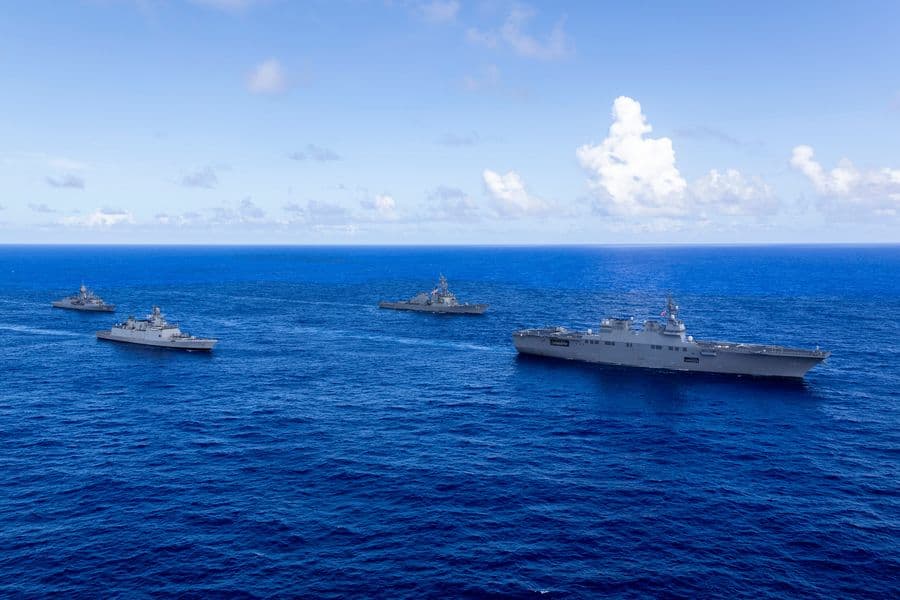
How the Quad Can Work With Southeast Asia
The Quad has more policy space to undertake maritime security activities than its members’ policymakers have assumed. Our recent study, published on 13 October by the Hoover Institution at Stanford University, shows that Quad partners could expand security activities if they were to concurrently deliver benefits to Southeast Asian states, experiment with creative configurations of participation, and take advantage of fleeting opportunities in regional political relations.
Regional views should be investigated, not assumed. For good reason the Quad – the informal grouping comprising Australia, India, Japan, and the United States – has consistently sworn that it doesn’t seek to supplant the Association of Southeast Asian Nations (ASEAN) as the region’s primary international organisation or otherwise rattle Southeast Asian countries that fear intensifying security rivalry between the US and China. But every Southeast Asian country views the Quad’s security activities through the prism of its own distinct national interests. Their perceptions are not automatically opposed to Quad military activities, nor are they uniform across countries.
Missile defence: Australian military’s $10 billion plan
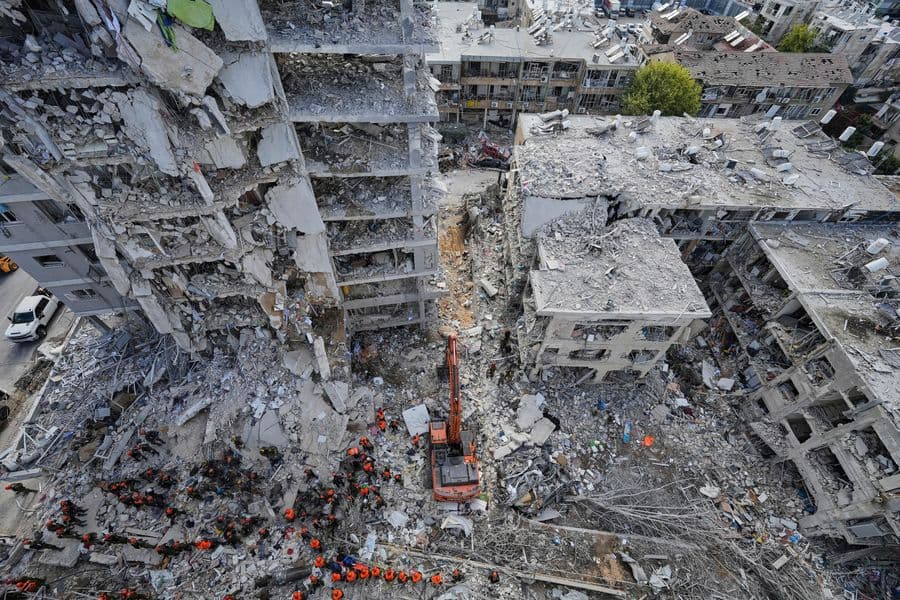
After watching Russia bombard Ukrainian civilians and cities for 4.5 years with ballistic missiles and drones, and seeing Iran do the same to US bases and Gulf State populations in the Middle East, Australia’s military has started to take missile defence and countering long range drones seriously.
That’s good, because we know – because people like Defence Minister Marles have told us – that China’s military has plenty of ballistic missiles and long range drones capable of reaching Australia whether launched from the Chinese homeland or from various PLA ships, submarines and planes.
With China in Mind, Japan Eyes More Realistic Joint Military Exercises
Japan and the United States are looking to ramp up their joint military drills, making them even more realistic...
1d agoRead it on The Japan TimesPulling Back to the Second Island Chain Would Be Strategic Folly
The case against a recent proposal to fundamentally reshape the U.S. military posture in East Asia...
2d agoRead it on Responsible StatecraftJapan, Australia, U.S. Should Build a Second-Island-Chain Air Bridge
Japan and Australia, with the United States and other partners, should build an air bridge between them in peacetime. This would be a set of regular...
2d agoRead it on The Strategist (ASPI)U.S. Army Pacific Plans for Possibility of War Over Taiwan Next Year
U.S. Army Pacific has prepared the Indo-Pacific theater under the assumption that China will have the capacity — and possibly the intent — to seize...
2d agoRead it on Stars and StripesOPCON: Washington Wants Flexibility, Seoul Wants Control
A South Korean push for operational control won’t give it a say over how the U.S. uses its forces beyond the Peninsula. Lieutenant General Joseph...
2d agoRead it on The Interpreter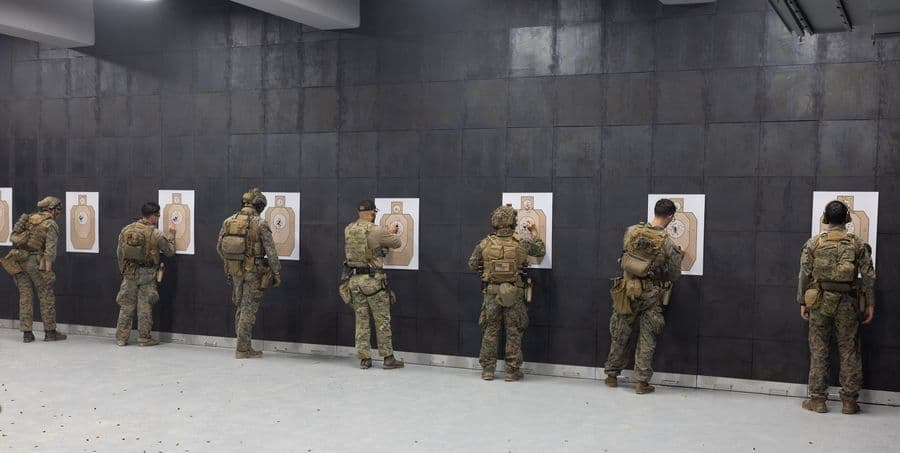
OPCON: Washington Wants Flexibility, Seoul Wants Control
Lieutenant General Joseph Hilbert, commander of the US 8th Army in South Korea, recently argued that it would be “irresponsible” for American troops stationed on the Korean Peninsula to focus exclusively on threats there. While reaffirming Washington’s commitment to defending South Korea, Hilbert stressed that U.S. forces must remain prepared for missions beyond the Peninsula. His remarks revived a longstanding debate over the strategic flexibility of U.S. Forces Korea (USFK), which gained prominence when Washington redeployed approximately 3,600 U.S. troops from South Korea to Iraq in 2004, raising concerns about both weakened deterrence and unwanted involvement in overseas conflicts.
Is It Déjà vu All Over Again: The 2012 Report on Global Zero
By Peter Huessy • RealClearDefense
As Private Investment Pours Into Defense, the Clock Is Ticking
By Elaine McCusker • RealClearDefense
The First Test of Peace Lies in Ukraine's Borderlands
By Dennis T. Cosgrove • RealClearDefense
The VFW’s Gambling Addiction Victimizes Veterans
By Jack Yoest • RealClearDefense
Superintelligence Exposes a Gap in the Law of Delegated Authority
By Sue Ghosh Stricklett • RealClearDefense
When Your Navy is too Small, the Bill Comes Due Bigly
By CDR Salamander
Quo Vadis MCU?
By Marine Corps Compass Points
When the Network Goes Dark, Who Controls the Battlefield?
By Jonathan K. Corrado • RealClearDefense
Air Force Should Buy 250 Blended-Wing Tankers, as 2027 Demo Looms
By A&SF Mag.
Long Deployments to Be Navy Standard For Next Couple Years
By Mongilio, USNI News