
Military Strategy
RealClear Context
Click below to continue reading this story, discover more Military Strategy stories from over 25 years of RealClear archives, or follow this topic to stay in the know.
The Unpopular Ones Who Were Right
Maneuver Warfare, Mission Command, and the Strength of Character That Institutions Punish—Until History Vindicates It
09/22/26Read it on Donald Vandergriff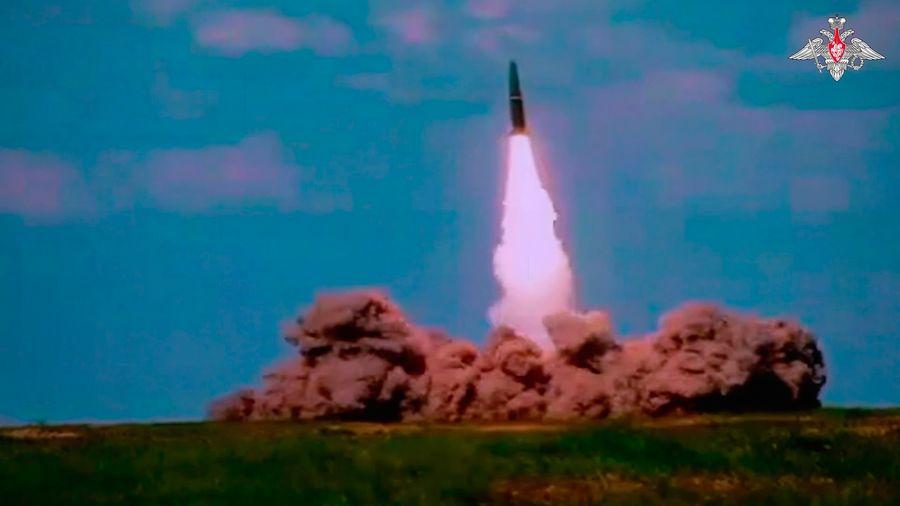
Don’t Be Swayed by Tactical Nukes
The Department of Defense, specifically under the direction of Undersecretary Elbridge Colby, is looking to increase the number of “tactical” nuclear weapons in America’s nuclear arsenal. Many hear “tactical” and think that these nuclear weapons aren’t so destructive, that they’re more usable than other nuclear weapons. The Department of Defense also aims to deploy more of these weapons throughout Europe. It’s seen as a go-between of putting US boot-on-the-ground or withdrawing from these continents entirely.
But tactical nuclear weapons aren’t the golden ticket to solve this dilemma, and the United States should refrain from adding more of them to its nuclear arsenal and should refrain from relying upon them for defense.
Don’t Be Swayed by Tactical Nukes
The Department of Defense, specifically under the direction of Undersecretary Elbridge Colby, is looking to increase the number of “tactical” nuclear...
Read it on RealClearDefenseRethinking Wargame Design and Analysis in the Modern Age
The U.S. Naval War College (NWC) recently hosted Global 21, the largest and most sophisticated wargame in its history in support of Commander, U.S....
Read it on CIMSECSuper Intelligence and the Distancing Effect
As prediction shortens the path from sensing to action, it creates distance....
Read it on War RoomWar for the Mind: Narrative Intelligence, AI & the Fight in the Cognitive Domain
The United States is actively losing a war it barely acknowledges....
19h agoRead it on Modern War Institute
The Mirror-Life Trap: When Deterrence Must Prevent Invention
Imagine a scientific breakthrough that could make a nation less secure even if it achieved it first. Now imagine two rival powers, each afraid the other might pursue it anyway. That is the strategic problem raised by the possibility of so-called "mirror life". Its danger lies not only in what an adversary might do with a novel organism, but in what competition itself might persuade otherwise cautious actors to create.
Mirror life does not exist today. It is a hypothetical form of life built from biological molecules that are the mirror images of those found in nature. The distinction involves what scientists call "chirality", or molecular "handedness". Consider your left and right hands. They have the same components but are arranged as mirror images and cannot be perfectly superimposed. Something similar occurs in biology. The proteins of living organisms are built almost exclusively from "left-handed" amino acids, while DNA relies on "right-handed" sugars. Mirror life would reverse these arrangements, potentially producing organisms whose molecular structures are fundamentally incompatible with those of life as we know it. Scientists have already created individual mirror-image biological molecules, but never a self-replicating organism. The danger is that certain mirror microbes might evade immune defenses and national biological controls that evolved to recognize ordinary organisms, thereby potentially allowing infections or ecological disruptions that would be difficult to contain. The likelihood and scale of these dangers remain uncertain at the moment.
The Mirror-Life Trap: When Deterrence Must Prevent Invention
Imagine a scientific breakthrough that could make a nation less secure even if it achieved it first....
1w agoRead it on RealClearDefenseThe Necropolitics of the Wasteland
The Strategic Obsolescence of Clausewitzian Occupation in the Twenty First Century...
1w agoRead it on RealClearDefenseDo American Forces in the First Island Chain Deter or Invite War?
After the deterrence failure that led to the Korean War, the United States recognized the necessity of forward presence to prevent war....
1w agoRead it on Modern War Institute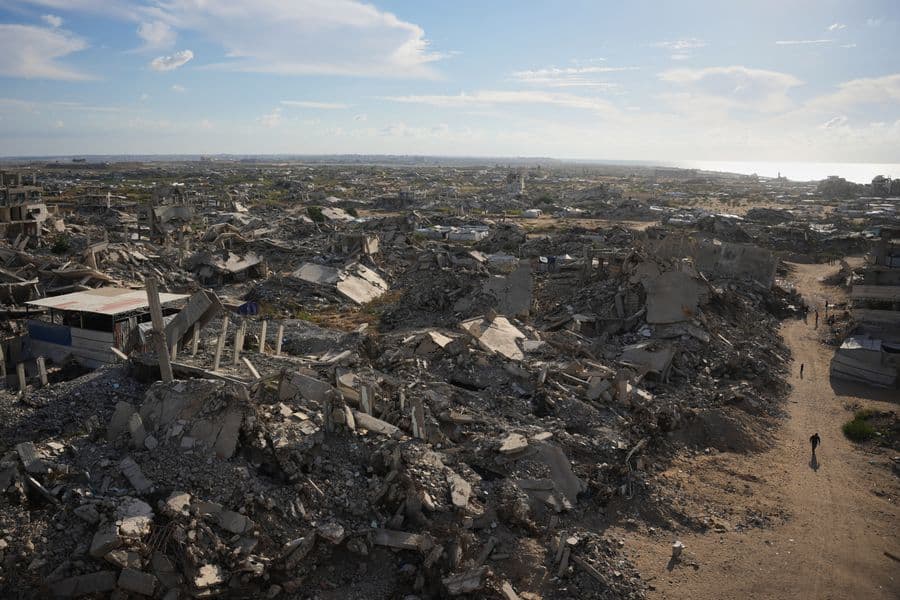
The Necropolitics of the Wasteland
Modern power can increasingly control an adversary’s resilience through remote warfare. Therefore, occupation is no longer necessary to impose and sustain a chosen reality and has become a strategically inefficient model of victory.

Don’t Be Swayed by Tactical Nukes
By Benjamin Giltner • RealClearDefense
How Seoul’s Break With Kyiv Serves Trump’s Russia Turn
By Sang Won Pyo • RealClearDefense
When the Grid Goes Down, the Mission Must Go On. Solar and Storage Can Help.
By John Szoka • RealClearDefense
Data and Communications Technology are the Hidden Keys to Success for Golden Dome
By Eric Velte • RealClearDefense
The Dual Threat: Why Beijing’s Collapse Is Just As Dangerous as Its Rise
By Efraín Vázquez-Vera • RealClearDefense

USS Stout Loses Power During Port Visit Due to ‘Engineering Casualty’
By USNI News
Air Force Lessons Learned From Operation Epic Fury
By Tabitha Reeves, National Defense
Marines Need Nine More Amphibious Warships To Carry Out Its Missions
By TWZ
AFRL, ACC Fly XQ-67A Drone To Test Autonomous Teaming
By Airforce Technology
F-35B Releases Meteor BVRAAM for the First Time
By Parth Satam, The Aviationist