
An Early North Korean Provocation Remembered
Last updated 05:51 PM EDT • Read time: 4m
TOKYO – A North Korean provocation, a U.S. President new to the job and untested, a show of force by a naval armada: a date pregnant with meaning. All point to a half-forgotten but seminal episode of the Cold War more than 40 years go that still resonates.
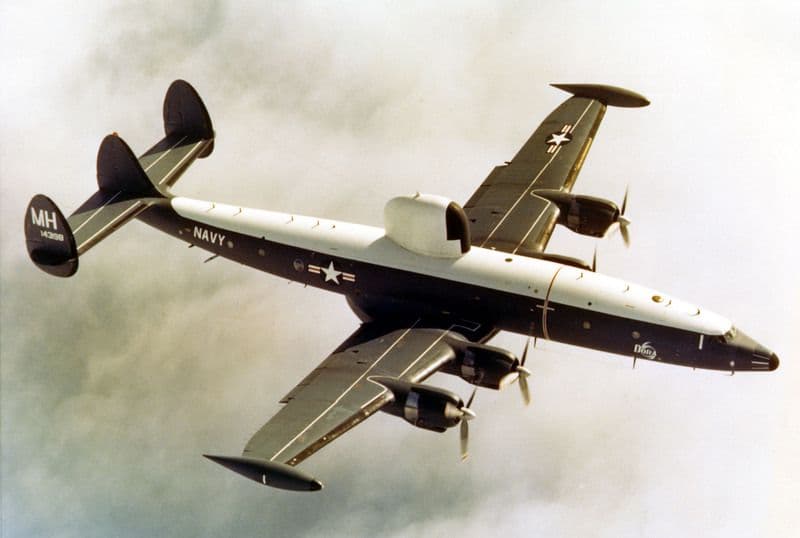
I was referring to the ambush and downing of a U.S. Navy EC-121 reconnaissance aircraft by two North Korean MiG-21s over the Sea of Japan on April 15, 1969. All 31 members of the crew perished in the attack, the largest aircrew lost during the Cold War.
The shoot down took place about 90 miles off the coast of North Korea well outside North Korea’s 12 nautical miles territorial waters. There was no warning, no effort to force the aircraft, a multi-engine military version of the Lockheed Constellation, to land at a Korean base.
It was nothing more than a cold-blooded ambush.
As today, the U.S. then had a rookie president. Richard Nixon had been in office for fewer than 100 days or almost the same number of days as President Trump. The attack was the first major crisis of Nixon’s presidency.
The president was presented with a series of “options,” including air attacks on major North Korean military targets. Air and naval units prepared for an anticipated order to attack.
After about a month of frenzied activity, they were ordered to stand down. There would be no retaliation. Nixon realized that none of the “options” were viable.
Nixon faced the same conundrum that bedevils policymakers to this day, namely: What kind of force could the U.S. use that would be tough enough to punish North Korea but not so tough that Pyongyang would consider it an invasion, requiring retaliation?
And remember, this was a time when possession of nuclear weapons and ballistic missiles were merely a gleam in the eye of supreme leader Kim Il-sung.
Nixon ordered a major naval show of force in the Sea of Japan built around four aircraft carriers and their escorts. But they withdrew and soon after he ordered that reconnaissance flights resume under fighter escort.
To this day nobody knows why Kim ordered the attack. There was nothing in the regional or world situation to suggest that this April 15 was any different from any other day (unless you consider that it was Kim’s 57th birthday).
In the first three months of 1969 leading up to the shooting incident, nearly 200 intelligence missions had been flown along the coast without incident or any sounding of alarm from Pyongyang.
In North Korea, the incident was trumpeted in the controlled press as a major victory against the imperialists. American reaction might be judged from the cover of Newsweek showing the silhouette of an airplane against the map of North Korea and the cover line; “The challenge from North Korea.”
However, in the decades that followed, there was never any repeat of the attack on Americans, save for the bizarre “ax murder” in 1976 which claimed the lives of two Americans on a tree-pruning detail in the Korean DMZ.
Of course, there would be other incidents directed at South Koreans, including the downing of a South Korean airliner with the loss of more than 100 passengers in 1987 and sinking of the South Korean Navy corvette Cheonan in March 2010.
Only three bodies and very little wreckage were ever recovered from the airliner. The Soviet Union sent two destroyers into the waters to help look for bodies (or possibly to recover some classified equipment). It was an indication that even then Pyongyang’s unpredictable provocations irritated its major allies.
There is no memorial to the 31 sailors and marine who lost their lives on that date. However, the naval contingent at Misawa Air Force Base, the American base closest to the Sea of Japan, holds a service every year. They bring a floral wreath to the beach and watch it drift out to sea.
They have been doing this every April 15 for 47 years.
Todd Crowell is the author of The Coming War Between China and Japan, published as an Amazon Single Kindle.

Putin, Plague, and America’s Biodefense Gap
By Ryan Kane • RealClearDefense
From Hormuz to the South China Sea: Defending Freedom of Navigation in Contested Waters
By David F. Lasseter • RealClearDefense
Checklist for Modern Conflict Readiness
By Sergey E. Ivashchenko • RealClearDefense
AUTOWARCOM Is Heading for a Command-and-Control Collision
By Michael Carvelli • RealClearDefense
The Unfinished Reform
By Mark W. Castillon • RealClearDefense
U.S. and Japan Begin Naval Exercises Near Taiwan
By Mari Yamaguchi • Associated PressFrom Hormuz to the South China Sea: Defending Freedom of Navigation in Contested Waters
By David F. Lasseter • RealClearDefense
National Guard Soldier Shot While Breaking Up Fight in Washington D.C.
By Military.com
‘No Marine Fights Alone’
By Gidget Fuentes, USNI News
Sea Services Weigh How to Embrace Autonomous, Attritable Tech
By Reeves, NatDef