
U.S. Spooks Chart a Steady Course
Last updated 05:02 PM EDT • Read time: 4m
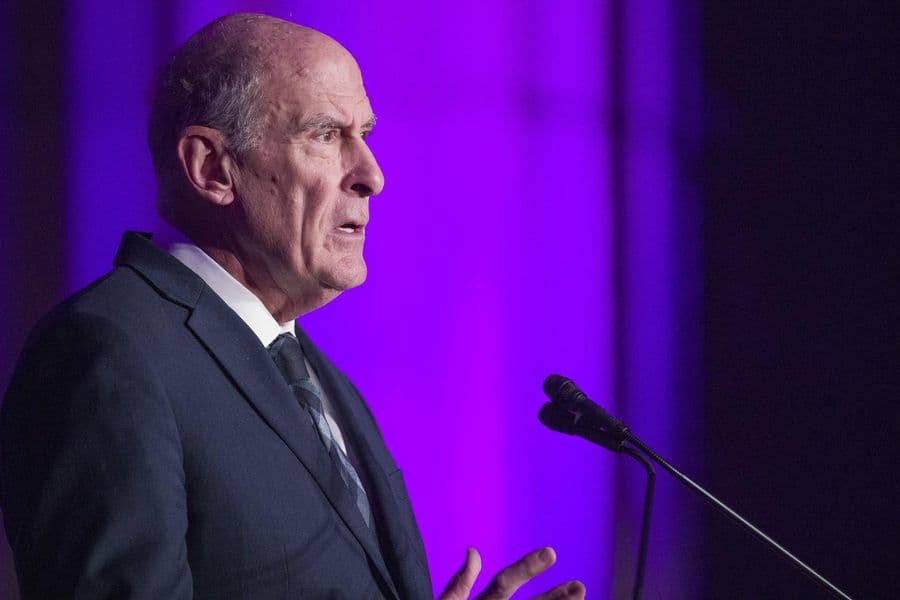
Last week, U.S. Director of National Intelligence (DNI) Daniel Coats unveiled America's 2019 National Intelligence Strategy. The DNI is the head of the U.S. intelligence community and the president’s senior intelligence advisor. The position was created in 2004 in the aftermath of the 9/11 terrorist attacks and the Iraq weapons of mass destruction estimate.
The National Intelligence Strategy is updated every four years and seeks to align itself with the President’s National Security Strategy, the most recent issued by President Trump in December 2017. As their names suggest, these are high-level documents stating general directions.
The most striking aspect of the latest intelligence strategy is its close similarity to the 2014 iteration. The stated Vision and Mission for the U.S. intelligence community are almost identical, as is the structure of the mission.
There are some interesting areas of emphasis. The introductory section on the strategic environment describes an increasingly complex and uncertain world in which threats are more diverse and interconnected. Coats’ predecessor at DNI, James Clapper, made a similar observation in his 2011 and 2012 Worldwide Threat Assessments:
It is virtually impossible to rank – in terms of long term importance – the numerous, potential threats to U.S. national security…it is the multiplicity & interconnectedness of potential threats…that constitute our biggest challenge.
The 2019 strategy notes the “weakening of the post-World War II order and the dominance of democratic ideals,” without naming any malefactors. Russia, China, and Iran are singled out as “traditional adversaries”. As would be expected, much attention is paid to the role of technology: the “democratization” of space; cyber threats; the promise and threat of emerging technologies such as nano- and bio-, and abundant data. There are references to migration and urbanisation, as well as climate change (in passing); the negative effects of social media on populations is mentioned, without actually stating the cause.
The essential tone of the document is a hortatory call to “do better”, but it does not suggest many path-breaking means to do so. It touches on a number of managerial issues that have been long-term problems. These include creating a community-wide intelligence architecture, better personnel security practices, and improved acquisition policies.
All of these tie into the overarching goal of a more integrated U.S. intelligence community, which has always been a challenge. Today the intelligence community has 17 components: 8 belong to the Defense Department and 7 to other Cabinet departments (State, Justice, Treasury, Energy, and Homeland Security). The DNI and the CIA are independent entities. Getting all of them to work together has always been a challenge, although much progress was made under DNI James Clapper and has continued under Coats.
There is an inevitable gap between documents like this and the actual workings of U.S. intelligence.
The views expressed in the strategy are more closely aligned with Trump administration policies than Coats has been in his annual Worldwide Threat Assessments. In the Strategy, Coats downplays climate change and highlights Iranian missile programs and support for terrorists, while noting that Iran had committed to a peaceful nuclear program in 2015, the Joint Comprehensive Plan of Action or JCPOA. Trump’s decision to walk away from that agreement is not mentioned.
But in his annual Worldwide Threat Assessments, Coats has taken a position at odds with the Trump administration. For example, in 2018 Coats was more positive about the JCPOA, noting that it had lengthened the time Iran would need to acquire a nuclear weapon and that the agreement had enhanced transparency into Iran’s nuclear activities. He also noted the “long-term trends toward a warming climate,” a view that Trump has denied.
Again, the National Intelligence Strategy is largely an expression of intelligence community intentions rather than views on specific issues. Therefore, there is less opportunity for “daylight” between intelligence officers and policy-makers. There is also an inevitable gap between documents like this and the actual workings of U.S. intelligence. The strategy discusses “how” the Intelligence Community intends to work. “What” the community is actually working on, with what degrees of emphasis, are better expressed in the National Intelligence Priority Framework, which is classified, and the annual Worldwide Threat Assessment, usually delivered in February.
The views expressed here are the author’s and do not imply endorsement by the Office of the Director of National Intelligence or any other U.S. Government agency.
Mark Lowenthal is President of the Intelligence & Security Academy in Reston, Virginia. He was the Assistant Director of Central Intelligence for Analysis & Production, 2002-05. He is the author of Intelligence: From Secrets to Policy.
This article appeared originally at Lowy Institute's the interpreter.

Is It Déjà vu All Over Again: The 2012 Report on Global Zero
By Peter Huessy • RealClearDefense
As Private Investment Pours Into Defense, the Clock Is Ticking
By Elaine McCusker • RealClearDefense
The First Test of Peace Lies in Ukraine's Borderlands
By Dennis T. Cosgrove • RealClearDefense
The VFW’s Gambling Addiction Victimizes Veterans
By Jack Yoest • RealClearDefense
Superintelligence Exposes a Gap in the Law of Delegated Authority
By Sue Ghosh Stricklett • RealClearDefense

When Your Navy is too Small, the Bill Comes Due Bigly
By CDR Salamander
Quo Vadis MCU?
By Marine Corps Compass Points
When the Network Goes Dark, Who Controls the Battlefield?
By Jonathan K. Corrado • RealClearDefense
Air Force Should Buy 250 Blended-Wing Tankers, as 2027 Demo Looms
By A&SF Mag.
Long Deployments to Be Navy Standard For Next Couple Years
By Mongilio, USNI News