
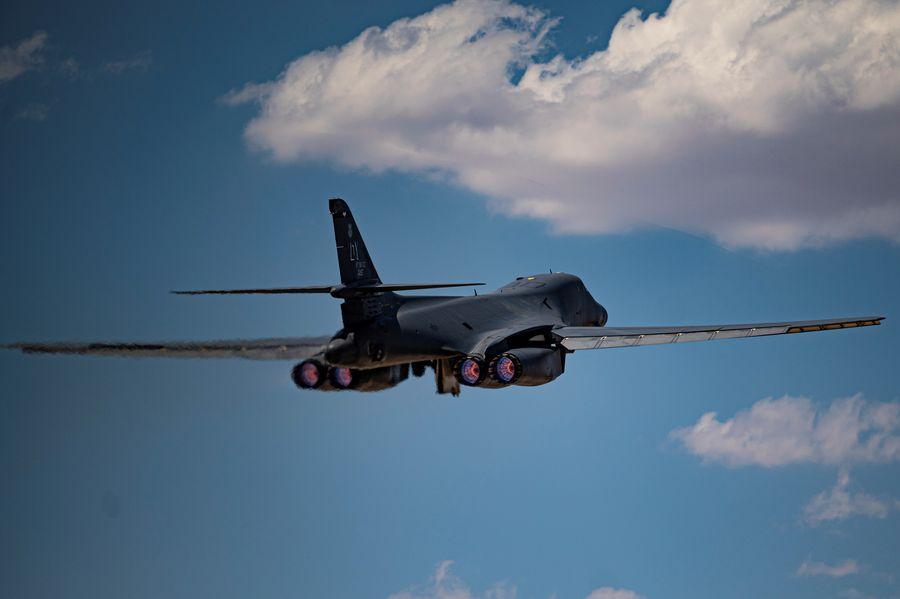
Let African Lion Roar
Last updated 05:57 AM EDT • Read time: 5m
Though Africa has long been and still is an object of great power rivalry; it is much more than that. As the repercussions of Russia’s aggression against Ukraine show the great powers need not only African political support; they remain in great need of Africa’s energy and other natural resources. Their competing interests for political support and economic gain represent major drivers of their rivalrous policies here. But African states themselves furnish much of the basis for that externally driven competition. Rivalries between and among them or the incidence of Islamic terrorism or ethnic strife within them provide the basis for extensive security competition that involves both local and foreign actors while also revealing a broad field for many different types of military action. Indeed, the Sahel region may accurately be called the current epicenter of Jihadi terrorism. And at the same time both Moscow and Beijing are doing their utmost to enhance their influence in Africa, not least, by military methods.
This background must always be kept in mind for if the Administration is to forge and then implement viable policies that comprise a successful strategy the military dimension is one, albeit a very important aspect, of those policies. American military policies in Africa, conducted in tandem with well-conceived economic, informational, and diplomatic initiatives must serve to advance U.S. interests, values, and those of our partners, e.g. Morocco. In this context, African Lion, the premier multilateral U.S. military exercise with African partners, including Israel this year, possesses great importance. This exercise fosters training and interoperability with and among African militaries who, as noted above, must contend with a full range of military threats, including those incited by Moscow and its proxies, i.e. the Vagner PMC e.g. in Mali.
But beyond imparting skills and training to militaries under pressure this and other exercises and also represent support for our allies and partners like Morocco. Morocco is currently embroiled in a decades-long conflict with Algeria over the Western Sahara. Nevertheless, Morocco is great importance to the U.S., and not just due to its location opposite the Straits of Gibraltar. For over forty years it has been instrumental in promoting Arab-Israeli peace, fostering numerous negotiating processes, and recently joining the Abraham Accords. And as part of its commitment to Middle Eastern peace it has a growing relationship with Israel and an enviable record on counterterrorism. Signifying its long record of domestic peace and stability, Morocco has become the single largest source of foreign direct investment (FDI) in West Africa, even exceeding China, and the second largest investor in Sub-Saharan Africa.
Nevertheless, Morocco faces threats from Algeria who is supported by Russia and Iran. Algeria is the largest recipient of Russian arms sales in Africa, buying up to 70% of its arms from Russia. It also has gravitated towards Iran whose relationship with Morocco has always been rocky, not least because of Iran’s support for the Polisario Front, the independence movement in the Western Sahara. And with that gravitation towards Iran comes as an outburst of official anti-Semitism. Since Iran stands behind much of the terrorism and violence plaguing Africa and with Russia provides support if not arms to Algeria, it is hardly surprising that Morocco turned to Israel and consummated a major arms deal of $500 million for air defenses earlier this year.
Therefore demands to move African Lion away from Morocco due to the failure to resolve the Western Sahara issue are misconceived. Moving the exercise will not galvanize the parties to this dispute to resolve the issue, quite the contrary. But it will demoralize Morocco and our regional allies and partners, adding fuel to Sino-Russian-Iranian charges of our fecklessness, unreliability, disloyalty to allies, and hypocrisy. Thus Algeria’s contributions to regional peace and development as it supports and even subsidizes Russia in Mali and Iranian policy are questionable at best. Indeed, it will host Desert Shield joint military exercises with Russia. This, of course, only extends Russia’s mischief-making military capabilities across Africa.
Exercises like African Lion not only demonstrates our ongoing support for allies and partners. They also create patters of mutual support, trust, interoperability, and amity among our allies allowing them and us to leverage this mutual support in a crisis. Exercises like African Lion are therefore critical manifestations of the U.S.’ interest in and resolve to support our partners and allies on issues and challenges that are important to us and vital to them. Morocco is one such ally and the benefits to African governments and militaries of participating in this exercise and learning from militaries, e.g., Israel and the U.S., with extensive experience dealing with the threats they face is of inestimable importance to them. Nobody benefits from moving African Lion away from Morocco, but many will suffer if we do so.
Stephen J. Blank, Ph.D., is Senior Fellow at FPRI’s Eurasia Program. He has published over 1500 articles and monographs on Soviet/Russian, U.S., Asian, and European military and foreign policies, testified frequently before Congress on Russia, China, and Central Asia, consulted for the Central Intelligence Agency, major think tanks and foundations, chaired major international conferences in the U.S. and in Florence; Prague; and London, and has been a commentator on foreign affairs in the media in the U.S. and abroad. He has also advised major corporations on investing in Russia and is a consultant for the Gerson Lehrmann Group. He has published or edited 15 books, most recently Russo-Chinese Energy Relations: Politics in Command (London: Global Markets Briefing, 2006). He has also published Natural Allies? Regional Security in Asia and Prospects for Indo-American Strategic Cooperation (Carlisle, PA: Strategic Studies Institute, U.S. Army War College, 2005). He is currently completing a book entitled Light From the East: Russia’s Quest for Great Power Status in Asia to be published in 2014 by Ashgate. Dr. Blank is also the author of The Sorcerer as Apprentice: Stalin’s Commissariat of Nationalities (Greenwood, 1994); and the co-editor of The Soviet Military and the Future (Greenwood, 1992).
The Gulf of Finland’s Forgotten Islands
By Ben Poulin • RealClearDefense
NATO’s New Spending Pledge Must Buy Real Energy Resilience
By Chuck Dockery • RealClearDefense
The Army Needs a Data Logistics Discipline Before the Next Surge
By Steve Ferenzi • RealClearDefense
2949 Marine Prisoners, Hostages, and Peacetime Governmental Detainees Since Our Corps' Founding
By Jon Couch • RealClearDefense
America Must Win the Biotech Race Against China
By Rob Maness • RealClearDefense
U.S. Air Force To Arm C-17 Cargo Aircraft With Cruise Missiles
By C. Jones, Defence Blog
How Marine Vet Ernest Langdon Became a Renowned Shooter & Gunsmith
By WATM
In First, Two CCAs Fly Air Combat Maneuvers Using Autonomy Software
By A&SF
Space Force Launches Mission Operations Center
By Jon Harper, DefenseScoop
Pentagon Mulls Placing Fleet of Military Satellites Around the Moon
By Ars Technica