
Japan's Inevitable Independent Nuclear Deterrent
Last updated 07:27 AM EDT • Read time: 12m
Japan’s (Inevitable, But Unlikely Anytime Soon) Independent Nuclear Dissuasion Force
In response to the current unprecedented Chinese nuclear weapons moderation program[i] and North Korea’s likely attempt to acquire the miniaturization technology to mate its nuclear weapons onto its ballistic missiles and specifically to help deter China from invading Taiwan,[ii] Japan ought to seek -- not more military closeness with the United States -- but more independence. Japan should prepare to go nuclear. It the inevitable future of the United States’ inability to restrain the never-ending truculence of the now totalitarian states of China and North Korea, both of which have decided unambiguously to become global nuclear powers.
Regrettably, of course, Japan is unlikely to go nuclear anytime soon – the inevitable result of once being ruled by an authoritarian, expansionist regime but now is a mature liberal democracy that remains frozen in shame for its past, self-doubt, and global identity crisis. Japan seems still unable to internalize that it is not the country it was in the first half of the 20th century. The Japanese also cannot quite see that the internal and international nonproliferation regime it so assiduously adheres to cynically allows the worst regimes in Asia to go nuclear yet discourages those responsible governments that today adhere to limited, representative government. Still, Japan is likely to go nuclear someday if China and North Korea continue to remain the most totalitarian states in history and dominate Asia. But by that time a Japanese deterrent may make little difference in changing the course of China’s ascendancy and North Korea’s continued prison state.[iii] Becoming more independent sooner is better.
In a statement to the Budget Committee of the Japanese House of Representatives, then Prime Minster Eisaku Sato stated in December 1967 that Japan would not possess, produce, nor permit the introduction of nuclear weapons into Japan, in line with Japan’s Peace Constitution.[iv] Japan soon after signed the Nonproliferation Treaty in 1970.[v] The Japanese people still largely defend their postwar constitution as a check against foreign (especially military) involvement abroad and evidence of Japan’s largely pacifist nature. Yet the Japanese people also recognize that Japan has not and cannot forgo its right to self-defense, which today can easily include a nuclear deterrent. Japan specifically chose not to become the Switzerland of Asia but has explicitly aligned with the values, military, and political goals of the United States and the West. This tension between external diffidence and liberal democratic Asian power will likely delay what is an inevitable dialectic toward Japan becoming a nuclear power as US power wanes and China ascends. How Japan manages and resolves this schizophrenia may determine the future of Asia in the second half of the 21st century.
Specifically, Japan should add to its National Security Strategy three new nuclear principles to complement its three nonnuclear principles:
- A pledge not to be a victim of nuclear weapons again.
- An outline of how quickly Japan could build nuclear weapons and note that Japan currently has:
- the technical capability to build nuclear weapons
- enough plutonium to build numerous nuclear weapons and the capability to refine its plutonium to weapons grade
- the delivery vehicles, both long range (three stage) ballistic missile technology, as well as air and sea-based delivery vehicles (such as TLAMs) to deliver such weapons
- all the precursors necessary (manufacturing, expertise) to fashion a nuclear weapon within six months
- A vow that if China goes forward with its massive nuclear weapons modernization program or if North Korea acquires the technology to mate small nuclear warheads onto its ballistic missiles, Japan will have no choice but to build a nuclear deterrent of its own.
If China continues its nuclear modernization program[vi] to field large, highly accurate, and deeply hardened strategic nuclear weapons, or if North Korea continues its nuclear weapons and ballistic missile development program – both of which currently is a near certainty, Japan will have no choice but to become a regional, stabilizing, independent nuclear power, much like France became with its ‘Force de Frappe.’ In a sense, this will be for Japan a form of restoration – an inevitable return to normalcy, equality, and acceptance as a major, regional state actor.
The nuclear weapons program of France is an excellent case study for Japan. During the Cold War, France did not trust the United States to use American nuclear weapons in the defense of Europe against superior Warsaw Pact forces moving westward. France feared that the United States would be reluctant to defend against encroaching Soviet forces with tactical nuclear weapons, as they moved west through West Germany, fearing that if the United States used nuclear weapons in Europe against Soviet forces, the Soviet Union would respond by using nuclear weapons against American cities. Thus, France feared, the United States might allow the defeat of NATO forces, including the subsequent defeat and loss of France, fearing nuclear escalation involving US cities.[vii]
As a result, France built its own ‘Force de dissuasion’ (‘Deterrence Force’), which threatened Warsaw Pact cities with French nuclear weapons, should Soviet forces push through Germany and threaten the border of France. At first, the United States opposed an independent French nuclear deterrent. But over time, the United States and NATO realized that an independent French nuclear force added significantly to the deterrence of all war. In response to invading Western Europe, the Soviet Union had to fear a nuclear response from the United States, the UK, or France. Japan similarly will soon fear that the United States cannot be assured to come successfully to the defense of the Republic of Korea, Japan, or Taiwan, as China continues to modernize and outpace US forces and North Korea continues to threaten Japan with its nuclear weapons and ballistic missile programs.
Japan is faced today with a similar dilemma, the result of China’s implacable hostility toward the United States and Japan, its rejection of liberal democracy, and its explicit interest to supplant US leadership regionally and conquer the democratic state of Taiwan. The historical success of nuclear weapons arms control is quite debatable but, sadly, overall, nonproliferation efforts have discouraged nuclear development within the liberal democracies yet allowed the very worst regimes in the world to seek and acquire nuclear weapons.
There are other, more near-term steps Japan could take to bolster regional deterrence and thwart the nuclear weapons programs of China and North Korea. These steps would not quite make Japan a nuclear weapons power and yet might change the calculus of Chinese military planning and activity in the Pacific:
- Japan should ask the US for the designs to create nuclear warheads that can be mated onto the 400 Tomahawk Land Attack Missiles (TLAM) that it is purchasing for its Aegis class destroyers.[viii] This will enhance Japan’s ‘Existential Nuclear Deterrence’ – the ability of Japan to field a deliverable, accurate nuclear weapon quickly, if it so chooses. Japan needs to just possess the designs – it does not have to produce the weapons. The possession of the ‘existential’ capability will advance deterrence. Japan already possesses all the other elements of a nuclear weapons program.
Russia, it is rumored, is considering giving such nuclear weapons miniaturization designs and technology to North Korea as reward for North Korean weapon systems being sent to Russia to support its war with Ukraine. Japan’s request, therefore, would be a direct result of Russian and North Korea provocation.[ix]
- Japan should join the ‘Five Eyes’ community: the United States, United Kingdom, Australia, New Zealand, Canada intelligence alliance, in which they share certain, regional, and strategic intelligence. Japan already contributes more to regional defense and the deterrence of China than these states do. Japan is not part of this intelligence community today, however, because of an uncertain ability to protect its communications network from Chinese espionage and because of ongoing fear that Japan is not ready to protect such sensitive information internally. Counterintelligence and cybersecurity reform must be a priority for Japan today to allow this intelligence community to include Japan.
- Japan should begin ballistic missile submarine training from the United States – in Australia and with the Australians – to begin to understand the requirements of fielding a survivable, second-strike nuclear (submarine) platform (the most stabilizing and survivable platform) to bolster regional nuclear deterrence. Someday soon Japan may be forced to field SSBNs to deter Chinese and North Korean nuclear threats. Japan’s participation in the UK-Australia-US (AUKUS) submarine relationship is similarly hampered by its need to improve its counterintelligence and cybersecurity.
- Japan should consider building super-cavitating torpedoes (which Russia and Iran already have) – supersonic, underwater torpedoes that can rocket from Japanese territory into the Sea of Japan or Taiwan Strait, and mate them with High Altitude Electromagnetic Pulse (HEMP) or High Power Microwave (HPM) devices (intense energy fields that can overload electrical systems and microcircuits). Such weapons could defeat, for instance, with little or no loss of life, a Chinese sea invasion of Taiwan. The Soviets planned to mate autonomous and then autonomous super-cavitating torpedoes with nuclear weapons, which they planned to shoot into the Atlantic to destroy entire US carrier groups. Ironically, Chinese ballistic missiles now threaten and deter US carrier groups from coming to the aid of a Taiwan under attack. Japan could flip this script by fielding super cavitating torpedoes with HEMP technology to fry the electronics of Chinese warships and landing craft attempting to overrun Taiwan. Such weapons are arguably not nuclear weapons (though they are created by a nuclear reaction) since they are configured to create an EMP pulse and not a nuclear blast wave.
en.topwar.ru
See: Supercavitating Torpedoes: Russia and Iran Have Them (The Navy Doesn’t) | The National Interest
- Japan could build and field a modern version of the Smart Rocks/Brilliant Pebbles program designed originally in the Reagan administration – space-based, small rockets with no warhead that ram into intercontinental ballistic missiles transiting space from the East Asian continent. Since such small interceptors would be entirely defensive (they would have no offensive capability whatsoever), they would be inherently stabilizing.[x]
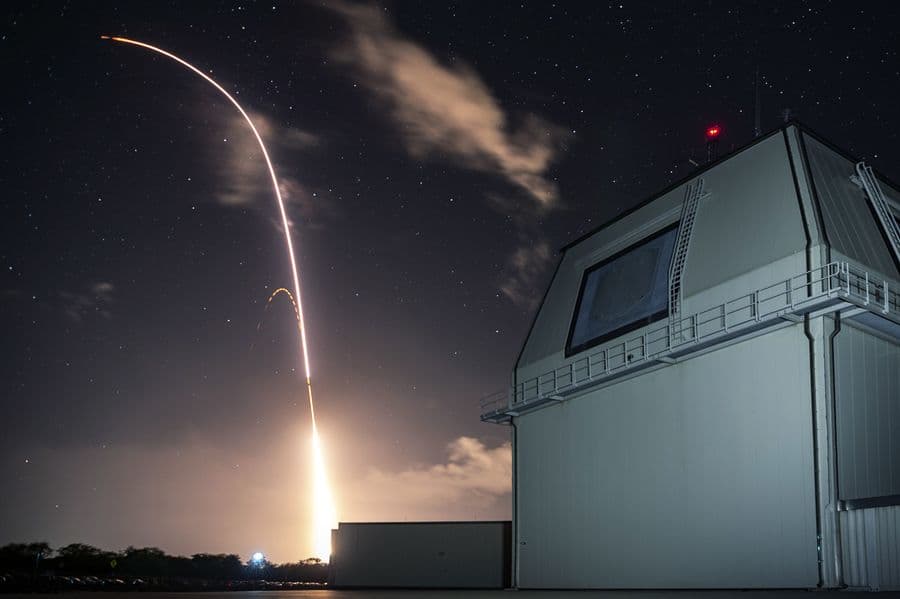
An interim ballistic missile interceptor step would be to purchase the land-based US THAAD[xi] or Israeli Arrow missile.[xii] Fielding such an interceptor in the near term would signal Japanese resolve to address the growing ballistic missile threat to Japan.
- Japan ought to field cyber capabilities to defeat North Korean cybercrime activity that finances the North Korean nuclear weapons program. Why is Japan preparing only cyber ‘defenses?’ If Japan wishes to deter malicious North Korean cyberspace operations, deploying cyber defenses only will ultimately fail. Cyber competitors will continue to probe for weaknesses no matter how many defenses a state uses. Good, overall cyber defense advances defense but must also threaten offense to deter malicious activity. Japan should be disappointed with the United States, which addresses North Korean cybercrime as a secondary issue, when in fact it is the principal financing tool for the North Korean nuclear weapons program. Allies and partners worldwide should unite in cyberspace to deny North Korea’s ability to fund its nuclear weapons program through cybercrime. Japan should ask the United States for cyber capabilities to deny North Korean cybercrime to bolster deterrence and defeat the criminal financing of the North Korean nuclear weapons program.
Japanese Prime Ministers Fumio Kishida and Shinzo Abe have moved Japan dramatically from mere US-ally to respectable regional power. But Japan is now being forced to do more -- to emerge as an independent regional actor, much like the United Kingdom and France have in Europe. This could be Prime Minster Shigeru Ishiba’s legacy.
The war in Ukraine has revealed that the totalitarian states of Russia, China, North Korea, and Iran will do anything – including ally militarily and suffer western economic isolation – to oppose the liberal democratic order and defend their authoritarian rule against all threats, including threats to their fellow totalitarian regimes. Sadly, in Asia, the most totalitarian state in history – the People’s Republic of China – is becoming an enormous nuclear weapons power and North Korea – the implacable, unending prison state – continues to survive through threatening the South, the United States, and its allies with ballistic and nuclear weapons. Japan sadly must now have to plan as an asymmetrical (smaller) power to protect its freedom and the freedom of its partners in the region. Any good analyst knows this is the inevitable, dialectic result of greater and greater totalitarianism in such states.
James Van de Velde, Ph.D., is a Professor at the National Defense University and an Adjunct Faculty Member at Johns Hopkins University. The views expressed in this article are those of the author and do not reflect the official policy or position of the National Defense University, the Department of Defense or the U. S. Government.
Notes:
[iii] Why Japan will not Go Nuclear (Yet): International and Domestic Constraints on the Nuclearization of Japan on JSTOR

Iranian Cyber Operations
By Michael Groen • RealClearDefense
Reflecting on an Epic Horse Campaign in the Mountains of Afghanistan
By Brian Glyn Williams • RealClearDefense
The Godfather of American Foreign Policy Realism Speaks to Today’s World
By Francis P. Sempa • RealClearDefense
In Pursuit of Nuclear Abolition
By Peter Huessy • RealClearDefense
Innovation Alone Won’t Prepare the U.S. for the Future Battlefield
By Joshua Segal • RealClearDefense

Navy Civilianizes Six Former Flag Billets, Reduces Six to Captains
By Mongilio, USNI N.
Raytheon's $8B Contract for Strategic Comms Terminal Modernization
By M+A El
America’s Maritime Moment Will Not Wait
By CDR Salamander
Armor Up?
By Marine Corps Compass Points
Who Shoots Down the Drone Over the Shipyard?
By John Ferrari & Dillon Prochnicki • RealClearDefense