
Getting Inside the Enemy's Mind
Published March 14, 2026 • Read time: 4m
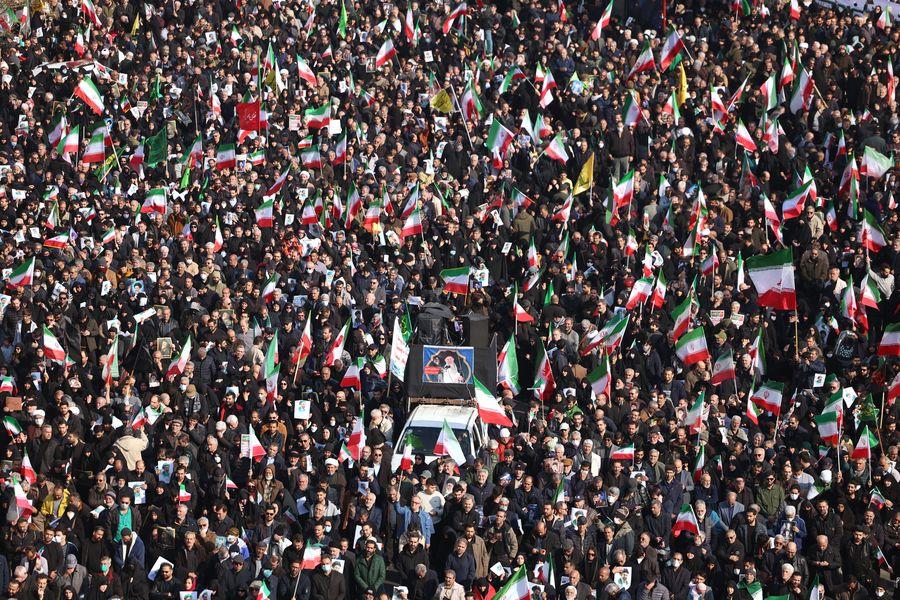
The impressive early successes of the U.S. and Israeli strikes on Iran highlight a crucial strategic advantage that Washington and Tel Aviv hold over many of our potential enemies: high-quality intelligence.
Before the recent Epic Fury strike on Iran, U.S. and Israeli intelligence knew that Iran’s large orders of missiles from China and Russia had just started arriving. Hundreds of anti-aircraft and anti-ship missiles would soon be in Tehran’s arsenal. This critical information most likely accelerated the Israeli and U.S. timetable.
An even more important tranche of vital intelligence emerged from the months-long U.S. and Israeli surveillance of the movements and plans of Iran’s top political and military officials, including the Supreme Leader, Ayatollah Ali Khamenei, and his senior military advisors.
Over a week ago, the U.S. and Israel knew where and when Khamenei and his most senior leaders would meet. This foreknowledge almost guaranteed that one strike would decapitate a major part of the Iranian leadership.
The decapitation of the Iranian elite had an eerie similarity with Operation Absolute Resolve’s flawless extraction of Venezuelan President Maduro from Caracas. In Maduro’s case, the American CIA had inserted a team of agents in Caracas months before the extraction. According to the New York Times, the CIA team used drones, insider informants, and standard surveillance techniques to monitor Maduro for months before they were ready to pounce. The Absolute Resolve mission will be studied as a classic in CIA classrooms for years to come.
Radio Frequencies in the Intelligence Ecosystem
The Strategic Technology Incubation Model
Exemptions and Enablers: The Accountability Gap in Unmanned Warfare
Why U.S. Intelligence Keeps Getting Blindsided
What are the implications of these historic back-to-back intelligence coups? How will they affect day-to-day routines for thousands of Iranian military and political leaders?
The Iranian clerical, military, and political elite will become permanently and deeply paranoid. They will be certain, or at least strongly suspect, that Washington and Tel Aviv know who they are, where they are, whom they are talking with, and even where they walk their dog. As a result, they will become increasingly anxious, fearful, and distrustful.
Recall that in 2024, Israeli intelligence hacked thousands of handheld pagers and hundreds of walkie-talkies used by Hezbollah’s leadership. These devices exploded simultaneously, killing and wounding over 1,000 top Hezbollah decision makers. This covert operation delivered a crushing blow to Hezbollah’s leadership.
Now it is the Iranians who will be unable to trust the security or safety of any phone, text messaging device, or other communication method. They won’t know which staffer, relative, friend, cleric, waiter, or taxi driver is working for the CIA or Mossad. They will have to assume that every room and vehicle is bugged. They will be forced to devote a disproportionate amount of resources to counterintelligence in a futile effort to track down every spy, even as new spies are recruited every day from the millions of newly anti-regime Iranians.
The U.S. and Israel will undoubtedly plant information in Iran hinting that loyal regime insiders are secretly working for the Great Satan, the Little Satan, or some previously unknown Satan.
The Iranian military, clerical, and political elite will need to start changing where they work, play, eat, and sleep lest a silent drone drop an explosive on their head. For years, the late Libyan leader Muammar Gaddafi slept in a different house every night to fend off assassination attempts. When you trust no one, this is how you must live.
Once the enemy thinks you are constantly watching, that belief will disrupt their decision-making process. Interfering with the timely flow and presumed reliability of information to leaders both slows down their decision-making and makes it more tentative and error-prone.
Once a target stops using regular communication channels, like Osama bin Laden did, they are forced to rely on a more primitive alternative: individual couriers. The CIA tracked bin Laden by following one of these couriers for months, until the courier led them to bin Laden’s house in Abbottabad, Pakistan. QED. There are NO absolutely safe means of communication.
The secretive Mexican drug lord, El Mencho, was killed because he wanted to see his girlfriend. The CIA and Mexican Intelligence were tracking her. She led them to the target.
The events of the past few days demonstrate that the stability and reliability of information and communication have fundamentally changed for the Iranian elite. Whether the West can take full advantage of this change remains to be seen.
James S. Fay is a semi-retired lawyer and university administrator. He served as a U.S. Army intelligence officer in Germany.

Ending the Conflict with Iran
By Anthony Cowden • RealClearDefense
Going After the Cyprus Money Laundering Hub
By Lise Korson • RealClearDefense
Don’t Bet Against CMMC
By Thomas Graham • RealClearDefense
When Losing Control of AI Becomes a Weapon
By Yunus Emre Tumen • RealClearDefense
International Allied Reliability of States: Criteria and Evolution
By Sergey E. Ivashchenko • RealClearDefense

Coast Guard’s Updated Force Design Plan Includes Maven Smart System
By DS
F-22 Raptor Commands MQ-20 Avenger From the Cockpit
By K. Osborn, Warrior M.
ULA’s Vulcan Rocket Is Grounded for Third Time
By I. Klotz, V. Machi, Aviation Week
Tragedy That Convinced the Coast Guard It Needed Rescue Swimmers
By WATM
USAF Contracts Final KC-46 Lot of Original Production Deal
By Satam, The Aviationist