
International Allied Reliability of States: Criteria and Evolution
Published Nov. 25, 2026 • Read time: 7m
The Problem of Allied Reliability
Mainstream international relations theory remains fixated on gross balance-of-power metrics: aggregate GDP, warhead counts, active manpower, and baseline manufacturing capacity. Yet these figures capture raw systemic weight—nothing more. They indicate what a state could theoretically leverage, not what its political leadership will actually risk when an ally faces strategic exposure. Latent capacity is analytically distinct from political willingness. A major power possessing multi-trillion-dollar scale can experience immediate policy paralysis as domestic electoral risks mount; conversely, secondary states routinely absorb extreme systemic pressures to honor external obligations.
Operational reliability constitutes a distinct analytic category that cuts through aggregate power metrics. This article introduces a tailored definition of allied reliability:
The operational accessibility of a state's national power to a partner in times of need, even when honoring those obligations incurs significant political, economic, or military costs.
Formal security guarantees fail to prevent sovereigns from constantly recalculating compliance against short-term survival incentives. Material capability without sustained political resolve remains analytically negligible for real-time crisis planning.
Recent crises expose this operational rupture. Following Russia’s 2022 invasion of Ukraine, Western economies possessed combined capital reserves that vastly outweighed Moscow's fiscal footprint. Yet as financial exposure expanded, European resource flows fractured along domestic legislative fault lines. Compare this to the post-9/11 invocation of Article 5, where member states accepted long-term operational exposure, deploying forces and incurring political damage over two decades in Afghanistan. Peacetime treaties obscure these execution gaps. The structural dilemma of alliance politics-navigating the dual threats of abandonment and entrapment—cannot be resolved by auditing order-of-battle tables. The only variable that dictates deterrence efficacy is fundamental: will that material capability actually materialise when requested?
Why Iran is Not Vietnam
The Pressure Is the Message: What Xi and Putin Faced in Shenzhen
Previewing The Shenzen Summit: A Critical View
What the 2026 Midterm Results Mean for U.S. Strategic Competition with Rivals
Dimensions of Operational Reliability
Evaluating an ally demands looking past formal treaty language to analyze three specific structural friction points.
1. Defense-Industrial Autonomy, Production Velocity, and Supply Microeconomics
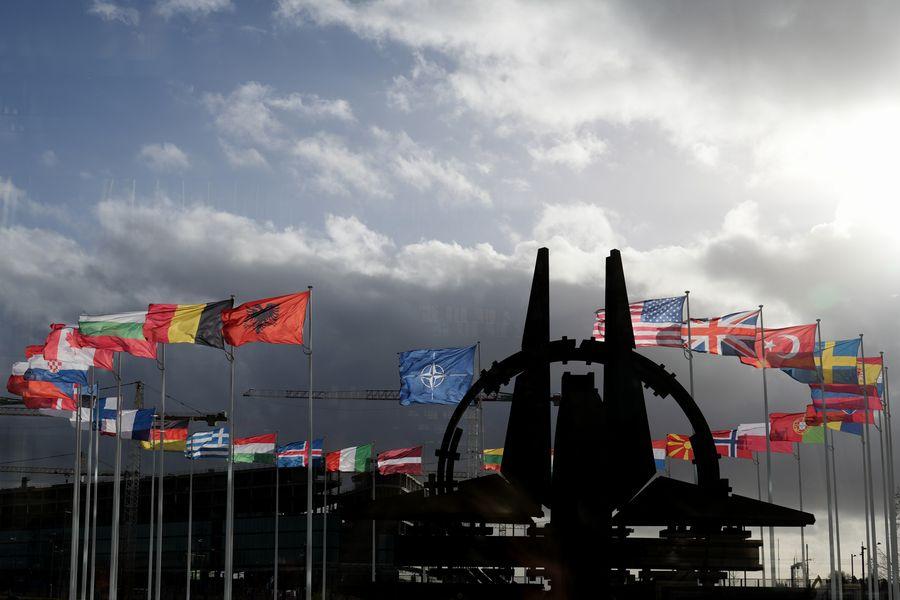
Latent industrial scale deters no one on its own. A reliable ally rapidly converts economic capacity into physical ordnance, surrendering organic baseline stockpiles when operational urgency demands it. Consider the microeconomics of ammunition procurement between 2023 and 2024. European NATO members pledged one million 155mm artillery shells to Kyiv yet failed to meet the delivery timeline, exposing acute institutional friction and severe defense-industrial fragmentation.
The combined GDP of European NATO countries exceeds 17 trillion dollars. By all traditional metrics of military power, this is a colossal force. However, when the question arose of supplying one million 155mm shells, this figure proved to be detached from reality. The problem boiled down not to a lack of money, but to the self-arrangement of the defense market. For decades, factories operated on just-in-time logistics and flatly refused to procure raw materials—first and foremost nitrocellulose and propellants—unless governments provided guaranteed multi-year contracts. As a result, massive economic potential remained on paper, and the ally on the frontline faced shell starvation. This is a classic illusion of aggregate power: wealthy states and their industrial potential failed to turn money into metal quickly.
2. Temporal Asymmetry: Electoral Cycles vs. Long-Term Horizons
Foreign policy credibility rests on a state’s capacity to bound its future choices through domestic audience costs. By making explicit public commitments, leaders deliberately expose themselves to political penalties from domestic constituencies should they subsequently back down. This mechanism—tying hands through ex post political vulnerability—transforms initial strategic declarations into costly, credible signals of resolve in international crisis bargaining.
However, democracies possess a vulnerability inherent solely to them: a politician is always a hostage to their electoral cycle. Their horizon is 2 to 4 years, while a strategic alliance requires planning for decades. A clear example is the six-month gridlock in the U.S. House of Representatives over the H.R. 815 package. The executive branch gave guarantees, but internal party struggle before the elections simply cut off the conditional valve of ammunition and logistics at the most critical moment at the front. Another example is Slovakia, where following a change of power, Robert Fico refused military aid to Ukraine. These two examples show that a single change within a coalition is capable of crossing out any past agreements. An ally cannot be reliable if its guarantees are zeroed out with every new electoral cycle.
3. Strategic Cost Tolerance and National Security Culture
A genuine test of reliability occurs only when a partner's support requires a direct and painful sacrifice—absorbing self-inflicted domestic strain, macroeconomic contraction, or severe voter backlash to sustain overseas commitments. The foreign policy pivot of Germany (Zeitenwende) after 2022 is a striking illustration of this dynamic. Having refused cheap Russian pipeline gas, Berlin consciously put its own economy under fire—first of all, the chemical industry and energy-intensive manufacturing—provoking elevated inflation and widespread voter discontent.
Nevertheless, the country endured this blow and maintained its place on the sanctions front and coalition solidarity. This shows that reliability is determined not by loud statements and sums in contracts, but by a deep awareness of the foundations of both own and allied security—an ingrained national security culture that allows the government to withstand criticism and discontent from its own population, even when the domestic economy lowers its indicators.
Re-evaluating the Alliance Continuum
Conventional diplomatic protocol and institutional pacts reduce interstate security relationships to a simplistic, linear progression of legal commitments:
Partner - strategic partner - ally
This traditional framework tracks diplomatic protocol rather than crisis availability. Accounting for behavioral divergence during severe systemic crises demands a more granular, five-tier analytical scale:
Partner - Reliable partner - Strategic partner - Ally - Reliable ally
States signal resolve through structural cost-sharing rather than nominal treaty signatures. The distinctions across these five operational tiers unfold as follows:
· Partner: Baseline diplomatic interaction. States share tactical interests but explicitly avoid binding military guarantees or operational integration. Current .U.S-Vietnam relations fit here: expanding maritime and commercial dialogue paired with zero legal defense obligations.
· Reliable Partner: Grounded in empirical performance rather than contractual obligation, Jordan’s security posture alongside Washington demonstrates how a state honors operational commitments even when unexpected diplomatic friction or financial stress emerges, functioning effectively outside a formal mutual defense treaty.
· Strategic Partner: Broad geopolitical alignment prioritized by both capitals. Yet both parties retain complete strategic autonomy and decline mutual defense clauses—complexities vividly illustrated by New Delhi's historical reliance on Russian defense imports alongside deepening U.S. tech frameworks across the Indo-Pacific, which generates persistent bilateral friction.
· Ally: A formal legal pact. As seen in the U.S.–Philippines alliance, states bind their national security architectures through mutual defense treaties. However, formal legal standing alone guarantees nothing when a crisis erupts.
· Reliable Ally: Represents the highest tier of bilateral force integration. A reliable ally combines formal treaty guarantees with a demonstrated track record of executing them under direct political exposure, financial loss, or military risk. The U.S.-U.K. dynamic consistently hits this benchmark through deep intelligence integration, joint force projection, and shared strategic risk.
Reliability as a Dynamic State
As world history demonstrates, alliance designations are never permanent attributes. States continuously recalibrate, downgrade, or outright abandon their commitments as their domestic political evolution—driven by majority pressure—reshapes external structural balances. Legal security pacts can sit on parchment for half a century, devaluing with every passing year. Their actual practical worth rests entirely on whether an ally maintains industrial delivery speed, supply chain resilience, and, above all, institutional stamina under acute political pressure, regardless of where that pressure originates. In contemporary global politics, forced to operate amid ever-escalating tensions, auditing real-time operational reliability matters far more than declaring nominal alliance statuses.
Sergey E. Ivashchenko is a London-based independent strategic threat analyst focusing on escalation dynamics, alliance political-military friction, and long-range threat forecasting. He is the developer of the PRISM analytical framework and the NAVIS surface uncrewed systems deployment strategy and frequently publishes on global security dynamics.

When Losing Control of AI Becomes a Weapon
By Yunus Emre Tumen • RealClearDefense
International Allied Reliability of States: Criteria and Evolution
By Sergey E. Ivashchenko • RealClearDefense
Your Military Paycheck Has an End Date
By Sean Ofeldt • RealClearDefense
Masters of Command
By Travis A. Karnes • RealClearDefense
A Sweet American Original
By Greg Maresca • RealClearDefense

Monty: Riding the Pendulum
By Zachery Thomas, DODReads
Sign of the Times: CCAs Dominate a Major Fighter Conference
By Bill Sweetman • The Strategist (ASPI)
Marines Want Naval Strike Missiles With Double The Range
By The WarZone
U.S. Navy Targets 79 New Cutter-Based FF(X) Frigates
By A. Servaes, Global Defense
The Hegseth Grenade: A Sea Change at Newport
By Robert C. Rubel, CIMSEC