
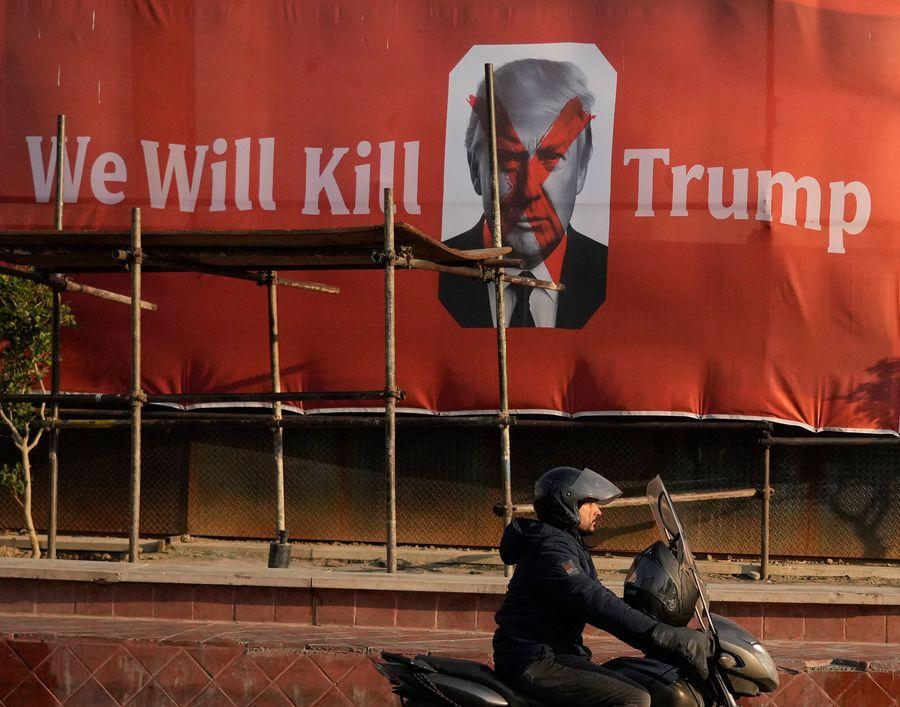
Ending the Conflict with Iran
Published Nov. 27, 2026 • Read time: 11m

Join the Conversation
0“President Donald Trump suggested Thursday that he was dialing back diplomatic efforts to resolve the conflict with Iran and ending a dealmaking effort by Vice President JD Vance in favor of leaving a naval blockade in place and continuing to pressure the Iranian economy.”[i]
The naval blockade has certainly had a significant effect on the Iranian economy. Will it be enough to make the Iranian regime capitulate? I doubt it, especially in the short term. And “the short term” used to be before the midterm elections, but that deadline has passed. The next interesting deadline is the seating of the newly elected Congress on 3 January 2027 – we’ll see.
But if the United States wanted to negotiate an end to the conflict with Iran, what might realistic, and mutually acceptable, terms look like?
From the Iranian perspective, it appears they are hewing closely to the terms of the Memorandum of Understanding (MOU) that President Trump – we all watched him do it, so in your comments please don’t claim he didn’t – signed with the Iranians in June. And why not? From their perspective it was a U.S. surrender document.
Despite the surprisingly one-sided terms of the MOU[ii], it might yet serve as the basis for an agreement to end the conflict between the United States and Iran. So, let’s review the specific terms of the agreement and see what the United States might agree to abide by going forward:
1 The United States of America and the Islamic Republic of Iran and their allies in the current war are signing this MOU to declare the immediate and permanent termination of military operations on all fronts, including in Lebanon, and undertake from now on not to initiate any war or any military operation against each other, and to refrain from the threat or use of force against each other, and ensuring the territorial integrity and sovereignty of Lebanon. The final deal will confirm the permanent termination of the war on all fronts, including in Lebanon and other provisions of this paragraph.
Agreeing to this provision would require the United States to end its naval blockade with Iran. Given the stress this blockade is causing to U.S. naval readiness, as well as the ability to conduct significant naval operations in any other part of the world, if that became necessary, this should come as a welcome relief. The United States should, in agreeing to this provision, note that it does not speak for its allies, and cannot, therefore, promise that Israel will refrain from military action in Lebanon. Finally, the United States should reserve the right to respond to security threats posed by the Houthis in Yemen in accordance with international law.
Going After the Cyprus Money Laundering Hub
The Need to Remove All Fissile Material from Iran
Operation Epic Fury and the Illusion of Victory
Why Iran Cannot Simply Surrender
2 The United States of America and the Islamic Republic of Iran undertake to respect each other’s sovereignty and territorial integrity and to refrain from interfering in each other’s internal affairs.
The United States shouldn’t have a problem with this if it is serious about ending the current conflict.
3 The United States of America and the Islamic Republic of Iran commit to negotiating and achieving the final deal in maximum 60 days, extendable with mutual consent.
Again, if serious about this effort, the United States shouldn’t have a problem agreeing to this.
4 Immediately upon the signing of this MOU, the United States of America will begin the removal of its naval blockade and any disturbances or impediments against the Islamic Republic of Iran, and will fully end the naval blockade within 30 days. During this period, the traffic of vessels will be in proportion to the numbers of pre-war traffic being restored by the Islamic Republic of Iran. The United States of America further undertakes to remove its forces from the proximity of the Islamic Republic of Iran within 30 days after the final deal.
The United States shouldn’t have a problem agreeing to ending the blockade immediately. The bigger sticking point is the last requirement, to “…remove its forces from the proximity of the Islamic Republic of Iran within 30 days after the final deal.” Since “proximity” is not defined, this sentence could mean almost anything. The fact is that the United States has already removed most of its military forces from the Middle East Gulf[iii] region already, so agreeing to this does mean much materially. The bigger question is whether the United States ever replaces its forces in the region, but the MOU is silent on that question, so it doesn’t need to be addressed.
5 Upon the signing of this MOU, the Islamic Republic of Iran will make arrangements using its best efforts for the safe passage of commercial vessels with no charge, for 60 days only, from the Persian Gulf to the Sea of Oman and vice versa. The traffic of commercial vessels will immediately start, and considering the need for removing the technical and military obstacles, and demining by the Islamic Republic of Iran will be instated within 30 days. The Islamic Republic of Iran will conduct dialog with the Sultanate of Oman to define the future administration and maritime services in the Strait of Hormuz in discussion with other Persian Gulf littoral states in line with the applicable international law and the sovereign rights of coastal states of the Strait of Hormuz.
I recommend that the United States agree to this. However, the United States should reiterate its support for the freedom of the seas under international law, and commit itself to working within the context of the United Nations Security Council (UNSC) to keep the seas open for all international shipping. I believe China, for one, will reject any attempt by Iran to impose a fee for transiting the Strait of Hormuz (SoH). Yes, I know this Administration has no use for the UN, but it also has demonstrated that it cannot keep the SoH fully open militarily, so it is time to compromise…
6 The United States of America undertakes with regional partners to develop a definitive, mutually agreed plan with at least USD 300 billion for the reconstruction and economic development of the Islamic Republic of Iran. The mechanism for the implementation of this plan will be finalized as part of a final deal within 60 days. All required licenses, waivers and permissions needed for the relevant financial transactions will be granted by the United States of America.
The United States should not agree to paying Iran any money. Instead, it should agree to lift all economic sanctions and agree not to interfere with international or UN reconstruction and economic development efforts. I think Iran will correctly see that no Congress would ever approve this kind of expenditure and reluctantly agree to these terms. In addition, it is effectively getting everything else it wants, so I don’t think Iran will make much of a fuss over this provision.
7 The United States of America undertakes to terminate all types of sanctions against the Islamic Republic of Iran, including the United Nations Security Council resolutions, IAEA Board of Governors resolutions, and all unilateral US sanctions, primary and secondary, in an agreed upon schedule as part of the final deal. The Islamic Republic of Iran and the United States of America acknowledge the critical importance of the sanctions termination issue above mentioned, and expressed their intentions to immediately address these issues in the negotiations in order to achieve mutual agreement on them.
The United States should agree to lift unilateral action against Iran. However, the United States should reiterate its membership within the community of nations, membership within the United Nations, and should recommit itself to pursuing the resolution of international disputes through the UN.
8 The Islamic Republic of Iran reaffirms that it shall not procure or develop nuclear weapons. The United States of America and the Islamic Republic of Iran have agreed to resolve the disposition of stockpiled enriched material pursuant to a mechanism that will be mutually agreed upon in accordance with the schedule mentioned in paragraph seven, with the minimum methodology to be down blended on site under the supervision of the IAEA. The two parties also agreed to discuss the issue of enrichment and other mutually agreed matters related to the Islamic Republic of Iran’s nuclear needs, based on a satisfactory framework being agreed upon in the final deal. The final deal will confirm the provisions of this paragraph. The United States of America and the Islamic Republic of Iran acknowledge the critical importance of the nuclear issues above mentioned. They express their intention to immediately address these issues in the negotiations in order to achieve mutual agreement on them.
The United States should fully agree to this provision.
9 Pending the final deal, the United States of America and the Islamic Republic of Iran agree to maintain the status quo. The Islamic Republic of Iran will maintain the current status quo of its nuclear program, and the United States of America will not impose any new sanctions and will not deploy additional forces in the region.
The United States should conditionally agree to this provision: the United States should reserve the right to deploy military forces anywhere it needs to in support of its national interests.
10 The United States of America undertakes that immediately upon the signing of this MOU and until the termination of sanctions, US Department of Treasury will issue waivers for the export of Iranian crude oil, petroleum products and derivatives, and all associated services, including banking transactions, insurances, transportation, etc.
The United States should fully agree to this provision.
11 The United States of America undertakes to make fully available for use the frozen or restricted funds and assets of the Islamic Republic of Iran upon the implementation of this MOU. The United States of America and the Islamic Republic of Iran will mutually agree on the procedures related to the release of these funds during negotiations. Such funds, whether retained in the original account or transferred, shall be made fully usable for payment to any ultimate beneficiary designated by the Central Bank of the Islamic Republic of Iran. The United States of America undertakes to issue all necessary licenses and authorizations accordingly.
The United States should fully agree to this provision.
12 The United States of America and the Islamic Republic of Iran agree that an executive mechanism will be established to monitor the successful implementation of this MOU and the future compliance of the final deal.
The United States should fully agree to this provision.
13 After signing this MOU, and subject to the beginning of the implementation of paragraphs 1, 4, 5, 10 and 11 of this MOU, and the continuing implementation of these measures, the United States of America and the Islamic Republic of Iran will start negotiations regarding the final deal exclusively on the other paragraphs.
The United States should fully agree to this provision. The reality is, though, that the United States can take all of the recommended actions above unilaterally, as nothing is really required of Iran.
14 The final deal will be endorsed by a binding UNSC resolution.
The United States should fully agree to this provision.
So there you have it: given that the United States has already signed this MOU, it now has a roadmap it can follow unilaterally to walk away from this conflict.
On the plus side, these actions, and the ending of the conflict with Iran, can be achieved through unilateral U.S. action, with nothing materially required of Iran. Should Iran not abide by the provisions in the MOU, the United States has reserved the right to work through the UN to address any bad behavior by Iran.
On the negative side, the United States is essentially admitting defeat in an ill-advised conflict it started in support of Israel, one that clearly violated the spirit, intent, and I believe letter, of both international law and the U.S. Constitution.
Note that “Israel” is barely mentioned. It is time the United States focused on its own national interests, without undo regard – I repeat, without the undo regard seen in starting this conflict - for the interests of Israel.
Anthony Cowden is the Managing Director of Stari Consulting Services, author of The Naval Institute Almanac of the Navy, and co-author of Fighting the Fleet: Operational Art and Modern Fleet Combat, all royalties from which go to the Navy/Marine Corps Relief Society.
notes:
[i] https://www.washingtonpost.com/politics/2026/11/12/trump-shuts-down-vance-iran-negotiating-efforts-says-no-deal-needed/?utm_medium=email&utm_source=newsletter&utm_content=alert&utm_campaign=wp_breaking_news_alert
[ii] https://arabcenterdc.org/resource/memorandum-of-understanding-between-the-united-states-of-america-and-the-islamic-republic-of-iran/
[iii] Time for a re-branding!

Ending the Conflict with Iran
By Anthony Cowden • RealClearDefense
Going After the Cyprus Money Laundering Hub
By Lise Korson • RealClearDefense
Don’t Bet Against CMMC
By Thomas Graham • RealClearDefense
When Losing Control of AI Becomes a Weapon
By Yunus Emre Tumen • RealClearDefense
International Allied Reliability of States: Criteria and Evolution
By Sergey E. Ivashchenko • RealClearDefense
Marine Corps Offers Early Exit to Some Enlisted Troops
By Rachel S. Cohen, FNN
U.S. Navy Taps Raytheon to Advance SLCM-N Nuclear Cruise Missile
By Naval News
U.S. Coast Guard Takes Icebreaker on Maiden Voyage to the Arctic
By Navy Times
Monty: Riding the Pendulum
By Zachery Thomas, DODReads
Sign of the Times: CCAs Dominate a Major Fighter Conference
By Bill Sweetman • The Strategist (ASPI)