
Iran's Stryker Hack Shows Why Trump's Cyber Strategy Matters
Last updated 05:29 AM EDT • Read time: 4m
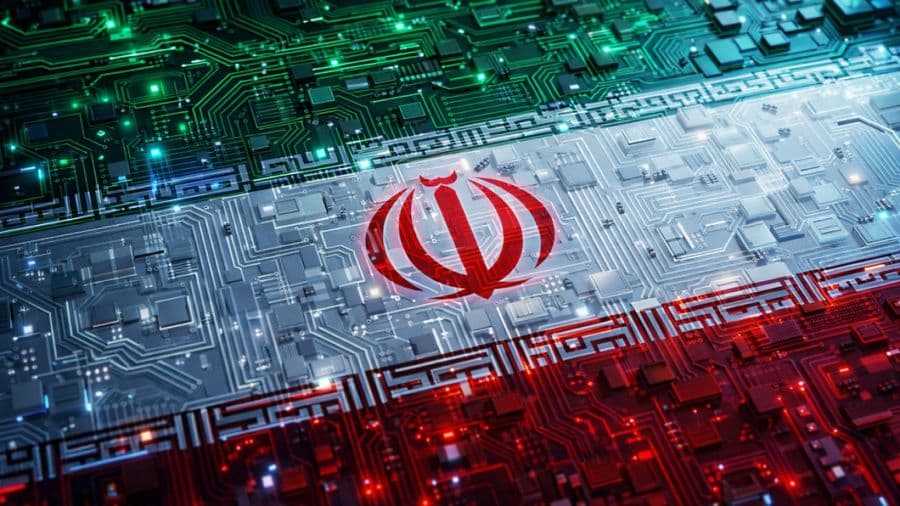
Stryker, a Michigan-based medical device and surgical supply company, is the latest victim of hackers linked to Iran’s regime. The group claiming responsibility, Handala, has known connections to the Islamic Republic’s intelligence apparatus. Analysts believe the intrusion affected hospital communications systems, not just internal corporate networks. The implications are serious.
When foreign adversaries can reach into American companies, including health care, critical infrastructure and telecommunication services that Americans rely on, cybersecurity is no longer just an IT issue. It is a national security issue.
For those who have tracked Tehran’s behavior for years, the latest attack comes as no surprise. Since the January 2026 uprising inside Iran, the regime has shut down domestic internet access while simultaneously escalating its external cyber operations. The contrast is telling: repression at home, aggression abroad.
Over the years, the Islamic Republic of Iran has emerged as one of the world’s most active cyber threat actors, using espionage, propaganda, and disruptive cyber operations to shape events, influence foreign audiences, and counter perceived threats to regime survival. These activities disregard accepted norms of responsible state behavior in cyberspace and undermine the stability of the open and secure internet that the global economy depends on. Like its reliance on terrorist proxies across the Middle East, Tehran structures its cyber campaigns to maintain plausible deniability, often working through affiliated hacker groups and criminal intermediaries.
This playbook is part of a broader pattern. Inexpensive, difficult to deter, and capable of producing outsized impact, cyber operations have become the tool of choice for authoritarian regimes. Ransomware can generate revenue, while a network intrusion can yield valuable intelligence. Well-placed influence campaigns can deepen political divisions.
Iran is not alone in its desire to disrupt our systems. The U.S. also faces persistent cyber threats from China, Russia, and North Korea, along with a growing ecosystem of ransomware groups, cybercriminal enterprises, and politically motivated hacking collectives. Increasingly, these actors operate in a gray zone where state tolerance, indirect sponsorship, or selective enforcement allows them to flourish.
Cybersecurity is therefore no longer just a technical discipline. It is a pillar of national sovereignty and economic resilience. That is why the release of President Trump’s Cyber Strategy for America is both timely and necessary.
The strategy reflects an important shift away from passive defense toward active disruption. Rather than accepting constant intrusion as the cost of doing business, the policy aims to shape adversary behavior by raising the cost of malicious activity. This includes deploying the full range of American power—military, diplomatic, financial, intelligence, and cyber—to deter and respond to hostile actions.
The strategy makes clear that the U.S. will not limit its responses to cyberspace. It emphasizes detecting threats before they penetrate networks by dismantling adversary infrastructure and denying criminal organizations the financial safe havens that allow them to operate. It also prioritizes working with allies to build collective cyber deterrence so U.S. companies and government systems are not left to absorb attacks on their own.
Just as important is the strategy’s recognition that government cannot do this alone. Most critical infrastructure is in private hands, which means companies like Stryker are now on the front lines of geopolitical competition. They cannot be expected to take on foreign intelligence services by themselves. By calling for real public-private operational cooperation, clearer regulations, and faster threat intelligence sharing, the strategy reflects a simple reality: cybersecurity is a whole-of-nation responsibility.
Beyond improving network defenses, companies must adopt a culture of preparedness by establishing clear cybersecurity policies, conducting regular exercises, and preparing crisis communications plans before incidents occur.
The strategy supports this shift by calling for regulatory streamlining so companies can focus resources on real security improvements rather than duplicative compliance exercises.
Another critical priority is securing supply chains and reducing reliance on untrusted technology vendors tied to authoritarian regimes. This principle has long been championed by technology security advocates who recognize that supply chain vulnerabilities can become strategic vulnerabilities. Ensuring that trusted technologies underpin critical infrastructure is essential not just for security, but for preserving technological leadership.
As former officials who have watched the Islamic Republic’s cyber capabilities evolve from basic website defacements to sophisticated influence operations and industrial targeting, we can say with confidence that Stryker will not be the last American company in the crosshairs.
Cyberattacks are no longer technical disruptions. They are strategic tests of American strength. The question is whether we will meet the challenge with equal resolve. President Trump’s cyber strategy is a serious step toward restoring deterrence, strengthening resilience, and ensuring America—not its adversaries—sets the terms of competition in the digital age.
Heather Nauert is a former U.S. State Department Spokesperson and acting Under Secretary for Public Affairs.
Len Khodorkovsky is a former Deputy Assistant Secretary of State for Digital Strategy and Senior Advisor to the U.S. Special Representative for Iran.

The Services Do Not Need a Four-Star Autonomous Warfare Command
By Steven Wills • RealClearDefense
Honor Them While There Is Still Time
By Jeffrey Rosales • RealClearDefense
From Siberia to Fairford: How Operation Spider’s Web Has Changed the Rules of Airpower
By Frank A. Rose • RealClearDefense
Faster Simulations, Better Defense Decisions
By Rut Lineswala • RealClearDefense
Will HASC Have an Oversight Subcommittee in the Next Congress?
By Christopher J. Bright • RealClearDefense

Hegseth Barred Trans Troops. Military Boards Are Rejecting Those Orders.
By NYT
Closing the Sea: Lessons from Ancient Mediterranean Blockades
By DeCasien, CIMSECFrom Siberia to Fairford: How Operation Spider’s Web Has Changed the Rules of Airpower
By Frank A. Rose • RealClearDefenseFaster Simulations, Better Defense Decisions
By Rut Lineswala • RealClearDefense
Bombers Could Have a Major Air-to-Air Combat Role
By Joseph Trevithick, The WarZone