
The Iran Peace Deal - Winners and Losers
Last updated 09:06 AM EDT • Read time: 5m
American President Donald Trump has produced a peace deal to end the Iran war. The 14- point Memorandum of Understanding has two parts: the first part calls for an end to all fighting, a resumption of traffic in the Strait of Hormuz, and economic benefits for Iran, including reconstruction funds, sanctions relief, and an end to the American blockade. The second 60-day part will deal with issues like Iran’s nuclear enrichment program (point 8).
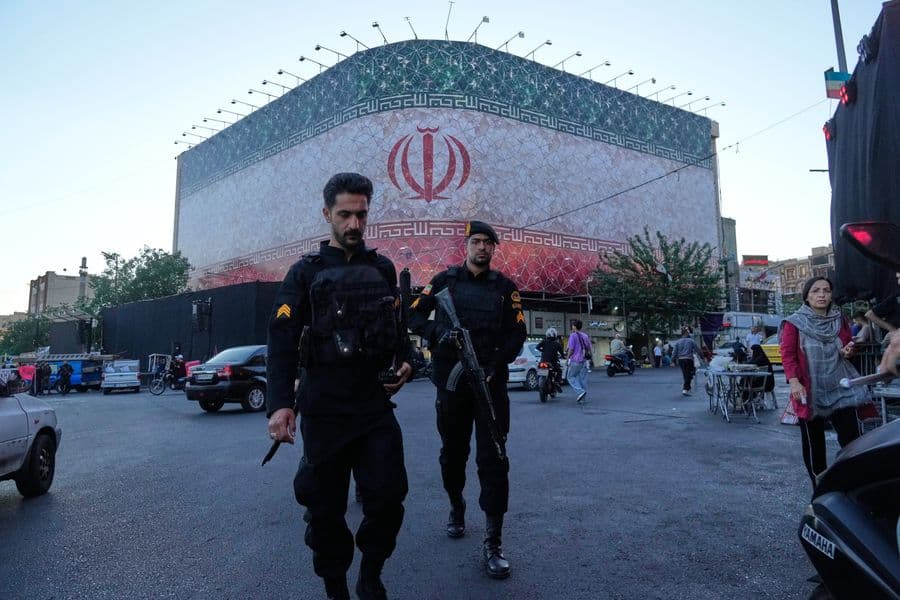
The Iran/American peace deal was negotiated via Pakistan with two leaders of Iran, Mohammad Bagher Zolghadr and Iranian Foreign Minister Abbas Araghchi. The two highly educated men are strict Shiite Muslims with direct links to the Ayatollah (Supreme Leader). Both men support violent repression of any protests opposing the ruling Shia Islam theocracy.
The theocracy comprises the Ayatollah Mojtaba Khamenei, backed up by a powerful Revolutionary Guards (IRGC), the devout Assembly of Experts and a vast bureaucracy. All paid for by billions of dollars of oil revenue (and its by-products). To put this in perspective the IRGC number about 125,000 and the total adult (over15) population of Iran is about 65 million people.
Regime change.
Former American National Security Advisor John Bolton is adamant that the Trump administration anticipated that the war would result in regime change, precipitated by removing the Ayatollah and other leaders of the theocracy. Ayatollah Ali Khamenei and several of his close followers were killed by American airstrikes.
An uprising did not take place. The IRGC, and regime-friendly militias, possess all the heavy weapons. For example, according to the Institute for the Study of War, in March Iranian security forces arrested people in provinces across Iran. In Shiraz, Fars Province, they seized 2,076 weapons, that included knives, machetes, swords, and axes. This example illustrates why it is an uneven contest, and why the theocracy remains in power. A strategic failure of American intelligence.
The Strait of Hormuz
The plan details open access to all shipping through narrow Hormuz Straits subject to Iranian agreement. The narrow Straits are the route for 20 percent of the world's liquefied natural gas (LNG) and 25 percent of its oil. It is also conduit for copper and sulfur, vital to produce artificial fertilizer and explosives. Constraints on these products critically affected the world’s economy. The ceasefire plan is just a written acknowledgement of the situation prior to the war.
Iran still controls the Straights.
Oil
It will take months to repair the oil infrastructure in Iran and resume shipments. Economically, both Iran and the United States are the short-term losers.
American local oil production is mainly shale-fracked oil, which is more expensive to produce than conventional oil drilling by overseas competitors. This is exacerbated by surging conventional oil supply from non-OPEC+ producers Guyana, Canada, Angola, and Brazil. In the long-term Iran’s increased oil production this will add to an international glut of oil. China and India are the biggest industrial users.
Sanctions
Point eleven of the peace plan requires the release of Iranian funds and frozen assets held by foreign banks. They are estimated at nearly $24US billion. The value of Iran's real estate in the U.S. is about $50 million.
The proposed $300billion reconstruction plan (point 6) may initially be funded by the released money from foreign banks - this requires approval by the United Nations Security Council.
Achieving recognition under international law and relief from sanctions are a significant victory for Iran.
Nuclear agreement
Iran and the United States will continue to negotiate Iran’s nuclear program. However, Iran cannot develop nuclear weapons (point 8).
Al Jazeera reported that it would have taken Iran months to progress from 60 per cent to 90 per cent (weapons grade) enrichment. At that level Iran might have been able to produce some basic nuclear bombs.
However, at the start of the conflict Israel and America, without officially declaring war, conducted airstrikes on Iran’s nuclear sites, successfully knocking out centrifuges at Natanz, and destroying the uranium-to-metal conversion facility at Isfahan.
Iran is unlikely to transfer its remaining stockpile of highly enriched uranium to the United States. What Trump calls “nuclear dust” is uranium hexafluoride gas - during the enrichment process it is converted into a solid ceramic fuel - now rubble. Transporting enriched uranium is inherently hazardous because of its significant radiological and chemical risks.
While Iran has vast reserves of oil and natural gas, it needs nuclear power for electrification. In this deal Iran will be able to continue uranium enrichment for electric power (point 9). Tehran will likely keep only one nuclear site operational. An independent body (difficult to find in the Middle East), may monitor the development of the nuclear program.
The winners here will be Israel, and Iran’s Sunni opponents in the region.
Since the nuclear program never directly threatened the United States, nor nuclear armed Israel, and the deal is similar to the pre-2016 protocols, the result may be considered a defeat for America.
International
Despite claims by the White House, America’s international prestige has suffered a major setback. For all its substantial military power it could not completely subjugate Iran and could not effectively defend its allies in the region - Saudi Arabia, Qatar, and the United Arab Emirates. On the other hand, Russia, already faltering in Ukraine and unable to take advantage of soaring oil prices, failed to support Iran. The winner is China, quietly growing trade influence and observing American military vulnerabilities - aircraft carrier and aircraft failures, and uneven, expensive drone interception.
Like all wars many innocent people die. At least 3,000 Iranian civilians have been killed, including school children. Iran’s military and governmental losses number about 6,000. In Lebanon over 2,500 people have died and over 8,000 injured. In America’s case, 15 soldiers died and over 530 were injured.
Was this loss of life and suffering in a 108-day war that cost the United States about $100billion really worth it?
Patrick Drennan is a journalist based in New Zealand, with a degree in American history and economics.

Reflecting on an Epic Horse Campaign in the Mountains of Afghanistan
By Brian Glyn Williams • RealClearDefense
The Godfather of American Foreign Policy Realism Speaks to Today’s World
By Francis P. Sempa • RealClearDefense
In Pursuit of Nuclear Abolition
By Peter Huessy • RealClearDefense
Innovation Alone Won’t Prepare the U.S. for the Future Battlefield
By Joshua Segal • RealClearDefense
The sUAS Tactical Trifecta
By Bryan T. Woody • RealClearDefense

Navy Civilianizes Six Former Flag Billets, Reduces Six to Captains
By Mongilio, USNI N.
Raytheon's $8B Contract for Strategic Comms Terminal Modernization
By M+A El
America’s Maritime Moment Will Not Wait
By CDR Salamander
Armor Up?
By Marine Corps Compass Points
Who Shoots Down the Drone Over the Shipyard?
By John Ferrari & Dillon Prochnicki • RealClearDefense