
From Sentiment to Interest
Published Aug. 18, 2026 • Read time: 7m
As confidence in America wanes, Europeans and Israelis turn to each other for defense technology and production
In its prime, a hegemonic power protects vassals and dependent allies from predators. As it decays, the hegemon’s will and power to protect its allies declines apace. The ‘allies’ are increasingly on their own. While some delude themselves about the hegemon’s continued reliability, others, closer to danger, develop their own power and independently maneuver, untrammeled by sentiment, pretense, or ‘international law.’ This is exactly what is happening in the Middle East and Europe. Frontline states are incrementally shifting their defense postures to survive without Washington. Europeans are turning to Israel for defense technology and advanced military equipment, and Israel to Europeans- and others- for lower- end munitions and production facilities. In the long run, for good and ill, European- Israeli cooperation will erode America’s power over both Europe and the Middle East. And while passion, Islamist penetration, and energy interests suggest a harsh anti- Israeli policy, key European nations, technologically and militarily intertwined with the Jewish state, will moderate that policy- not out of sentiment, but realistic military interest.
After Hamas, Hezbollah, and the Houthis, supported by Iran, attacked Israel in 2023, the Americans attempted to hobble their Israeli client’s response. The Biden Administration did resupply Israel with munitions and helped defend it from ballistic missile attack. But at decisive moments the Americans slow- walked delivery of materiál and vetoed offensive action. If American pressure had succeeded, Hamas would have remained in control of Rafah and its supply lines from Egypt. Hezbollah would have remained entrenched just north of the border, threatening and bombarding at will. Iran’s ballistic missile attacks in 2024 would have been absorbed without any deterrent response. Israel would have lost the war, strategically paralyzed and demoralized, while Iran swiftly moved towards nuclear armament.
U.S. and Australia Should Give ANZUS Teeth
How to Win Without Military Victory
Tailored Deterrence and Nuclear First Use in Europe
When Access Becomes the Fight
And what of the Trump Administration? In the beginning, it vowed to support its ally and protect itself from the rising Iranian threat. And actions matched words. The Americans supported Israel’s attack on Iran’s nuclear and missile infrastructure in 2025, delivering the coup de grace to the Fordow and Natanz enrichment sites. In preparation for the subsequent 2026 campaign, the Americans integrated their military forces and operations with the Israelis to an extent unmatched since the Anglo- American alliance in the Second World War. However, after fighting side by side against the common enemy, the Americans, frustrated by Iranian resilience, and at the first hint of sustaining serious economic and political damage, conducted a shocking diplomatic volte-face. Was it a coincidence that the French had President Trump sign the Memorandum of Understanding in Versailles’s Hall of Mirrors, the site of famous past capitulations? Among other provisions, the MOU halted the campaign two weeks before its planned completion, forbade Israel from striking Iran or Hezbollah while negotiations continued, and promised Iran sanctions relief and $300 billion- which it would obviously use to rearm. The MOU bought the regime a relief from pressure in return for empty promises. The Americans cut their ally completely out of the negotiation and used its Qatari and Pakistani enemies as mediators. Suffice it to say that such conduct towards a military ally in wartime is unprecedented in American history. Having seen this, Israel cannot forget it, and America’s other allies- European, Arab, Japanese, Korean, etc.- have also taken note. Whether or not the Americans had good reasons of their own to take the actions that they did, is, from Israel’s perspective, irrelevant. During their most desperate war since the state’s founding, the hegemon would not, or could not, support them such that they could win the war. And, given domestic American developments, its support will only diminish. Therefore, Israel is looking elsewhere for friends and supplies.
Meanwhile, the Americans had legitimate complaints about their European vassals’ free riding. Of course, that is what vassals do, and, when cajoling fails, sterner measures are called for. But the Ukrainians certainly were not free riding- quite the contrary. Therefore, the Europeans were horrified less by American complaints about disarmament, than by the American President’s unprecedented treatment of the Ukrainian President- a de facto co- belligerent- in the Oval Office. Bessent compounded the shock to European sensibilities by attempting to strong- arm the Ukrainians out of their natural resources, and Trump then threatened to seize Greenland from Denmark and territory from Canada, both of which had fought with the Americans in Afghanistan.
‘What’s done cannot be undone’- and, while some Europeans will remain passive and hope for the best, others are seeking out new sources of advanced weaponry and technology. And Israel is an obvious source which will not incur the wrath of the still-useful American hegemon (because the United States participated in developing many of the Israeli air defense systems, America must approve exports to third parties; so far, the Americans have approved sales to European allies and neutrals.) To wit, Serbia signed a contract with Elbit Systems for drones, artillery, missiles, and electronic systems. Israel will also co-produce drones in Serbia. Finland, traditionally cool or hostile, chose military security over sentiment, and purchased the David’s Sling missile defense system. Greece, formerly hostile, spent c.$4.5 billion on Israeli air defense and artillery systems. Greece fears Turkey. Prudently hedging against America’s decline, Greece and Cyprus have set aside sentiment and, de facto, aligned with Israel to balance their traditional and ambitious Turkish enemy. Switzerland, after repeatedly delayed Patriot deliveries, has opened negotiations with Rafael Advanced Defense Systems, amongst others, to purchase air defense systems.
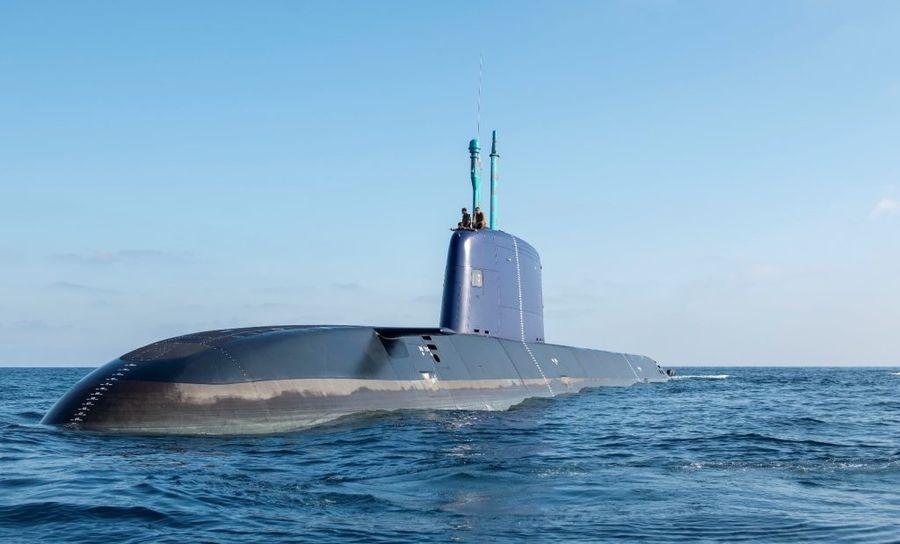
Germany’s military relationship with Israel is of particular significance. Previously motivated by post- war sentiment, Germany now views Israel as a reliable, non- American source of advanced weaponry that Germany needs for its own and European defense. Foregoing French and American options, Germany spent $6.7 billion on the Arrow missile defense system- the largest foreign defense order in Israel’s history. ThyssenKrupp Marine Systems sells Israel the submarines for its second- strike nuclear deterrent, and Israeli firms sell Germany assault ships and unmanned naval systems. Israel and Germany planned to convert German VW factories to produce Iron Dome defense components. This particular proposal was vetoed by Qatar, which owns a 10.7% stake in VW. But that will not stop the long run logic. The symbiosis is obvious. Germany provides manufacturing infrastructure in a safe location- the equivalent of economic, strategic depth, which Israel lacks. Israel provides advanced technology and battle-tested systems. And both powers dilute their dependence upon their mercurial American ally. Parenthetically, following the same logic, Israel and India have concluded an agreement to jointly develop defense technology and explore joint production within India. India already purchases 29% of Israel’s arms exports, which amount to 15% of India’s armament imports. India is Israel’s largest defense customer (Germany is second, followed by the US.) Meanwhile, at a time when the Americans were setting conditions on resupply, India sent Israel ‘no fewer than 2,596 shipments of weapons, ammunition, parts, and components’ between October 7th, 2023, and November 30th, 2025.
China, of course, is the power par excellence whose manufacturing sector would meet Israel’s need for diversified supplies. China wants Israel’s technology. Out of deference to its American patron and fear of Chinese exploitation, Israel has refrained from crossing that Rubicon. However, should American administrations shift towards indifference or hostility, we should expect Israel’s calculus to change. For now, Israelis and Europeans are hedging their dependence upon American production without overtly breaking with the still-useful ‘hegemon.’ The shift toward a multipolar defense order will be gradual, but Washington should make no mistake: it is already underway.
Aaron M. Zack has taught at the City University of New York, Pennsylvania State University, and Yeshiva University. He holds a PhD in European Studies from the Johns Hopkins School of Advanced International Studies. The author of Hegemonic War and Grand Strategy, his analysis has appeared in Survival, Comparative Strategy, and on Substack.
image: The Israeli navy's sixth submarine submarine haas been officially named INS (Israeli Navy Ship) "Drakon." The naming ceremony took place at the Kiel Shipyard in Germany. (Israeli Navy)

When Losing Control of AI Becomes a Weapon
By Yunus Emre Tumen • RealClearDefense
International Allied Reliability of States: Criteria and Evolution
By Sergey E. Ivashchenko • RealClearDefense
Your Military Paycheck Has an End Date
By Sean Ofeldt • RealClearDefense
Masters of Command
By Travis A. Karnes • RealClearDefense
A Sweet American Original
By Greg Maresca • RealClearDefense

Monty: Riding the Pendulum
By Zachery Thomas, DODReads
Sign of the Times: CCAs Dominate a Major Fighter Conference
By Bill Sweetman • The Strategist (ASPI)
Marines Want Naval Strike Missiles With Double The Range
By The WarZone
U.S. Navy Targets 79 New Cutter-Based FF(X) Frigates
By A. Servaes, Global Defense
The Hegseth Grenade: A Sea Change at Newport
By Robert C. Rubel, CIMSEC