

Time To Think About The Unthinkable
Published July 7, 2023 • Read time: 8m
Twice in the 1950s, the Eisenhower administration threatened to use nuclear weapons to defend Taiwan from a Communist Chinese invasion. Writing in The Diplomat, Yi-Lan Fang and Lin Tzu-Yao, both of whom have served as legislative assistants in the Legislative Yuan, Taiwan’s unicameral legislature, argue that the United States should extend its nuclear umbrella to the island. They view this step as a practical alternative to Taiwan developing its own nuclear deterrent. And they note that Taiwan’s Foreign Minister has confirmed that “the issue has been discussed, without elaborating as to the content of the discussion.”
The EurAsian Times reports that Taiwan’s Foreign Minister Joseph Wu told legislators that “Taipei and Washington are engaged in talks” about the American nuclear umbrella being used to deter a Chinese invasion. And the paper quotes Su Tzu-yun, a research fellow at Taiwan’s Institute for National Defense and Security, who observed that “the extension of an ally’s nuclear umbrella over Taiwan would significantly benefit Taiwan’s security” by reducing “its susceptibility to nuclear coercion.”
After China conducted its first successful nuclear weapons test in the early 1960s, Taiwan’s government under Chiang Kai-shek sought to acquire nuclear weapons. A key player in Taiwan’s nuclear research, Dr. Chang Hsien-yi, studied nuclear engineering in the United States and was recruited by the Central Intelligence Agency which enabled the United States to monitor the progress of Taiwan’s effort to acquire nuclear weapons. According to Yi-Lan Fang and Lin Tzu-Yao, Chang defected to the U.S. in 1988, after which Washington persuaded the Taiwanese government to end its nuclear weapons program. Since then, successive U.S. administrations have relied on a policy of “strategic ambiguity” to deter China from forcibly annexing Taiwan.
The Ring of Global Compute and the Limits of Chip Export Controls
China’s Revised Mobilization Law and the Expanding Reach of National Defense
America Must Win the Biotech Race Against China
China’s Epic Campaign To Steal America’s Secrets
The debate over whether to continue the policy of strategic ambiguity continues among U.S. policymakers and observers. On more than one occasion, President Biden has stated that the United States would militarily respond to an invasion of Taiwan by China--only to have administration spokespersons walk back the president’s remarks, which exhibited strategic confusion instead of strategic ambiguity. Observers such as the late Japanese premier Abe Shinzo, Michael Schuman, Doug Bandow, Weifeng Zhong Richard Haass, Peter Devine, Rep. Mike Gallagher, and Joseph Bosco have called for ending strategic ambiguity, while others including Sen. Rand Paul, Peter Van Buren, Steven Goldstein, Taiwanese political scientists Nien-chung Chang-Liao and Chi Fang, Taiwanese foreign advisers Simon Shin-wei Chen, Wang Kai-chun and Samuel Hui, Lucas de Gamboa, and Bill Sharp advise maintaining the policy of strategic ambiguity. U.S. Secretary of State Antony Blinken at his recent meeting with Chinese President Xi Jinping reiterated that America does not support Taiwan’s independence, which produced a negative reaction from some Republicans in Congress who accused the Biden administration of appeasement.
Extending America’s nuclear umbrella to Taiwan would unquestionably end the policy of strategic ambiguity, but would it make strategic sense for the United States? Our nuclear umbrella currently extends to our NATO allies, Japan, and South Korea. That means our nuclear umbrella covers North Macedonia, Slovenia, Albania, and Croatia. Does anyone believe that the independence of those countries is as important to U.S. interests as the independence of Taiwan? From that perspective, extending the nuclear umbrella to Taiwan makes sense. But it could also be very provocative. Timing here can be important. Washington policymakers should not be making a commitment to wage nuclear war on behalf of Taiwan unless they are confident that the U.S. can thereby deter a Chinese invasion and, if necessary, defeat China if war comes. Extended deterrence only works if the threat is credible. Will Beijing believe that U.S. leaders would be willing to risk Washington, New York, or Los Angeles for Taipei?
Interestingly, in a recent poll conducted by Western Kentucky University’s Timothy Rich, 65 percent of Taiwan’s citizens lacked confidence that the United States would defend Taiwan if China attacked. Only 7.5 percent of those polled were “very confident” that the U.S. would come to the defense of Taiwan. Perhaps that is why Taiwan increased its defense budget by nearly 14 percent for 2023.
In the 1950s, when the U.S used nuclear threats to deter a Chinese invasion of Taiwan, China had no nuclear weapons and we had unquestionable strategic superiority over the Soviet Union. Today, China has a substantial nuclear force which is growing in size and sophistication. And Russia’s nuclear force is at least the equal of the United States’ nuclear arsenal. Recently, Air Force Gen. Thomas Bussiere noted that the U.S. is “now facing two nuclear peer adversaries that have the capability to hold at risk almost anything in any domain at a time and place of their choosing.” What this means is that a U.S. threat to use nuclear weapons in defense of Taiwan today would not be as credible as it was in the 1950s. And to state the obvious, a nuclear threat by Dwight Eisenhower then was much more credible than would be a similar threat issued by Joe Biden today. But before any such extended guarantee is made, Congress needs to weigh in on the debate so that the representatives of the American people have a say in committing this nation to go to war--including nuclear war--to defend Taiwan.
A report last year by Patty-Jane Geller of the Heritage Foundation noted some worrisome trends in the U.S.-China nuclear balance. China already deploys about 100 Intercontinental Ballistic Missiles (ICBMs) and is building more than 300 new missile silos for future deployment of DF-41 missiles, each of which can carry up to 10 warheads. Our currently deployed 400 ICBMs, Geller writes, each carries one warhead. China, therefore, is on the road to achieving superiority vis-a-vis the United States in land-based ICBMs. The Pentagon estimates that China’s nuclear force will have at least a thousand warheads by 2030.
Geller also notes that China has “hundreds” of theater dual-capable precision missiles, such as the DF-21 and DF-26, that gives it theater nuclear superiority over the United States to match its conventional military superiority over the U.S. in the South China Sea. The implications of these trends for our ability to deter a Chinese invasion of Taiwan or defeat China in a war in the western Pacific are stark, according to Geller:
The impacts of China’s expanded nuclear forces would become evident in the case of a military effort to unify with Taiwan. Backed by nuclear missiles that can strike targets ranging from Taiwan out to the Second Island Chain (in addition to a strategic force capable of holding the U.S. homeland at risk), China can become more confident and secure in a conventional fight. If fighting over Taiwan escalates, China can rely on its nuclear forces to coerce Taiwan or the United States, should it become involved, to back down. Worse, it can employ nuclear weapons in an attempt to bring the conflict to an end on terms favorable to China. In this case, China’s expanded nuclear forces fit directly into its goal to unify with Taiwan and then expand its dominance into the Indo-Pacific.
Geller concludes that the trends in the nuclear balance between China and the United States “could hinder the credibility of U.S. extended deterrent commitments.” China, she writes, by building up its ICBM force and its theater nuclear forces is mimicking Soviet strategy in the late 1970s when after completing a massive ICBM buildup, the Soviets deployed SS-20 intermediate-range nuclear missiles in Eastern Europe in an effort to decouple the United States from its West European allies. President Reagan responded to that development by growing and modernizing our own ICBM force and installing Pershing-2 and nuclear-armed cruise missiles in Western Europe.
Meanwhile, Mark Helprin writes in the Claremont Review of Books that Taiwan’s military budget is “deficient” in the face of the growing Chinese threat, while the American nuclear deterrent has “atrophied.” Helprin sees the “under-resourced” U.S. military as “traveling the road followed by Britain, once the indisputably most powerful nation, then one of the great powers, then a secondary, and soon a tertiary, power.” He notes that while a declining Britain had the United States to shield it from its great power challengers, we “have no such protector, and should we continue our neglectful course . . . our denouement will be violent and tragic.”
What should the U.S. response be to these worsening trends? Should we build up our own ICBM force? Should we deploy theater nuclear forces to the western Pacific region? Should we station nuclear missiles in allied countries in the western Pacific, including Taiwan? Should we encourage key allies in the region—Japan, South Korea, Taiwan—to develop their own nuclear deterrent forces? Or should we put our faith in arms control and the belief that China is a status quo power that does not threaten the U.S.-led global world order?
During the Cold War, America was blessed with a group of nuclear strategists that prided themselves on “thinking about the unthinkable,” to borrow a phrase from Herman Kahn—one of those nuclear strategists. Fred Kaplan called them “the wizards of Armageddon” in a book with that title. Kahn, Bernard Brodie, Albert Wohlstetter, and Henry Kissinger were among the early pioneers in this field, and were later joined by Paul Nitze, Andrew Marshall, Edward Luttwak, Colin Gray, and others.
As a new nuclear arms race continues to heat-up in the Indo-Pacific region, it is time for a new generation of nuclear strategists to once again “think about the unthinkable” to help guide our policymakers through these dangerous times.
Francis P. Sempa writes on foreign policy and geopolitics. His Best Defense columns appear at the beginning of each month.

When Losing Control of AI Becomes a Weapon
By Yunus Emre Tumen • RealClearDefense
International Allied Reliability of States: Criteria and Evolution
By Sergey E. Ivashchenko • RealClearDefense
Your Military Paycheck Has an End Date
By Sean Ofeldt • RealClearDefense
Masters of Command
By Travis A. Karnes • RealClearDefense
A Sweet American Original
By Greg Maresca • RealClearDefense
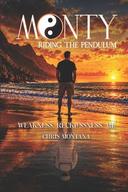
Monty: Riding the Pendulum
By Zachery Thomas, DODReads
Sign of the Times: CCAs Dominate a Major Fighter Conference
By Bill Sweetman • The Strategist (ASPI)
Marines Want Naval Strike Missiles With Double The Range
By The WarZone
U.S. Navy Targets 79 New Cutter-Based FF(X) Frigates
By A. Servaes, Global Defense
The Hegseth Grenade: A Sea Change at Newport
By Robert C. Rubel, CIMSEC