
Trump's Taco Plant on Communist CCP Red China
Last updated 06:15 AM EDT • Read time: 7m
From Summit Failure to Strategic Capitulation in the Face of Existential Threat
The Communist Party of China (CCP) functions not as a normal nation-state but as a totalitarian Leninist apparatus conducting unrestricted, multi-domain warfare against the United States and the broader West. Guided by Mao Zedong’s protracted struggle, Sun Tzu’s emphasis on deception and preemption, and Marxist-Leninist dialectical materialism, the CCP pursues “national rejuvenation” by 2049 through systematic erosion of American military, economic, technological, and societal resilience.
Recent developments in the second Trump administration expose a perilous disconnect: campaign-era rhetoric of strength yielding to transactional accommodations that grant the adversary time, legitimacy, and resources. The May 2026 Beijing summit’s thin results, direct appeals for CCP intervention in Ukraine, ongoing strategic farmland acquisitions, persistent economic entanglements, and the interlocking threats across Iran, North Korea, Taiwan, espionage, space warfare, and Cuban intelligence footholds represent a hollow “taco”—crisp rhetorical shell concealing substantive emptiness—before a peer competitor whose doctrine demands the displacement of U.S. primacy.
The Summit Charade: Optics, Stabilization, and Strategic Deferral
President Trump’s mid-May 2026 meetings with Xi Jinping in Beijing produced photo opportunities, announcements of Boeing aircraft purchases (up to 200 confirmed with talk of 750 more), agricultural commitments aiming to restore pre-2025 trade levels, and the creation of bilateral Boards of Trade and Investment for “non-sensitive” sectors. Both sides touted a new framing: a “constructive U.S.-China relationship of strategic stability.” Chinese readouts prioritized this narrative shift, warnings on Taiwan, and “stabilization,” while U.S. briefings emphasized modest trade gains, rare earth supply assurances (unreciprocated in Beijing’s version), and shared language on Iran’s nuclear ambitions and North Korean denuclearization.
Analytically, this mirrors the Phase One deal of Trump’s first term: headline purchases and bureaucratic mechanisms masking unchanged fundamentals. No enforceable curbs materialized on dual-use technology transfers, Belt and Road Initiative coercion, overcapacity dumping, or gray-zone campaigns in the South China Sea. The PLA’s modernization—incorporating stolen Western IP across hypersonics, AI-enabled command systems, and integrated joint operations—advances unimpeded. Such engagements provide the CCP with intelligence collection windows, delay U.S. decoupling efforts, and legitimize its hybrid warfare under the guise of “stability.” Xi extracted rhetorical concessions and breathing room amid U.S. distractions in the Middle East and Europe; America gained little beyond optics.
Pleading with Beijing on Ukraine: Inverting the Correlation of Forces
Particularly alarming was President Trump’s direct request during the summit for Xi to leverage influence over Moscow to break the deadlock in Ukraine negotiations, now in their fifth year. Trump reportedly pressed Xi to convince Vladimir Putin to return to talks with Volodymyr Zelensky, viewing it as “natural” given Beijing’s ties to Russia. This inverts strategic logic. The Sino-Russian entente—forged in joint military exercises, no-limits partnership rhetoric, and economic complementarity (Russian energy for Chinese technology and markets)—positions the CCP as the senior partner. Beijing sustains Moscow’s war machine through massive dual-use exports (machine tools, electronics, components for drones and missiles) while importing sanctioned oil and evading secondary sanctions.
Enlisting the primary revisionist power to arbitrate a conflict that drains U.S. resources and European attention grants Beijing unearned peacemaker stature, negotiating leverage on trade and Taiwan, and assurance that Russia remains a forward-deployed distraction. Communist alliances thrive on exploiting Western divisions. Realist counsel cautions against outsourcing core security interests. This constitutes classic great-power realignment malpractice: empowering the actor whose long-term interest lies in a weakened but functional Russia tying down the U.S. Navy and Air Force in secondary theaters.
Farmland Acquisitions, Food Security, and Economic Warfare
CCP-linked entities continue targeted acquisitions of U.S. agricultural land, often proximate to military bases, critical infrastructure, and research facilities. While Chinese-held acreage remains modest—roughly 248,000 to 383,000 acres per various USDA and congressional estimates, under 0.02-0.03% of total U.S. farmland—the pattern aligns precisely with “civil-military fusion” (jun-min ronghe) doctrine. This blurs commercial and PLA lines to embed surveillance, sabotage, or logistical assets within the American homeland. Parcels near sensitive sites raise reconnaissance, supply-chain interdiction, and biological/agricultural warfare concerns.
Broader economic subversion persists. Despite tariffs, U.S. dependencies endure in rare earth processing (China controls over 90%), pharmaceuticals, electronics, and advanced manufacturing. Annual IP theft costs run into hundreds of billions, directly funding PLA modernization. “Made in China 2025” and successor plans target dominance in AI, quantum, biotech, and semiconductors. Summit-created boards risk institutionalizing managed decline rather than enforcing decoupling. Economic engagement absent ironclad reciprocity subsidizes the enemy’s military-civil fusion apparatus and internal repression machinery—from Xinjiang to Hong Kong.
The Axis of Revisionists: Iran, North Korea, Taiwan
The CCP serves as enabler-in-chief. It sustains Iran via oil imports and dual-use technology, complicating U.S. efforts amid Hormuz tensions. North Korea’s nuclear-missile escalations benefit from Chinese tolerance, covert support, and border logistics, diverting American strategic focus. The moral and operational hazard of tolerating such patronage networks remains acute.
Taiwan remains the decisive theater. Xi’s summit warnings, intensified PLA exercises, and gray-zone coercion signal narrowing patience. U.S. strategic ambiguity, combined with procurement delays, risks signaling irresolution. CCP doctrine views absorption of Taiwan as the key to shattering the First Island Chain, enabling breakout into the Pacific, and securing semiconductor dominance. A cross-Strait contingency would trigger economic shockwaves dwarfing current conflicts, given global reliance on Taiwanese advanced chips.
Espionage: Thousand Grains of Sand, Persistent Penetration
CCP espionage—cyber, human intelligence (HUMINT), United Front influence, and academic “non-traditional” collectors—operates at industrial scale. Over 60 documented cases from 2021-2024 alone span military technology theft, trade secrets, and transnational repression (overseas police stations). Recent activity includes attempts to recruit U.S. service members, toxin smuggling, and hacking campaigns. The FBI notes China-linked actors in ~80% of economic espionage prosecutions. United Front Work Department operations target diaspora communities, elites, and institutions via Confucius Institutes’ successors, TikTok data harvesting, and elite capture. This comprehensive assault erodes America’s qualitative edges in AI, quantum computing, hypersonics, and biotechnology.
Emerging Domains: Space Warfare and the Cuban Foothold
The CCP militarizes space as a warfighting domain. It fields direct-ascent ASAT missiles (SC-19 family, demonstrated 2007 with massive debris), with reach extending toward geosynchronous orbit per 2013 tests. Ground-based lasers dazzle or damage sensors today and threaten structural damage by mid-to-late 2020s. Co-orbital “inspection/repair” satellites serve as reversible or kinetic killers. Electronic warfare, jamming, and cyber payloads complete a counter-space arsenal designed to blind U.S. command, control, communications, intelligence, and precision-strike capabilities essential for joint operations. By 2040, PLA planners envision integrated space superiority enabling shock deterrence and blockade operations.
Concurrently, Beijing expands its SIGINT footprint in Cuba, 90 miles from Florida. Facilities at Bejucal (with upgraded circularly disposed antenna arrays), Wajay, Calabazar, and others enable monitoring of U.S. southeastern military activities, naval operations, air bases, and Cape Canaveral launches. Satellite imagery confirms ongoing enhancements for long-range collection of electronic signatures and communications patterns. This hemispheric penetration—echoing but surpassing Soviet-era threats—provides persistent surveillance and potential crisis leverage.
Strategic Reckoning: Containment or Capitulation
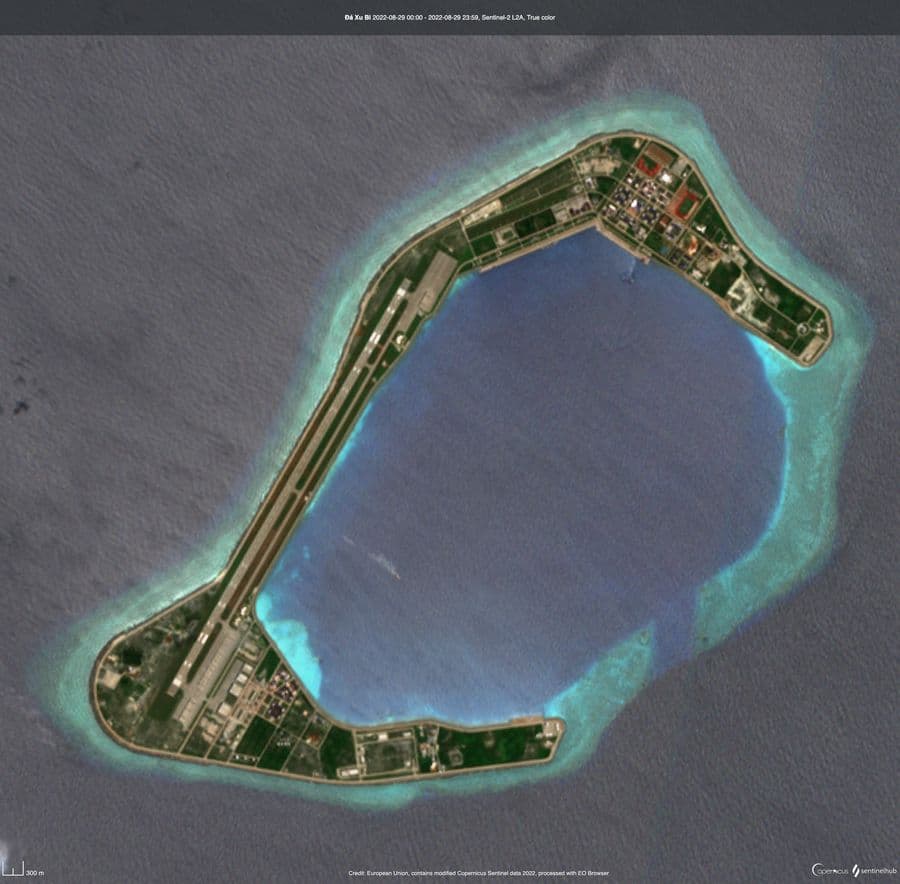
The CCP’s record—genocide in Xinjiang, Hong Kong’s dismantling, South China Sea island militarization, COVID-19 obfuscation, and hybrid aggression—reveals implacable totalitarian intent. Transactional summits, pleas for mediation, and incremental measures treat symptoms while the adversary consolidates comprehensive national power.
Cold War victory experience prescribes comprehensive, multi-domain containment: ironclad alliances (QUAD, AUKUS expansion), total supply-chain repatriation and friend-shoring, export controls on foundational technologies, outright prohibition on adversary farmland and critical infrastructure investments, counter-space resilience and offensive capabilities, hemispheric denial operations against Cuban outposts, and ideological clarity that rejects engagement illusions. Military posture must credibly deter Taiwan scenarios while signaling resolve across domains.
America’s margin for error contracts daily. The Beijing “taco”—polished exterior masking strategic malnutrition—risks leaving the Republic unprepared before the most capable Leninist challenger in its history. Only demonstrated strength, relentless vigilance, and doctrinal realism—not transactional optics—will secure liberty and primacy. The CCP respects power and exploits weakness; doctrine, capabilities, and trajectories dictate the imperative path forward.
“As President Ronald Reagan once said, evil is powerless when the good are unafraid.”
Travis A. Karnes is a strategic analyst who was the former lead editor of the Peace Through Strength Institute.
image: Subi Reef in the Spratly Islands

In Pursuit of Nuclear Abolition
By Peter Huessy • RealClearDefense
Innovation Alone Won’t Prepare the U.S. for the Future Battlefield
By Joshua Segal • RealClearDefense
The sUAS Tactical Trifecta
By Bryan T. Woody • RealClearDefense
The Revolutionary War: When Strategic Options Share the Same Weakness
By Henry Yep • RealClearDefense
The Houthis Are Testing the Limits of Collective Defense
By Saima Afzal • RealClearDefense

Who Shoots Down the Drone Over the Shipyard?
By John Ferrari & Dillon Prochnicki • RealClearDefense
Northrop Grumman Breaks Out the Big Guns at AUSA
By Daniel Terrill, Defense News
Army Pursuing Diverse Array of New Anti-Air Interceptors
By Trevithick, The WarZoneWho Shoots Down the Drone Over the Shipyard?
By John Ferrari & Dillon Prochnicki, RCD
F-35C Lands for the First Time on a Ford-Class Aircraft Carrier
By The Aviationist