
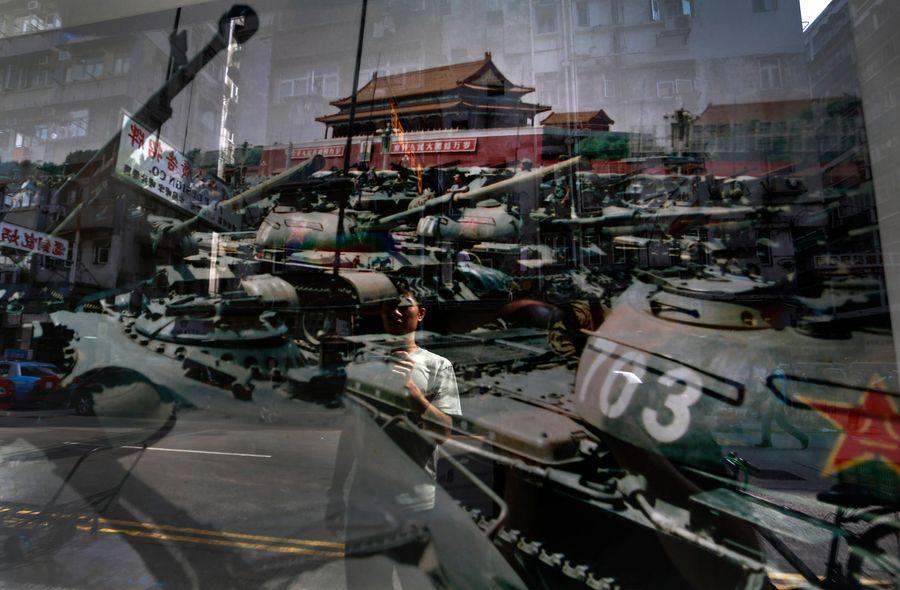
Waterfall of Five Reasons Why the PRC Will Not Invade Taiwan
Published May 9, 2026 • Read time: 13m
The modernization and expansion of the People’s Republic of China's (PRC) Armed Forces have caused reverberations around the world. Its leader, Xi Jinping, has said several times that the reunification of Taiwan with the motherland is unstoppable and it will occur within his lifetime. Jinping is 72 and leaders of the PRC have ruled into their 80s, which provides a rough timeline. Thus, political and military leaders in the U.S. have called the PRC’s military buildup the “pacing threat.”
Unless one is privy to Xi Jinping's conversations with members of the Chinese Communist Party's (CCP) Politburo's Standing Committee, one cannot state with any certainty that the PRC will or will not invade Taiwan. Earlier this year, Xi stated that any action against Taiwan will not happen before 2027 causing many to breathe a sigh of relief.
Remember, rhetoric by political leaders is often directed at an internal audience and is often not accurate when it comes to foreign policy actions. Nonetheless, we, as do the Taiwanese and our Asian Allies must honor the threat.
Yet, the prevailing opinion is that an attempted takeover of Taiwan by force by the PRC is inevitable. But is it?
Assume for the sake of discussion that you are a member of the CCP's Politburo Standing Committee, and Xi has ordered a risk evaluation of an invasion of Taiwan. Xi’s decision is based on statements by the elected Democratic People’s Party (DPP) which opposes reunification and controls the presidency and a narrow majority in the Taiwanese legislature. Thus, the intelligence assessment that the PRC cannot gain control of the Taiwanese government via its support of the Pan-Blue Coalition opposition led by the Kuomintang (KPF) Party or a coup.
The Ring of Global Compute and the Limits of Chip Export Controls
China’s Revised Mobilization Law and the Expanding Reach of National Defense
America Must Win the Biotech Race Against China
China’s Epic Campaign To Steal America’s Secrets
There are five areas the committee should consider, which cascade into the primary risk evaluation leading to a go/no-go decision.
Risk #1 – Contraction of the PRC’s economy
The PRC’s economy is heavily dependent on exports. Four countries - the U.S., Republic of Korea, Japan, and Taiwan – represent 21.31% of the PRC’s total exports of $3.777.9 billion in 2025. The U.S. leads with 11.12%, Japan with 4.16%, Korea with 3.82%, and Taiwan with 2.21%.
Assuming these four nations support Taiwan in a conflict with the PRC, exports to these countries will end.
European Union (EU) ($559.9B or 14.82%) and other ASEAN nations (Brunei, Cambodia, Indonesia, Malaysia, Myanmar, Philippines, Singapore, Thailand, Timor, and Vietnam) ($665.2B or 17.61%) are the PRC’s other large customers.
In a war over control of Taiwan businesses, it is also likely that the PRC would likely lose customers in the Philippines and Vietnam because they are already in conflict with the PRC over mineral rights and control of small archipelagos in the South China Sea. Others in the EU or ASEAN may also join in sanctions that would further reduce the PRC’s exports.
Most firms that depend on exports or provide technology and business services are in the PRC’s Special Economic Zones, which free them from some of the restrictive economic policies faced by businesses elsewhere in the country. Many of these businesses also have bank accounts and have invested funds outside the PRC.
A war over Taiwan will bring sanctions that will cut them off from their assets. While the CCP can blame the banks and governments opposing the attempted takeover of Taiwan, these entrepreneurs will know the truth, which is that the CCP created this problem.
Sanctions that cut off the PRC from the financial markets where it has invested billions, along with a significant drop in exports, will cause economic problems and reduce the GDP. Owners of thousands of businesses will turn to their government for aid. Should the CCP not be forthcoming to make them whole, resistance/dissent will increase.
Risk #2 - Financial Risk
The government agencies that control the economy don’t have the tools or ability to adjust to a contracting economy. With all the direction and decisions coming from the party’s bureaucrats, rather than the business owners, the CCP will find it difficult to mitigate a recession caused by the loss of exports.
Unlike Russia, the PRC has no natural resources to export. It cannot sell surplus oil and gas to generate hard currency from nations willing to ignore sanctions.
Once the war begins, thousands of entrepreneurs in the PRC's Special Economic Zones will see their revenue drop significantly. Finding new customers in countries that do not support Taiwan will be difficult, which will force layoffs and force their employees to use their savings to buy food.
Yes, production of munitions and equipment to support the war will help, but those factories are all owned/controlled by the CCP. The party has also invested in many inefficient firms and kept them alive through government subsidies. These payments will increase if the Chinese economy is cut off from the world’s markets.
One available option is to print money. More yuan coming off the presses will lead to inflation. The funds Chinese citizens have hoarded will be quickly consumed as the price of everything rises. Internationally, the value of the yuan will plummet, making imported goods such as oil and coal more expensive, further feeding inflation and further stressing the Chinese economy and its currency reserves.
The temptation will be to impose price controls and rationing. These may work in the short term but could create a black market that may have widely inflated prices, forcing the CCP to order its security apparatus to crack down. The government's efforts to eliminate the black market may be unpopular, which will add fuel to the fire for those who want to reduce the CCP’s control or rid the country of its form of government.
Risk #3 – Two Types of Corruption
Over the past few years, Xi has purged many senior leaders of the People’s Liberation Army (PLA). The reasons that have leaked out vary, from a lack of trust, being ineffective managers, and/or corrupt.
Signs of endemic corruption surfaced when it was revealed that many of the PLA’s missiles were either fueled with water or not fueled at all, and electronics that wouldn’t function when the launch button was pressed. Apparently, it was not just one missile, but a large number, which led to a purge of its strategic rocket forces leadership.
The fact that the problems exist or the purges that occurred is not as surprising as the fact that the issues were reported by Western media outlets. While the CCP and the PLA attempt to closely control what is reported, they cannot control everything. However, one should also look at them as possible disinformation.
What these instances do is provide a picture of recurring corruption, which would, if one were the president of the PRC, give pause before committing the country to war. In other words, can Xi trust his generals and their equipment.
The other corruption issue stems from the PRC’s emphasis on political orthodoxy and Chinese culture. In the Chinese Armed Forces - the PLA, the PLA Navy and PLA Air Force – there are dual chains of command – political and military. Political reliability is prized as much as, if not more than, an individual’s professional (leadership, management and operational) skills.
Promotions are often based on political reliability over one’s ability as an officer. Battlefield decision-making is done at the highest level and then passed down to the units in combat. The troops in combat are not allowed (trusted?) to make decisions based on the actual fighting.
As an aside, the Soviet, and now the Red Army, has the same problem, and its leadership and tactical failures are on full display in Ukraine. The PRC’s culture and doctrine are closer to the Russian model than to a Western one, in which tactical decision-making is pushed down to the lowest possible level. The U.S. and our Allies train junior enlisted to be leaders and expect them to take over if their officers are killed or out of action and execute the mission as planned.
Compounding the problem the PLA will have when fighting a Western-trained military is the concept of face in which you are told by your superior to do something, questioning the command’s wisdom causes embarrassment to the senior officer as well as to the recipient. The senior is embarrassed because his questioning suggests he may have given a poorly conceived order, and the junior is embarrassed because he must execute it, knowing he will fail.
Face also makes it difficult to push bad news up the chain of command problem. While this is an oversimplification of the concept of face, the reality is that face hampers real-time operational decision-making and, worse, can paint a picture for a senior commander that is a fantasy. This is a very different cultural mountain to overcome, and we, the U.S., have worked very hard with our Asian Allies to overcome this cultural obstacle.
Risk #4 – Military Risk
Ask any Marine, and he will tell you that a contested amphibious operation is the most difficult task a military organization can take on. They will also tell you that gaining a bridgehead is the easiest part. The degree of difficulty for the next phases, sustaining the lodgment and expanding it, are exponentially more difficult
The PLA, the PLAN, and the PLAF have almost no experience in amphibious operations. Yes, they took some islands at the end of the Chinese Civil War, but in 1949, they failed miserably trying to take a fortified island just off the coast at the Battle of Guningtou.
Note that the PLA has not been in a major shooting war since 1979 when the PRC invaded Vietnam. In less than a month of fighting that ended in a draw, the PLA, despite overwhelming advantages in men and equipment, did not fare well.
If you assume that the Taiwanese will resist, the invasion force will have to be able to bring enough combat power ashore in a very short period of time to overwhelm the Taiwanese defenses. Most military experts would equate the level of effort to what the U.S. put ashore to take Okinawa in 1945.
The beaches where an assault force could come ashore are on the Western side of Taiwan and on the edge of heavily built-up areas. To move off a very narrow beachhead, the PLA’s forces will be fighting in an urban environment that favors the defender, who also has the high ground in the mountains in the center of the island.
To succeed, the PLA would have to first clear the Taiwan Straits of any Taiwanese submarines. This in itself is no easy task, particularly for a Navy that has no wartime experience in anti-submarine warfare, much less in shallow, noisy water. Neutralizing mines under fire is another challenge that the PLA Navy would have to overcome.
The PLAF will have to establish and sustain air superiority over the entire island and well to the east, north, and south to prevent long-range guided weapons from raining down on the beachhead. Both the PLA Navy and the PLA Air Force will have to seek out and destroy the Taiwanese Navy, which has weapons that can attack the invasion fleet from the east side of the island.
Only then can the PLA come ashore. Losses in people, equipment, and vessels are likely to be heavy en route, and once ashore, the PLA units must be resupplied. Moving equipment, supplies, and reinforcements over 110 miles of contested open water is not easy.
In the back of their minds, PLA planners know that the PRC is a net importer of oil and coal, most of which comes by ship, making it easy for navies from countries supporting Taiwan to interdict. According to WorldOMeter, in 2025, the PRC was the world’s second-largest oil consumer and ran a daily deficit of over 11 billion barrels! Even if rationing is imposed, a war will drain the PRC’s stocks or, worse, run out. Either will constrain its military operations.
Beyond the scope of this article is the fact that Taiwan's geography favors the defender, meaning that conquering the island and quashing all resistance will be time-consuming and costly. A complicating factor for PLA planners is which countries would send military aid to Taiwan, and what would they bring to the fight? Taiwan's aid.
The point is that the PLA has very little experience in amphibious landings of this size and scale. Any invasion will be militarily very, very risky and drag the PRC into a protracted war that its fragile economy may not be able to survive, much less afford.
Risk #5 – Threat to the CCP’s Hegemony and Control
The primary goal of the CCP is to maintain control of the Chinese people and remain in power. Any action that materially risks that position, such as the four risks described earlier, is a non-starter. The CCP likes to portray the Chinese people as unified behind its power yet dissent simmers beneath the surface.
In early 1990, the CCP admitted that there had been 8,700 "mass protests." By 2010, Sun Liping, a member of the Chinese Academy of Social Scientists, estimated the number had grown to 190,000.
In 2021, we saw protests in Hong Kong, and in 2022, opposition to the PRC's Covid-19 prevention policies forced the CCP to impose martial law in three provinces and to confine its citizens to their apartments. The CCP uses every lever it has available - print/electronic/social media, education, police, birth control, limits on personal and economic freedom, etc. – to control its population.
Despite the Ministry of State Security’s ability to monitor the population, an invasion of Taiwan could be the catalyst for opponents to act. Any opposition to the CCP's policies will not be tolerated and will be dealt with harshly. Given the nature of the threat as perceived in the halls of the CCP and the Ministry of State Security, they may determine that Xi’s decision to invade Taiwan puts the regime at risk, and Xi must go.
What Could or Should the Free World Do?
To make the price of invading Taiwan unacceptable, we should train and equip the Taiwanese to defend themselves. The U.S., NATO, and the world have seen how the training the Ukrainians received from the U.S. and our NATO allies paid dividends in the early stages of the war and is now giving Ukraine the upper hand.
We need to heed that lesson and do the same for the Taiwanese. If the Taiwanese continue to strengthen their military with modern Western weapons, it should give the PRC pause and may raise the cost of an invasion beyond what the PRC is willing to pay. Deterrence, particularly when dealing with a re-armed, fire-breathing dragon, is always cheaper than war.
Marc Liebman is a retired Navy Captain and Naval Aviator and a Vietnam and Desert Shield/Storm combat veteran. He is an award-winning author of 19 historical novels who writes and speaks on American history and foreign affairs.

When Losing Control of AI Becomes a Weapon
By Yunus Emre Tumen • RealClearDefense
International Allied Reliability of States: Criteria and Evolution
By Sergey E. Ivashchenko • RealClearDefense
Your Military Paycheck Has an End Date
By Sean Ofeldt • RealClearDefense
Masters of Command
By Travis A. Karnes • RealClearDefense
A Sweet American Original
By Greg Maresca • RealClearDefense
Monty: Riding the Pendulum
By Zachery Thomas, DODReads
Sign of the Times: CCAs Dominate a Major Fighter Conference
By Bill Sweetman • The Strategist (ASPI)
Marines Want Naval Strike Missiles With Double The Range
By The WarZone
U.S. Navy Targets 79 New Cutter-Based FF(X) Frigates
By A. Servaes, Global Defense
The Hegseth Grenade: A Sea Change at Newport
By Robert C. Rubel, CIMSEC