
China
RealClear Context
Click below to continue reading this story, discover more China stories from over 25 years of RealClear archives, or follow this topic to stay in the know.
China Is Poised To Lead in Research on Quantum Technologies
ASPI's Critical Technology Tracker (CTT) shows that China is already the country producing the most high-impact research on quantum communication...
09/12/26Read it on The Strategist (ASPI)In Seeking Peace With Beijing, Taipei Is an Asset, Not a Burden
Taipei’s consistent assertion of its national interests, of its right to self-determination, and its participation within international frameworks...
30mins agoRead it on RealClearDefense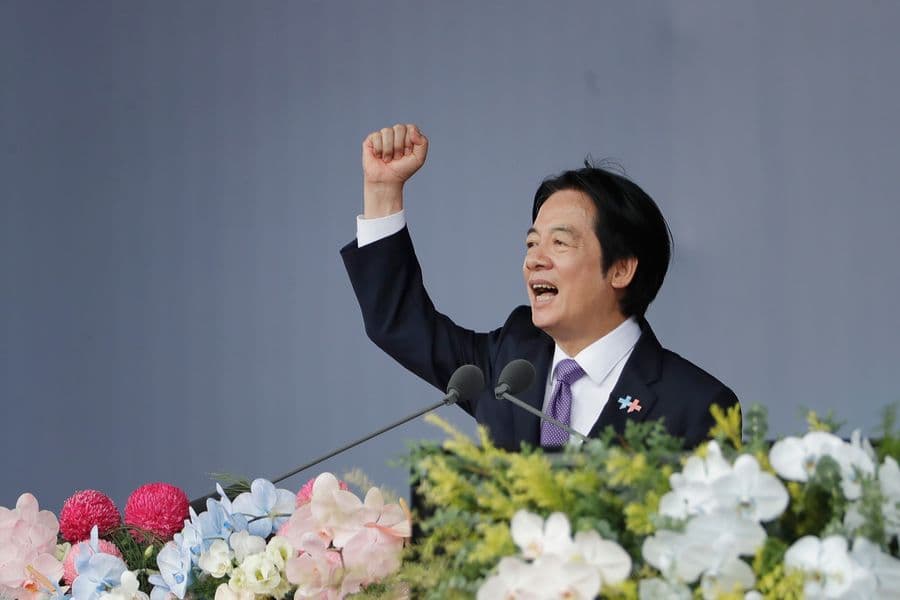
In Seeking Peace With Beijing, Taipei Is an Asset, Not a Burden
On October 10, in his Republic of China National Day address, Taiwanese President Lai Ching-te made his country’s position clear: “Taiwan cherishes peace, but we will not give up our freedom. We are open to exchanges but will not accept subordination.” As evidenced by Taiwan’s recent arms build-up, in direct response to Beijing’s aggression, the conventional wisdom which has come to regard Taiwan’s security situation as being partially bound by the resolve of Western states is flawed. A better explanation is rooted in understanding the managerial role Taipei plays against the internal dynamics of the Chinese Communist Party (CCP), which incentivize external aggression. Despite not being formally recognized as a sovereign state, the Republic of China is a full member of 45 intergovernmental organizations and holds a further 30 positions which range from observer roles to non-member participant status. Taipei’s consistent assertion of its national interests, of its right to self-determination, and its participation within international frameworks make it a source of moral legitimacy for its democratic allies, in stark contrast to Beijing's revisionism.
In the context of cross-Strait security, declarations made in Washington or Brussels, while reassuring, are not the most effective tool of support for Taiwan, as the People's Republic of China (PRC) either ignores the messaging or responds by reasserting the “One-China Principle”. While democracies almost uniformly perceive the PRC's view of Taiwan as an affront to the values of self-determination, Beijing does not. This is because it sincerely believes in the strength of its “reunification” narrative, due to its domestic legitimation. To counter this, Western support should not solely seek to confront Beijing; it should also seek to validate and moralize Taiwan's position as a self-governing democracy which seeks to safeguard its own national interest.
Talking With China - Say What You're Told You Can't Say
When it comes to the Chinese Communists, if you won’t say it in public – like Reagan did with the Soviets - it’s a win for the communists....
1d agoRead it on AND MagazineChina’s Advance in the Bahamas
Beijing’s presence in the Bahamas and its military implications for the U.S. are often overshadowed by discussion of Chinese activities elsewhere in...
1d agoRead it on The DiplomatChina’s Rare Earth Strategy and the Future of the South China Sea
The rise of seabed mining will add new complexity to the South China Sea disputes....
4d agoRead it on The DiplomatA Surfacing Strategy: Chinese Unconventional Oceanic Warfare
The evolution of maritime warfare has largely moved in expanding the form of conflict and the direction of it...
4d agoRead it on CIMSECThe New Geography of America’s China Dependence
... the American de-risking approach has not eliminated dependence on China so much as rerouted and obscured it....
5d agoRead it on OrbisRussia, China and Iran Harness AI for U.S. Midterm Disinformation
Russia, Iran and China are using artificial intelligence tools to turbocharge disinformation efforts ahead of the midterm elections...
5d agoRead it on Bloomberg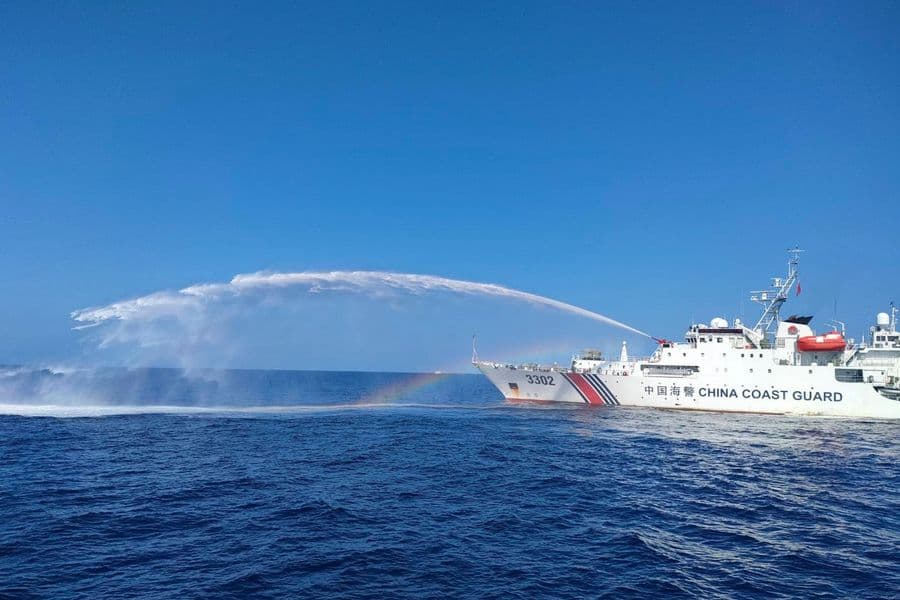
West Philippine Sea: Transparency Alone Won't Deter China
Publicising China’s actions has rallied Filipino support, but Manila still needs sharper messaging and stronger allies.
On 10 October, the National Task Force for the West Philippine Sea (NTF-WPS) reported that 22 vessels from the Chinese maritime militia had been deployed near Kota Island, a Philippine-held area in Palawan. The task force also confirmed that Chinese Maritime Militia Vessel 9622, along with 22 small boats, returned to the area after two weeks, where they engaged in unauthorised fishing and dumping waste at sea.

Trump's Disrupt First, Negotiate Second: Greenland in Focus
By Meda Parameswara Reddy • RealClearDefense
In Seeking Peace With Beijing, Taipei Is an Asset, Not a Burden
By Alexandru Filip • RealClearDefense
Strike First: Israel's Inevitable Doctrine for the Iranian Axis
By Lance Gordon • RealClearDefense
It’s Not President Trump but Thomas Friedman Who Should Be Ashamed
By Francis P. Sempa • RealClearDefense
Putin, Plague, and America’s Biodefense Gap
By Ryan Kane • RealClearDefense
U.S. and Japan Begin Naval Exercises Near Taiwan
By Mari Yamaguchi • Associated PressU.S. and Japan Begin Naval Exercises Near Taiwan
By Mari Yamaguchi, AP
U.S. Navy, Gecko Robotics Surge AI Maintenance Contract
By Ceder, Simkins, Navy T.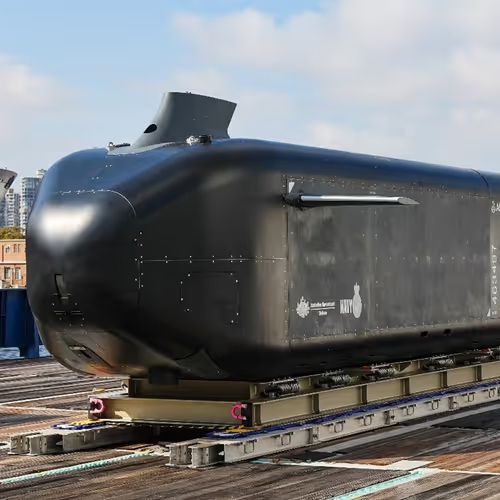
Ghost Shark XL-AUV Payload Bay Seen For First Time
By Thomas Newdick, The WarZone
Dakota Meyer Tapped As Barracks Task Force Senior Advisor
By C. Stassis, MC Times