
America Needs a Joseph Directive
Last updated 06:46 AM EST • Read time: 9m
Join the Conversation
0A national food and water reserve is the missing piece of America’s EMP defense
The war with Iran looms over the midterm elections. Nearly three in four Americans are very concerned about fuel prices, and two in three now disapprove of the war. Explanations on offer run from grand geopolitics to conspiracy theories that Israel dragged America into it. Americans deserve a plain answer to why we are fighting. There is a practical step President Trump can announce now that explains all and creates an opportunity for a major policy upgrade for the American homeland.
For more than 20 years, Washington has known that just a small handful of nuclear weapons, detonated high over the United States, would release electromagnetic pulses, or EMPs, that could black out the electric grid across most of the lower 48 states for a year or more. Former CIA Director James Woolsey told the Senate in 2015 that 90 percent of Americans could die within a year of such a blackout from hunger, lack of water and the breakdown of order.
In April, one of us laid out in these pages how close Iran came to having the means to carry out such an attack. Before this year’s war, the International Atomic Energy Agency and U.S. intelligence assessed that Tehran held enough enriched uranium for more than ten nuclear weapons, more than enough to collapse our country. Ambassador Henry Cooper, former director of the Strategic Defense Initiative, told the Senate in 2018 that EMP attacks “are known to be included in the doctrine and planning of Russia, China, North Korea and Iran.”
This war is about the safety of the American homeland, and it is the price of keeping Iran from turning off the country. But the threat that hangs over America is more than just Iran and demands the kind of initiative President Trump is known for, a practical fix Washington has ignored for decades: a national reserve of food and water to keep Americans alive if the lights go out.
Woolsey’s estimate is far from an outlier. One federal study after another has reached similarly grave conclusions, starting with the congressional EMP Commission’s reports of 2004, 2008 and 2017. The threat is not only from our enemies. A 2010 Oak Ridge National Laboratory study sponsored by the Federal Energy Regulatory Commission, the Energy Department and the Department of Homeland Security found that a severe solar storm could damage or destroy hundreds of the grid’s largest transformers and leave about 130 million Americans without power, in places for years. In 2018 DHS called EMP and solar storms potentially catastrophic, and the President’s National Infrastructure Advisory Council concluded that national plans “would be outmatched by a catastrophic power outage.”
Suppose that all the analyses are wrong and the true toll is just a tenth of Woolsey’s estimate. That’s more than 30 million Americans dead. Suppose it’s a mere hundredth. That’s still over 3 million Americans, more than twice the roughly 1.3 million Americans killed in all our nation’s wars combined. None of those numbers is remotely acceptable. Measured against any of them, let alone the risk of an extinction-level event, the cost of a national reserve is trivial.
In September 1859, a solar storm known as the Carrington event deactivated telegraph lines around the world, shocked telegraph operators and sparked fires in telegraph offices. The telegraph was the only electrical network there was. NASA reports a 12 percent chance per decade that another Carrington-class storm strikes Earth, making one more likely than not every few decades. On July 23, 2012, a solar storm that University of Colorado physicist Daniel Baker judged “in all respects at least as strong as the 1859 Carrington event” crossed Earth’s orbit. Had it erupted a week earlier, it would have hit a country that runs entirely on electricity, very possibly triggering the long, nationwide blackout that Woolsey testified could kill nine in ten Americans. For a country that has neither potable water nor food without electricity, this is an extinction-level event.
In 1860, 31 million Americans lived mostly on farms and knew how to feed themselves without electricity. Today 340 million Americans, four in five of them in cities and suburbs, depend on systems that stop when the power stops.
The backbone of the grid is about 2,100 very large transformers rated 345 kilovolts and above. Four in five large power transformers used in the United States are imported, and new ones commonly take three years to arrive, sometimes five. A grid that loses enough of them cannot restart until replacements arrive. The fuel supply runs on electric pumps. America’s food moves on a just-in-time basis: stores and warehouses depend on trucks, trucks on diesel, and diesel on electricity. Grocery shelves would be emptied within days, or even hours, as panic buying and looting strip them, with no ability to restock. Water treatment plants and the pumps that deliver water run on electricity. People survive about three days without water, so thirst would kill many millions of Americans before hunger.
Possibly excepting the apocalyptic “Death to America” regime in Tehran, against which the only defense appears to be a good offense, adversaries weighing an EMP attack are betting that America would collapse before it could respond. A United States that can maintain basic order by feeding and watering its people through a year even without power largely takes that bet off the table. A national reserve is thus both civil defense and deterrence. As commandant of the Marine Corps, Gen. Robert H. Barrow famously put it in 1979: “Amateurs talk about strategy and tactics. Professionals talk about logistics and sustainability...” Power, communications, transportation, food and water are the logistics and sustainability of our nation in peace and in war, and the grid on which they all rely is America’s Achilles heel.
For most of the 20th century Washington kept grain in reserve, until Congress ended the farmer-owned reserve in 1996. Meanwhile, China, which holds roughly half the world’s stocks of wheat, corn and rice, wrote grain reserves into its Grain Security Law, in force since June 2024. Russia’s Federal Agency for State Reserves, whose roots go back almost 100 years, stockpiles food, fuel and equipment for national emergencies. America stockpiles oil in the Strategic Petroleum Reserve, created in 1975 after the Arab oil embargo; critical minerals and metals in the National Defense Stockpile, authorized in 1939; and medicine and vaccines in the Strategic National Stockpile. Yet we keep no food and no water, apart from what FEMA stores in eight warehouses to carry to disaster victims. FEMA’s stockpile is only about 27 million meals and America eats a billion meals a day. The entire federal stockpile would be exhausted after feeding just one meal to under 10 percent of the population, assuming FEMA found some way to distribute it.
President Trump signed the first executive order on national resilience to electromagnetic pulse in 2019. On Sept. 30 of this year, Secretary of War Pete Hegseth announced FORTRESS America, committing every major military installation to generate its own power independent of the civilian grid. “If an adversary takes down the grid—by cyberattack, by sabotage, by any means—our bases stay lit,” he said. Protecting civilians is the natural next step for President Trump, who promised “the revolution of common sense” in his second inaugural address. Storing food and water against a threat this grave is common sense that Washington, under both parties, has ignored for decades, to the detriment of the American people. Fixing what Washington won’t is Trump’s trademark.
Hardening America’s civilian grid also is necessary but will be slow and costly: the Foundation for Infrastructure Resilience puts protection of the grid’s electronics at about $300 billion. A national reserve of food and water costs a small fraction of that, and it can be done far sooner. Until our grid is protected, Americans need food and water in reserve.
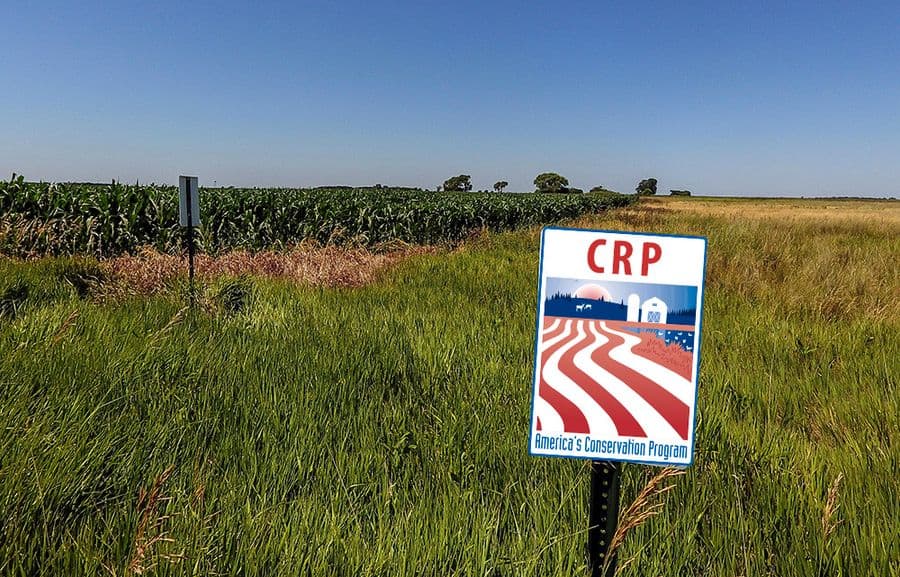
In Genesis, Joseph filled Egypt’s storehouses during a time of plenty, so that when famine came, “in all the land of Egypt there was bread.” America is in a time of plenty. We grow more food than any other nation on earth. The calories to keep every American alive for a year come to about a sixth of a single year’s corn crop. Washington even pays farmers about $1.8 billion a year to keep more than 26 million acres out of production through the Conservation Reserve Program. A “Joseph Directive” would secure a portion of our abundance, and the water Americans need even more urgently, where it will keep Americans alive when nothing else is running. Done right, it would strengthen American farmers, and food rotated out of it would feed Americans in need. It should be built with the producers, distributors and grocers who already feed the country.
Most of what keeps Americans safe should be decided as close to home as possible, and the administration wrote that sound principle into its March 2025 order on state and local preparedness. But the Constitution makes “common defence” one of the federal government’s elemental purposes, something no state, city or family can do alone. No state has a reserve that could feed its people through a long blackout, and an interlocked grid that enemies can cripple all at once belongs in that category. Washington must lead, with a designated official working with the governors and accountable to the President.
Every family should keep supplies of food, water and medicine on hand. But in a national blackout that lasts a year, no family can store enough, and a family that has stored food cannot hold it against foragers desperate for food and water.
The Trump Administration has already begun to harden America. A Joseph Directive is the practical next step; the kind of step President Trump takes because Washington won’t. Announced before Election Day, it would show Americans paying for this war at the pump what the war protects them from and what their president is doing about it. The president who promised to Make America Great Again can now Make America Resilient Again.
Jeff Ballabon is a former counsel to the Senate Commerce, Science and Transportation Committee, and is principal of B2 Strategic Public Affairs.
Stephen Chill is a retired Marine infantry lieutenant colonel, and is a senior advisor to the Foundation for Infrastructure Resilience and the Secure the Grid Coalition.

ICE Is Not a Four-Letter Word
By Meda Parameswara Reddy • RealClearDefense
The U.S. Can Draw Down in the Middle East Without Going Blind
By Cudi Zerey • RealClearDefense
America Needs a Joseph Directive
By Jeff Ballabon • RealClearDefense
Partnering Decides Whether Flexible Military Construction Can Work
By Matt Russell • RealClearDefense
Eight Months of Epic Fury and Still No Internal Alternative
By Stephen D. Cook • RealClearDefense

GE Aerospace to Supply Engines for Two US Navy Flight III Destroyers
By Defense Post
U.S. Air Force Asks Industry for New Cruise Missile for Ukraine
By Michael Peck, DNews
First Flight II San Antonio-class Amphib Completes Builder’s Trials
By Mongilio, USNI N.
LGM-35 Sentinel ICBM on Track for 2030
By Kris Osborn, Warrior Maven
On American Destroyers, Avoid a Self-Inflicted Wound in Spain
By Defense News