
Europe
RealClear Context
Click below to continue reading this story, discover more Europe stories from over 25 years of RealClear archives, or follow this topic to stay in the know.
The Gulf of Finland’s Forgotten Islands
History is full of examples as to why these islands have consistently attracted attention in one conflict after another....
5h agoRead it on RealClearDefense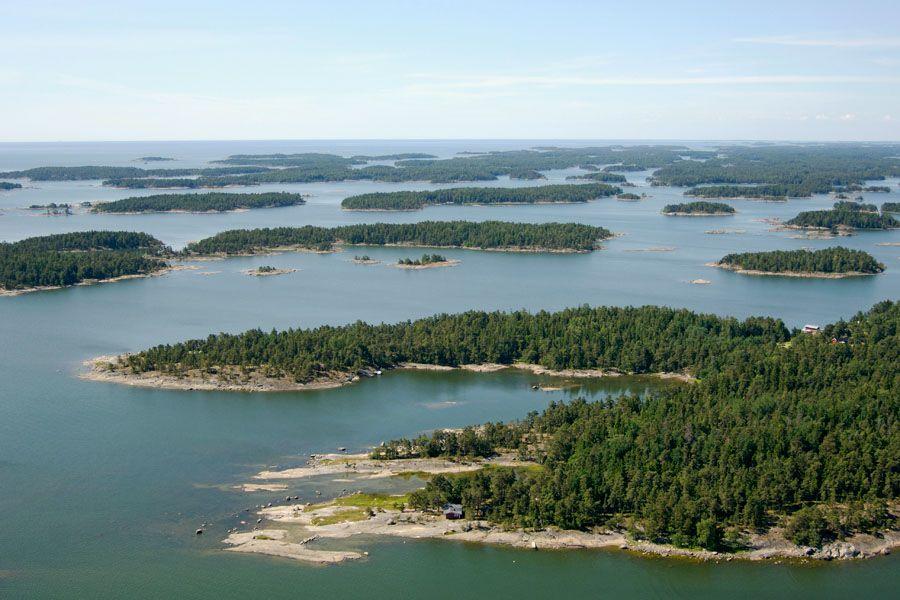
The Gulf of Finland’s Forgotten Islands
In March 1942, Finnish soldiers launched an offensive to retake the island Gogland from the Soviets, not with boats, but by advancing across the frozen Gulf of Finland. The narrow waterway that in warmer months protected the island had become an avenue for assault. Soldiers swathed in winter camouflage clandestinely crossed the snow covered ice and took control of the island, constraining the sea route to Leningrad. In the modern day, the gulf’s scattered islands still remain part of a strategically sensitive maritime frontier. These often overlooked map dots exist on the very frontlines of geopolitics yet are virtually unknown to a wider world. Here, where Russia and NATO’s edges grind against one another, what happens on a few specks of land surrounded by sea can affect events around the globe.
The Gulf of Finland is a narrow passage bordered primarily by Finland to the north and Estonia to the south, both of whose capital cities are positioned directly on its shores. While its western edge opens into the wider Baltic Sea, the gulf’s eastern flank terminates in Russian territory around St. Petersburg. Far from a sleepy backwater, it is choked with shipping routes, ports, communications cables, and naval approaches which give this geography outsized importance beyond its modest size. Whoever controls the small islands speckled across this strategic space gains observation points, logistical nodes, or opportunities to extend operational reach.
Europe Is Paying the Price for Its Soft Power Delusion
For decades, Britain has, like the rest of Europe, clung to a deluded belief in soft power...
4d agoRead it on The SpectatorSlouching Toward Kaliningrad, NATO Dismisses a Nuclear Threat
As it encroaches on the western Russian enclave on the Baltic Sea, the alliance continues to underestimate Moscow's red lines...
2w agoRead it on Responsible StatecraftThe Nordics Are Preparing for War
Neutrality is a distant memory...
2w agoRead it on UnHerdThree Maritime Strike Groups Spearhead NATO’s Neptune Strike 26-4
ITS Cavour, TCG Anadolu, and HMS Prince of Wales are leading the fourth and final element of NATO’s Neptune Strike enhanced vigilance activity for...
2w agoRead it on The AviationistEurope’s Credibility Gap
Dependence on America Has Left It With Little to Offer Would-Be Partners...
3w agoRead it on Foreign AffairsNord Stream Trial Tests Germany’s Alliance With Ukraine
A Ukrainian special-forces veteran went on trial for war crimes in Germany on Wednesday, accused of leading a covert state-sponsored operation to...
3w agoRead it on The Wall Street JournalBritain Puts Millions Into Protecting Military Sites
An additional £470 million is being spent on improving the security of critical military sites across Britain, alongside £240 million for an enhanced...
3w agoRead it on UK Defence Journal
The Gulf of Finland’s Forgotten Islands
By Ben Poulin • RealClearDefense
NATO’s New Spending Pledge Must Buy Real Energy Resilience
By Chuck Dockery • RealClearDefense
The Army Needs a Data Logistics Discipline Before the Next Surge
By Steve Ferenzi • RealClearDefense
2949 Marine Prisoners, Hostages, and Peacetime Governmental Detainees Since Our Corps' Founding
By Jon Couch • RealClearDefense
America Must Win the Biotech Race Against China
By Rob Maness • RealClearDefense
U.S. Air Force To Arm C-17 Cargo Aircraft With Cruise Missiles
By C. Jones, Defence Blog
How Marine Vet Ernest Langdon Became a Renowned Shooter & Gunsmith
By WATM
In First, Two CCAs Fly Air Combat Maneuvers Using Autonomy Software
By A&SF
Space Force Launches Mission Operations Center
By Jon Harper, DefenseScoop
Pentagon Mulls Placing Fleet of Military Satellites Around the Moon
By Ars Technica