
Why Taiwan May Need To Reconsider the Ultimate Deterrent
Last updated 06:16 AM EDT • Read time: 5m
For decades, Taipei’s security has leaned on three pillars: its relationship with the United States, the Taiwanese armed forces, and the island’s renowned ‘silicon shield.’ However, as the global order shifts, the reliability of these safeguards is becoming increasingly uncertain. Decades after Taiwan ended its clandestine nuclear weapons program in 1988, the changing geopolitical environment raises questions on whether Taipei should reconsider nuclear deterrence.
The growing uncertainty surrounding U.S.-Taiwan relations is a clear warning sign for Taipei. Unlike South Korea and Japan, Taiwan lacks a formalized military alliance with Washington. Instead, U.S. policy toward Taiwan has traditionally rested on the Taiwan Relations Act of 1979 and a policy of strategic ambiguity. For Taipei this policy has been a double-edged sword, on the one hand serving as a potent deterrent by forcing China to weigh the high risk of a U.S. kinetic intervention without knowing the exact threshold or scale of that response, but simultaneously creating uncertainty for Taiwan’s strategic planning.
Under the Trump administration this uncertainty has only deepened with the President openly opposing Taiwanese independence and referring to arms sales to Taiwan as a “bargaining chip” vis-à-vis Beijing. As such, while Washington may not fully abandon Taiwan, the country must come to terms with the possibility that the United States is trending to become less reliable and steadfast in its support.
This makes Taiwan’s ability to defend itself increasingly important. Yet here too, Taipei faces a fundamental disadvantage. Following months of contention in the Legislative Yuan, Taipei’s proposed NT$1 trillion military budget (3.01% of GDP) signals an impressive commitment to military deterrence. However, President Lai’s hard-fought budget is still dwarfed by Beijing’s military spending whose annual increase is usually larger than Taiwan’s entire military budget. To compensate, Taiwan cleverly invests in asymmetric warfare capabilities like drones and missiles which can impose significant costs on a much larger adversary. This year’s passing of NT$240 billion drone development and procurement law is a significant step towards such a posture. However, even an exceptionally capable asymmetric defense— and Taiwan’s favorable geography— cannot fully eliminate the fundamental military imbalance between China and Taiwan.
The country’s semiconductor industry offers another, well-known layer of protection. This silicon shield, spearheaded by market leader TSMC, has made the island indispensable to the global economy and the enormous consequences of a cross-strait conflict on global supply chains create a uniquely potent deterrent against Chinese aggression.
Although Taiwan’s semiconductor industry provides considerable strategic protection, the silicon shield cannot be assumed to last forever. U.S. policy initiatives such as the CHIPS and Science Act, together with mounting political pressure, are encouraging Taiwanese foundries to expand production in the United States. While Taipei still retains production of its most advanced chips, Washington’s goal of reshoring as much as 40% of Taiwanese foundry capacity stateside reflects a broader effort to diversify the global semiconductor supply chain away from Taiwan.
While experts doubt the viability of these efforts, a black swan scenario—whether involving disruptive technological breakthroughs or the development of alternative manufacturing ecosystems—could diminish Taiwan’s central role in advanced chip production, thereby eroding the deterrent value of its semiconductor industry.
If each of Taiwan’s current safeguards face structural vulnerabilities, the country is left with the uncomfortable puzzle of how to compensate for them.
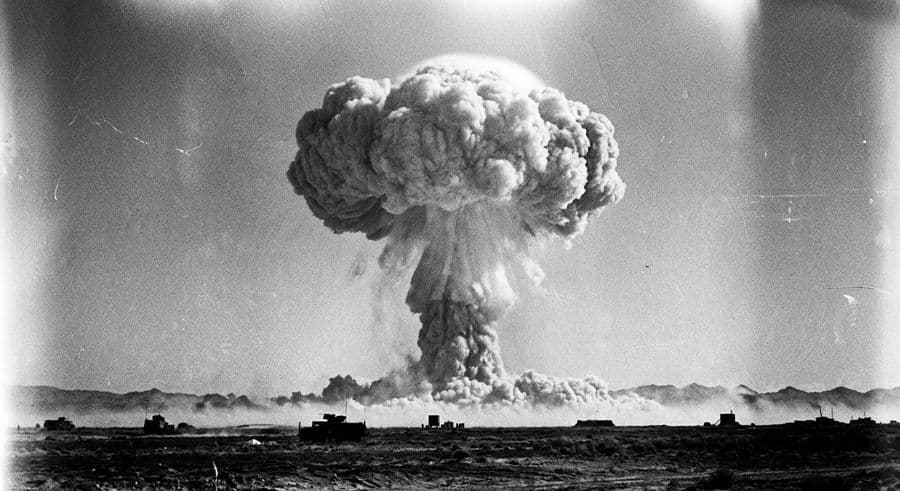
A nuclear weapon would provide Taipei something it currently lacks: deterrence by punishment. Rather than merely raising the costs of an invasion, nuclear capabilities pose a serious threat to the aggressor itself. This shifts the objective from defeating the People’s Liberation Army on the battlefield to ensuring that Beijing views the costs of military aggression as completely prohibitive. No nuclear-armed state has ever suffered conquest from a full-scale invasion, yet history offers examples of states, like Ukraine and Libya, that abandoned nuclear programs or surrendered their nuclear warheads and suffered the consequences. In the mid-1980’s Taiwan’s nuclear program aimed to develop a weapon within three to six months. While development would likely take years, it is not unrealistic that the technologically savvy Taiwan could replicate this capacity in the 21st century. Taipei also already possesses indigenously developed long-range supersonic missiles such as the Ching Tien, capable of striking the Chinese mainland, which could theoretically be reconfigured into delivery platforms for nuclear warheads.
Of course, pursuing a nuclear deterrent is not without its risks and trade-offs. Taiwan would have to abandon its adherence to the Treaty on the Non-Proliferation of Nuclear Weapons (NPT) and could face diplomatic backlash, including from the U.S. Additionally, a nuclear program would divert vast resources that could otherwise strengthen conventional or other asymmetric defenses.
Most crucially, the breakout period between initiating a nuclear program and possessing a credible, operational deterrent could create a particularly perilous window of vulnerability where Beijing might feel compelled to act pre-emptively. Yet, the alternative is to rely on Taiwan’s current safeguards and wait while Beijing’s military capabilities continue to expand. Taiwan’s current strategy may remain sufficient for now, but it should also prepare for a possibility where existing safeguards could prove insufficient.
Across the globe, middle powers like Saudi Arabia, Poland, and South Korea are actively pondering the role of nuclear deterrence. There is currently no popular or political consensus for a potential nuclear program in Taiwan, although this political calculus may change. Taiwan does not need to declare an intent to build a nuclear weapon today. But it should be willing to have the conversation. If Taiwan’s military cannot close the conventional military gap with Beijing, American support cannot be guaranteed, and the silicon shield cannot be relied upon indefinitely, then Taipei may eventually need to consider whether it requires a final layer of deterrence.
Lasse de Graaf holds a Master of International Affairs from the Baruch College Marxe School of Public and International Affairs and a bachelor’s degree from Vrije Universiteit Amsterdam. He has served as an investigator and policy analyst for the New York City Department of Investigation, and worked as an Oversight Fellow for the U.S. House of Representatives.