
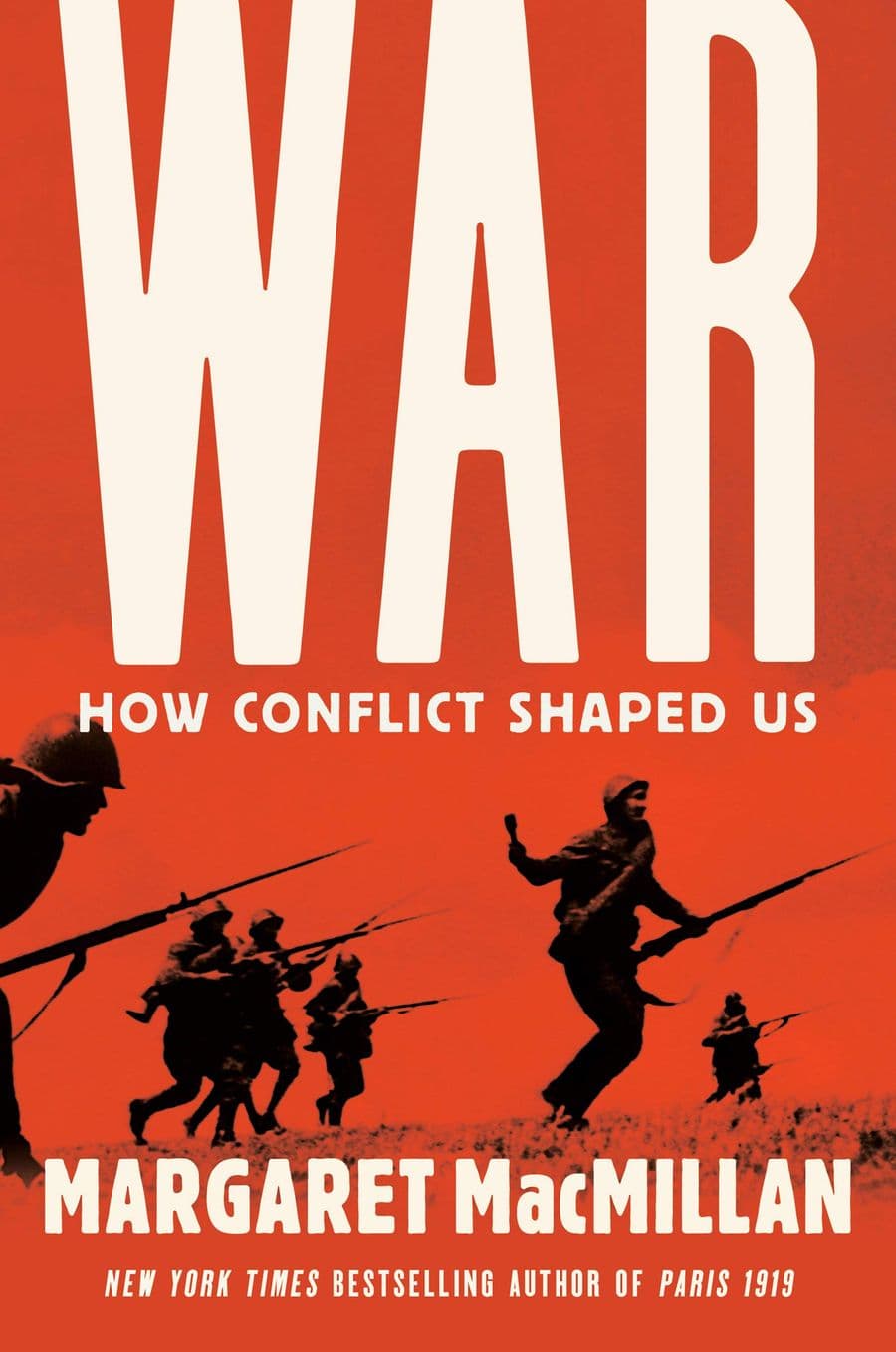
War Study
Last updated 08:50 PM EST • Read time: 7m
America has entered its twentieth year of war against terrorism. Although newspapers no longer give front-page coverage to troops in conflict, and photographs of flag-draped caskets flown from overseas combat posts have faded from nightly news broadcasts, the soldiers continue their fight on at least two continents, maybe more. Preparation for the next encounter, the next episode in the global war against terrorism, has become institutionalized; troops are recruited, trained and deployed continuously, amidst uncertainty over what they are expecting to find or how they might resolve the problem, should it occur. The end of this war is not yet in sight.
That we cannot agree on answers to fundamental questions about war—whether we fight for reasons of religion or rage, plunder or pride—seems appropriate. Justifications for having fought the war in Iraq are just as confusing post hoc as the explanations for launching the invasion were seventeen years ago. Still more perplexing is the debate over whether these issues should even be studied in academia. In her excellent new book War: How Conflict Shaped Us (Random House, 2020), author Margaret MacMillan relates a story from early in her teaching career, recalling the dismayed look of an educational consultant when she told him she was drawing up plans for a course titled “War and Society.” “It would be better,” he urged, “to use the title ‘A History of Peace.’” Whether for reasons of fear or ignorance, we do not take the study of war as seriously as it deserves.
Fortunately, Macmillan does.
In a brisk 272 pages, she explains that we study war in hopes of understanding its impact on the development of Western civilization and of how we reached this point in history. Regardless of our conclusions to war’s big questions, most can agree that war has left an indelible imprint on every aspect of human society, that war has been an engine for growth and innovation, as well as destruction. In a mere nine chapters, Macmillan reminds us that war is among the most organized of human activities, that it has been a source of motivation for national leaders to systematize the means of raising money, manufacturing material, and educating soldiers to meet the existential demands of a nation-state in armed conflict, and that war can, in fact, be the organizing gesture toward extending greater rights and liberties to marginalized groups. War, Macmillan explains, is inextricably interwoven into every facet of the human experience.
Thus, to study war is to study human nature.
“With new and terrifying weapons, the growing importance of artificial intelligence, automated killing machines and cyberwar, we face the prospect of the end of humanity itself. It is not the time to avert our eyes from something we find abhorrent. We must, more than ever, think about war.”
What follows is a lightly edited transcript of a conversation with author and historian Margaret MacMillan.
Tell me why we go to war:
Humans have mixed motives for going to war. Honor. Fear. Prestige. National pride. Religion. “We do not fight just for survival—food, sex, shelter—but also for abstractions such as religions or nations which we think worth killing and dying for.” There are many reasons we go to war, and I try to introduce these different reasons in each chapter of my book.
I was just trying to understand the causes of war and why we have mixed motives as human beings, why people will fight for honor, but if they can get loot out of it or spoils, then they will do that as well. There are many reasons people go to war, and fear of the enemy can be longstanding until war breaks out. Wars have deeper causes that can be differentiated from immediate causes. For instance, I always thought World War I could have been avoided, that there were not necessarily clear causes for that war but many failures of leadership. If we look too deeply at causation, we might end up thinking war is inevitable.
Whatever the causes, man is certainly fascinated by war because it has been around so long. War brings out the best and the worst in us, and it is all around.
In your chapter “Controlling the Uncontrollable,” you cite Pope Innocent II as having said that the crossbow was “hateful to God and unfit for Christians.” Later, the Christian Church decided that it was appropriate for soldiers to use the crossbow against infidels, who were “damned in any case.” Do you believe that war is fought for religious reasons?
I am not religious by and large, so it is hard for me to imagine people dying for a religious cause, but we have seen enough evidence in the world. Obviously, Crusaders took religious vows and were ceremonially given crosses that had been blessed before going into battle. The wars of the eighteenth century were ferocious because people thought they were fighting for something eternal. Thinking more recently, I write about the long war between Iran and Iraq in the 1980s, when thousands of Iranian volunteers marched across mine-strewn battlefields, believing that they would go directly to heaven when they died because the ayatollahs had told them so. Some even carried keys they were given to speed their entry.
Leaders and governments have played on religious feeling to get people to go to war. Many of the Crusaders had wealth and land and could have lived perfectly happily on their land, and instead, they chose to go halfway around the world to fight and die. They went because they felt they had been called to do so. There is no other reason.
I wonder if the most modern thing a man can do with his life is to become owned by the State, what you call the Leviathan. War produces the Leviathan, which then monopolizes institutions and force in order to protect itself from decay. Tell me about the relationship between man and the State.
You get this notion that states have always believed the able-bodied belong to them and are owned by them. People usually try to hide when the recruiting armies come by, but when people became citizens, you have an ownership stake in the government, and the government has an ownership stake in you, so there's a relationship there that obligates both parties. In a war the state will conscript people and direct citizens. The state has taken ownership of the citizens, but the citizens have ownership, too.
About conscription, I will say there is a major difference between wars fought by professional soldiers and conscripted soldiers. Professional soldiers long said that warfare would get much more brutal when the regular citizens got involved. What had once been “cabinet wars” fought under code or a rule of behavior would end, and we’d get the much bloodier “people’s war.” War used to be what governments did but became what the public wanted, like the Civil War. The limits just go, they go away.
Shifting to how we remember war, English art critic and thinker John Ruskin said that “no great art ever yet arose on earth but among a nation of soldiers.” Explain the connection between warfare and artistic expression.
Art is the way in which we think about things, and the art—poetry, paintings, film, and books—shapes our perceptions and our thinking about war. If you are in the story, you must rely on the evidence, but authors or artists can go beyond what's in the evidence and imagine things that are true if not necessarily real. This is the chapter in my book, “War in Our Imaginations and Our Memories.”
Do you have any recommendations for further reading?
One of my favorites is Barbara Tuchman’s “The Guns of August.” Sir Michael Howard’s book on the Franco-Prussian war is as good as anything. The Australian poet and novelist Frederic Manning; he is good, too, especially because he wrote the actual way that soldiers spoke. I do think that the American writer Tim O’Brien’s writing on the Vietnam War is fabulous, and he is one of my favorites. I recommend everything he’s written.
Able Magwitch is a government employee. The opinions expressed in this article are his own and do not reflect those of the U.S. government.
The First Test of Peace Lies in Ukraine's Borderlands
By Dennis T. Cosgrove • RealClearDefense
The VFW’s Gambling Addiction Victimizes Veterans
By Jack Yoest • RealClearDefense
Superintelligence Exposes a Gap in the Law of Delegated Authority
By Sue Ghosh Stricklett • RealClearDefense
When the Network Goes Dark, Who Controls the Battlefield?
By Jonathan K. Corrado • RealClearDefense
We Cannot Build Tomorrow's Weapons With Yesterday's Alloys
By Joseph F. Krause • RealClearDefense
When the Network Goes Dark, Who Controls the Battlefield?
By Jonathan K. Corrado • RealClearDefense
Air Force Should Buy 250 Blended-Wing Tankers, as 2027 Demo Looms
By A&SF Mag.
Long Deployments to Be Navy Standard For Next Couple Years
By Mongilio, USNI NewsWhen the Network Goes Dark, Who Controls the Battlefield?
By Jonathan Corrado, RCD
Marines Deploy Neros Archer Drone in Live Fire Exercise for First Time
By USNI News