
Soft Power's Path to the Gate of Tears
Last updated 05:52 PM EDT • Read time: 7m
While international attention has been correctly focused on the North Koreans in the past few weeks, the Chinese are months away from opening a naval base at the mouth of the Red Sea.
The Djibouti government allowed the Chinese to start construction of a naval base only four miles from American Camp Lemonnier in Djibouti on the Horn of Africa in 2016. By summer of 2017, it is predicted to be fully operational as reported by General Thomas Waldhauser, commander of U.S. Africa Command. For the past decade, the United States has used Camp Lemonnier as a key launching point for military operations in Yemen and Somalia as well as anti-pirate operations in the area. France, Japan, and Saudi Arabia also have bases in the small but strategic country.
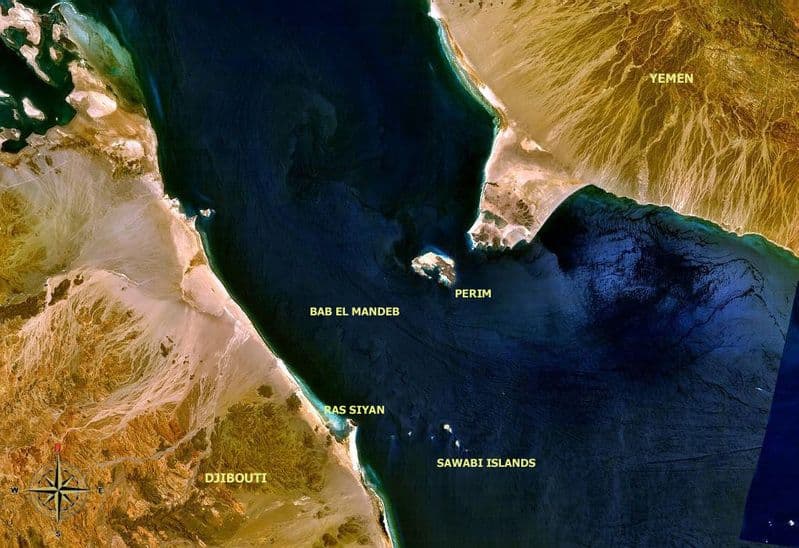
Djibouti sits on the African side of the Bab-el-Mandeb (“Gate of Tears”), an 18-mile wide waterway between the tip of the Arabian Peninsula and Africa. A choke point between the Mediterranean Sea (via the Suez Canal) and the Indian Ocean, the route is vital to the international economy, as an estimated 4% of global oil trade passes through it.
Even the most strident isolationists in the U.S. should see the value of keeping these shipping lanes conflict free. Any disruption in the flow of commerce in the area will profoundly affect the economy of the world.
Unfortunately, the straits sit in a very contentious region. To the north, the Yemeni government has no control over its coastline. Rebels, as recently as February, attacked a Saudi ship resulting in two deaths. In the south, Somalia continues to be a haven for jihadist groups, and pirates are again using the country as a staging area to seek out targets of opportunity on unsuspecting ships.
Adding China to the mix will only increase instability. The Chinese building and maintaining a military base near a U.S. base increases the odds of conflict in the region. Chinese sailors and airmen are known for their aggressiveness in ramming and intercepting other vessels. In the close waters and airspace off and over Djibouti, it is just a matter of time before an incident occurs.
This expansion is a wake-up call that the Chinese are serious about projecting power. It is the first base specifically built for military purposes by the Chinese outside the western Pacific. Additionally, it has been reported that China will increase its naval infantry forces. These forces are expeditionary in nature and will help the Chinese influence events beyond its shores. For the last 15 years, commentators have debated back and forth if the Chinese have the wherewithal to establish a base so distant from its home country. Well, that debate is over. And don’t be surprised if additional military bases pop up along the periphery of the Indian Ocean or in the Persian Gulf.
The lease also shows how their new economic power can lure supposed allies away from the American orbit. The Chinese paid the Djibouti government $100 million a year for ten years for leasing rights. Billions of more dollars will be invested by the Chinese to build infrastructure in the country. The Chinese are not afraid of using their economic weight to influence countries.
Most importantly, this base is a result of a lack of leadership shown by the U.S. in the past eight years and the concept of “soft power.” The Djibouti government saw the Obama administration look the other way regarding Chinese provocations in the South China Sea and the Senkaku Islands; Russia invading Crimea and causing mischief in Ukraine; North Korea moving forward with the construction of nuclear weapons, and the U.S. withdrawing from Iraq and ignoring red lines drawn in Syria.
I am sure Djibouti was hedging its bets as the U.S. was ambiguous on what they might do regarding major foreign policy events in the past years. (And an administration that was not proud of its Western tradition or culture.) On the other hand, they see an up and coming, confident China, willing to use its power and clout to displace a non-western nation.
The rhetoric of “soft power” touted by the Obama administration has caused allies to doubt America’s seriousness in the international arena where hard power is the norm. Soft power might work with other democracies with traditions and values that match our own. However, in cultures that are still a generation away from tribal conflicts, are quasi-dictatorships, or young democracies that live on the edge of a chaotic world, hard power will continue to influence them.
As Osama bin Laden is quoted as saying, “When people see a strong horse and a weak horse, by nature, they will like the strong horse.” Unfortunately, the U.S. has is seen as the weak horse in certain quarters of the world.
Chinese Interests in Africa and the India Ocean-String of Pearls
The “String of Pearls” theory posits that the Chinese are building a string of civilian and military installations starting from Hainan Island, through the Parcel Islands, ports in Sri Lanka, Myanmar; Gwadar, Pakistan and eventually ending with the naval base in Djibouti. According to the theory, the Chinese are using these installations to secure a line of communication to the oil fields of the Middle East. China imports approximately 70% of its oil from the region. So a benevolent China securing its shipping lanes makes sense, and maybe the world should not worry.
China states that its presence in the Indian Ocean and Africa is part of its rightful and peaceful expansion in the world. However, China’s actions in the South China Sea and its aggressiveness in the Japanese islands show that China’s growth is not all that peaceful. China becoming dominant in the Indian Ocean would allow it to squeeze its main rival’s supply lines in Northwest Asia, Japan. The West should cast a skeptical eye on any Chinese encroachment on the Indian Ocean and adjacent regions.
The Chinese base in Djibouti will serve as the most western and important pearl in its long string across the Indian Ocean.
Conclusion
The Chinese naval base in Djibouti is a foregone conclusion unless the Trump administration can pull off a huge deal to make the Djibouti government renege on its lease to the Chinese, which I do not foresee occurring. America and her allies have to live with a hostile base within walking distance from a key U.S. military installation and along a route of strategic importance to the world economy.
The U.S. will have to adjust tactics according to the new reality. The U.S. and her allies need to let the Chinese know right away that the antics they use in the South China Sea will not be tolerated here. Strategically, the U.S., Europe, and Japan have to become less dependent on oil from the Middle East. That means more nuclear power, more drilling in North America, and development of alternative means of energy.
The larger lesson for America is that soft power will not advance its interests when dealing with countries that have no interest in emulating the values of the West, such as Djibouti. No matter how much aid, cups of tea, or movies from Hollywood are provided, if the U.S is perceived as the weak horse, our national security interests will not be advanced.
Sean P. Morrisroe served 10 years in the U.S. Marine Corps as an infantryman. In his post-Marine Corps career, he has advised clients at various investment banks and firms focusing on mergers & acquisitions. He graduated from UC Irvine with a BA in History and attended the London School of Economics.

Putin, Plague, and America’s Biodefense Gap
By Ryan Kane • RealClearDefense
From Hormuz to the South China Sea: Defending Freedom of Navigation in Contested Waters
By David F. Lasseter • RealClearDefense
Checklist for Modern Conflict Readiness
By Sergey E. Ivashchenko • RealClearDefense
AUTOWARCOM Is Heading for a Command-and-Control Collision
By Michael Carvelli • RealClearDefense
The Unfinished Reform
By Mark W. Castillon • RealClearDefense
U.S. and Japan Begin Naval Exercises Near Taiwan
By Mari Yamaguchi • Associated PressFrom Hormuz to the South China Sea: Defending Freedom of Navigation in Contested Waters
By David F. Lasseter • RealClearDefense
National Guard Soldier Shot While Breaking Up Fight in Washington D.C.
By Military.com
‘No Marine Fights Alone’
By Gidget Fuentes, USNI News
Sea Services Weigh How to Embrace Autonomous, Attritable Tech
By Reeves, NatDef