
The 1973 War and the Lessons for Today
Published Oct. 28, 2021 • Read time: 5m
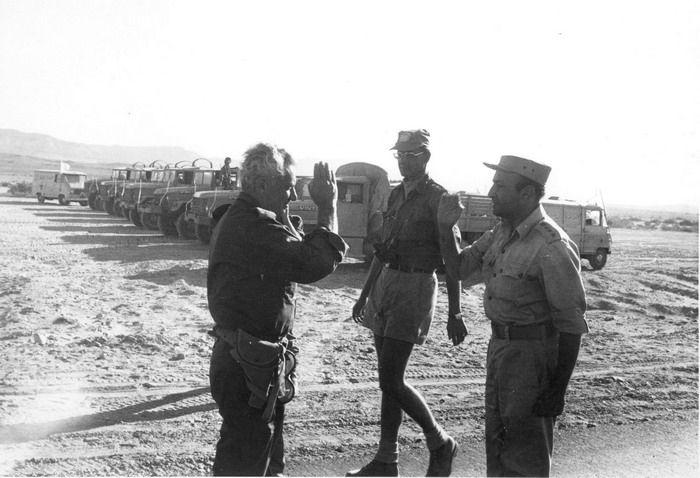
We now mark 48 years to the Yom Kippur war, which occurred in October 1973. Egypt and Syria surprised Israel by attacking her on two different fronts. Israel prevailed but sustained heavy casualties. Although Israel ultimately recovered from the shock of the 1973 war, it has always been remembered as a traumatic event.
The war started during Yom Kippur. Since then, "Yum Kippur" has been the holiest day of the year and is seen as a symbol of potential disaster that can happen in the military and other areas of national concern. There are many lessons from the 1973 war, some of which now remain more relevant than others.
Prior to the 1973 war, the IDF controlled the Sinai Peninsula. Israel accepted that Egypt deployed its massive air defense very close to the Suez Canal, which marked the border between the two states at the time. Israel did not attack the Egyptian air defense because it might have ignited a war, which Israel sought to avoid. The presence of the Egyptian air defense protected other Egyptian units, including tanks, artillery units, etc. They provided cover for the Egyptian infantry when it successfully reached the eastern bank of the Suez Canal at the first stage of the war.
In 1973, the IDF relied heavily on the IAF, which was supposed to play a major role in defeating the Egyptian military. However, the Egyptian air defense inflicted serious losses upon the IAF, effectively preventing it from pushing back the Egyptian forces. It was a bitter disappointment for the IDF.
Since the 2006 war, Israel has tolerated Hezbollah's stockpiling of tens of thousands of missiles and rockets. In this respect, Israel has taken the same approach as it did prior to the 1973 war by allowing its foe to accumulate significant firepower close to the border. Israel recognizes that an alternative approach might bring war, a result Israel seeks to avoid.
However, the destructive capabilities of Hezbollah are significant and would present a significant challenge to IDF operations if a war started. In addition, Egypt surprised Israel in 1973, and Hezbollah might try to do the same.
Some of Hezbollah’s missiles can penetrate far into Israeli territory. Its substantial arsenal would definitely allow it to provide firepower to its fighters, enabling infiltration to northern Israel. In 2019, the IDF destroyed several tunnels that led from Lebanon to Israel, serving Hezbollah in penetrating into Israel. However, Hezbollah can still do this by exploiting the rugged terrain and lack of sufficient obstacles on the border. (Although Israel created some new and effective barriers, did not finish the project due to lack of funds and other priorities). Hezbollah combatants would have to overcome natural and artificial obstacles to pave their way into Israel, but such an undertaking could be accomplished, as it was with crossing the Suez Canal in 1973.
Despite the Egyptian success in 1973, its troops captured only a tiny part of Sinai, and they remained more than 200 kilometers from the heart of Israel. The Egyptian military did not pose an existential threat to Israel. The greater danger would have been if the IDF had worn itself down, confronting the Egyptian military on its terms. The IDF's best approach would have been to trap its rival in the vast areas of Sinai.
Hezbollah might be capable of infiltrating Israel in the next war and seizing ground, but it would be a short-lived victory. Within several hours, at most a day, the IDF would take back the territory while killing, capturing, or driving out Hezbollah fighters who invaded Israel. In this respect, even a Hezbollah penetration would not be capable of threatening Israel's survival.
Egypt’s air defense crippled the IAF in the 1973 war. Today, Hezbollah’s missiles might hit Israeli airfields, inflicting casualties and disrupting operations. The IAF might also not be able to suppress the fire of Hezbollah’s rockets and missiles. The IDF should not depend too much on the IAF, yet another lesson from the 1973 war. Israeli ground forces have to be fit and ready to carry out a large-scale offensive deep inside a hostile country. In 1973, Israeli ground units destroyed anti-aircraft batteries. In the next war, Israeli land units will be capable of wiping out other kinds of missiles.
Prior to the 1973 war, IDF was focused on the important task of securing its borders but often did so at the expense of preparing for a high-intensity war against Egypt. In recent years, the IDF, particularly its northern command, has been busy in the "war between wars", which consists of the ongoing effort to stop or at least minimize the Iranian military presence in Syria. Israel launched hundreds of airstrikes that cost Iran heavy damages and casualties, but Iran still insists on trying to turn Syria into a firebase against Israel. This is an important fight, yet as demonstrated in 1973, the IDF must not be distracted from preparing to confront Hezbollah.
Although the 1973 war occurred almost fifty years ago, some of its lessons are clearly still valid.
Dr. Ehud Eilam has been dealing with and studying Israel's national security for more than 25 years. He served in the Israeli military and later worked for the Israeli Ministry of Defense as a researcher. He has a Ph.D. and he had published six books in the U.S / U.K. His latest book is: Containment in the Middle East, (University Press of Nebraska, 2019)

The Army’s AI Cyber Defenders Need a Proven Stand-Down Order
By Gleb Tsipursky • RealClearDefense
After the Silence
By Chase Skylar DeMayo • RealClearDefense
Defense Chip Procurement Needs a Recovery Test
By Percy Yixuanchen Yu • RealClearDefense
FORTRESS America Must Measure Missions, Not Megawatts
By Burak Oktenli • RealClearDefense
After the Midterms, the Right Strategy Against Iran
By Lance Gordon • RealClearDefense
After the Silence
By Chase Skylar DeMayo • RealClearDefense
Underwater Arms Race Puts U.S. Naval Supremacy at Risk
By Tom O'Connor, Newsweek
New Facilities To Pump Out Upgraded F/A-18E/F Super Hornets
By Trevithick, WarZone
U.S. Navy Expands Tomahawk Warhead Production
By Naval News Staff, Naval News
SSN(X) Attack Boat Will be a Swift, Lethal Mothership for Undersea Drones
By USNI N.