
Vocational Education Is a National Security Imperative
Last updated 06:54 AM EDT • Read time: 6m
Join the Conversation
0America is facing a skilled trades crisis — and the national security consequences are becoming impossible to ignore.
A recent Wall Street Journal report documents how major employers and philanthropies are scrambling to address a deepening shortage of electricians, welders, pipefitters, and mechanics. Ford Motor Company and Bloomberg Philanthropies alone have announced new initiatives this year totaling nearly $400 million aimed at steering more Americans toward careers in the trades. According to the Associated Builders and Contractors, the construction industry needs to add an estimated 349,000 net new workers this year just to meet current demand — driven in part by surging requirements for electricians to support data center construction and investment in advanced manufacturing. Meanwhile, the skilled workforce that built and maintained America's industrial infrastructure for generations is aging out, and there are not enough trained workers coming behind them to fill the gap.
This is a serious economic problem. It is also, increasingly, a serious national security problem — and it is time the defense community said so clearly.
Lowe's CEO Marvin Ellison captured the cultural root of the challenge with admirable directness: "Within our society, we've created a belief there's only one pathway to be successful, and that is you have to go to college, you have to get a four-year degree. There are multiple pathways." He is right. Over the past four decades, American public education has systematically dismantled vocational training programs in favor of a college-for-everyone model that serves neither students nor the economy particularly well. The results are now visible in workforce shortfalls across virtually every sector of the skilled trades.
I know this problem from more than one vantage point.
When I was in high school in Massachusetts nearly forty years ago, we had genuinely balanced programs — rigorous college preparatory tracks alongside excellent vocational education options that prepared students for careers in the trades with the same seriousness we applied to preparing students for university. That balance has largely disappeared from American public education, and we are living with the consequences.
More directly, I saw the consequences firsthand during my tenure as Principal Deputy Administrator of the National Nuclear Security Administration. One of the most persistent operational challenges we faced was finding sufficient numbers of trained craftspeople — electricians, pipefitters, ironworkers, instrumentation specialists — to support critical construction and maintenance projects across the nuclear security enterprise. These are not marginal positions. They are the skilled workers who keep America's nuclear weapons infrastructure functioning safely and reliably. When those workers are not available, projects slow, costs rise, and mission readiness suffers.
The problem extends well beyond NNSA. The United States Navy's shipbuilding crisis is perhaps the most visible and acute manifestation of what happens when a nation allows its skilled trades pipeline to erode over decades. American shipyards are struggling to find the welders, pipe fitters, electricians, and marine engineers needed to build and repair the vessels the Navy requires. The consequences are not abstract. Ships are being delivered late. Maintenance backlogs are growing. The Navy's ability to sustain the fleet at the size and readiness level required for great power competition is being directly degraded — not by an adversary's actions, but by a domestic workforce shortfall that was entirely foreseeable and is now entirely real.
This pattern repeats across the defense industrial base. Advanced manufacturing facilities cannot find enough skilled machinists. Missile production lines are constrained in part by workforce limitations. Nuclear construction projects face chronic shortages of the specialized tradespeople they require. As the United States attempts to rebuild its defense industrial capacity after decades of underinvestment — expanding production of munitions, interceptors, ships, and advanced manufacturing systems that great power competition demands — the skilled trades shortage is emerging as one of the binding constraints on how fast that rebuilding can actually happen.
The strategic implications are direct and serious. We cannot build a stronger defense industrial base without the workers to staff it. We cannot expand our naval fleet without the shipyard workers to construct it. We cannot modernize our nuclear infrastructure without the craftspeople to build, maintain, and repair it. We cannot manufacture interceptors, munitions, and advanced weapons systems at the scale great power competition requires without the machinists, welders, and electricians to run the production lines.
Money and political will are necessary conditions for defense industrial revitalization. They are not sufficient ones. The workforce is the foundation on which everything else rests — and right now, that foundation has serious cracks.
The good news is that the problem is not invisible. The Wall Street Journal's reporting on employer and philanthropic investment in vocational training reflects genuine private sector recognition that the trades pipeline must be rebuilt. The Bloomberg Philanthropies initiative, Ford's partnership with Detroit high schools to fund automotive repair facilities, and the broader employer-led push to restore vocational education's place in American secondary education are all steps in the right direction.
But private sector initiatives, however well-funded, cannot substitute for a systematic national commitment to restoring vocational education as a respected, well-resourced pathway in American public education. That requires federal and state policy alignment, sustained investment in career and technical education programs, and a cultural shift that treats a master electrician or a certified welder as the skilled professional they are — not as someone who failed to make it to college.
The defense community has a role to play in making that case. Defense secretaries, service chiefs, combatant commanders, and defense industry leaders all have platforms and credibility that can help reframe vocational education as what it actually is: a national security imperative, not an educational consolation prize.
Vocational education is not a second-tier pathway. It is a foundational element of American military power — and treating it as anything less is a strategic error we can no longer afford.
Frank A. Rose is president of Chevalier Strategic Advisors, a strategic advisory firm focused on the intersection of geopolitics and defense technology. He previously served as Principal Deputy Administrator of the National Nuclear Security Administration, U.S. Assistant Secretary of State for Arms Control, a Professional Staff Member on the House Armed Services Committee, and as a Policy Advisor at the U.S. Defense Department.
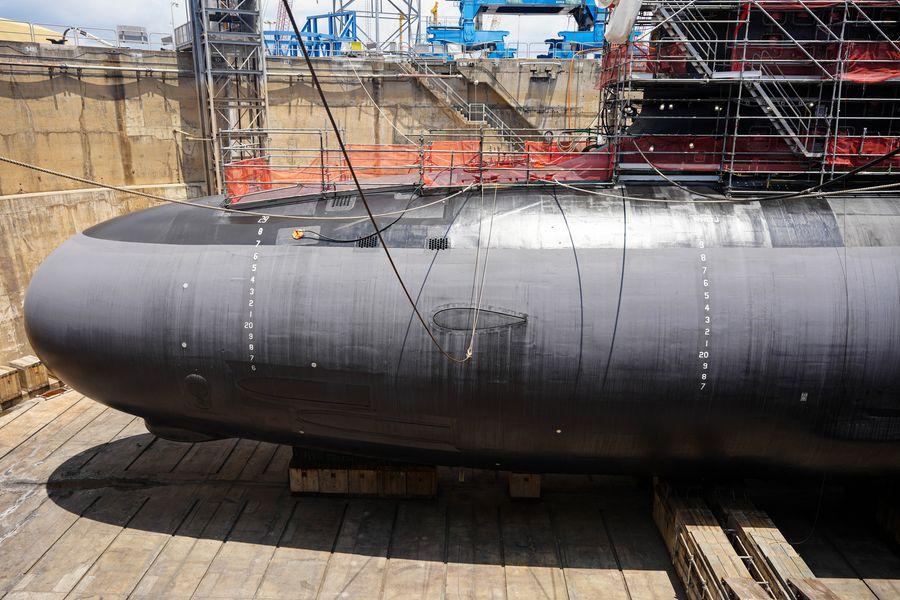
image: Virginia-class fast-attack submarine USS Illinois (SSN 786) sits in Dry Dock 2 as it prepares for the upcoming undocking evolution at Pearl Harbor Naval Shipyard and Intermediate Maintenance Facility (PHNSY & IMF), June 17, 2026, completing an important milestone in the submarine’s scheduled lifecycle maintenance period. (U.S. Navy photo by Camey Streff)

Counterterrorism and the Growing Convergence in Homeland Security and Homeland Defense
By Austin Doctor • RealClearDefense
The Future of Space Power Depends on Integration
By Damian DiPippa • RealClearDefense
America Should Unleash Cyber Privateers
By Jacob Schelp • RealClearDefense
America Invented the Battery, but China Controls the Factory
By William Crane • RealClearDefense
A Defense Win for Americans and Israelis in Arkansas
By Bradley Bowman • RealClearDefense

F-16s Build on Iran Combat Lessons to Prepare for China Threat
By Rebecca Grant • Lexington Institute
Key Space Force Satellites Can’t Talk to Each Other
By T. Hitchens, Breaking Defense
Blue Angels Pilot Scott Laux Removed for Failing To Uphold Standards
By Johnson, PNJ
The Future of the Ground Reconnaissance Enterprise
By Joe Albano, The Connecting File
The Future of the ARG/MEU
By William Yale, Proceedings