
Capability in Adaptability: Training for Modern Conflicts in Contested Environments
Last updated 06:44 AM EDT • Read time: 8m
Enabling concept-driven transformation through integrated aviation and ground training for contested, multidomain operations
Training for the fight the Army expects to face
As Army aviation adapts to multidomain operations and prepares for efforts such as Project Convergence 2026, training must reflect how aircraft will operate in more contested and data-driven environments. Aviation provides speed, reach and effects across future battlefields, but its true operational value will depend on how well it integrates with the broader ground force under degraded communications and compressed decision timelines.
Project Convergence Capstone 5 in 2025 demonstrated the importance of integration in training. The event gave Soldiers and commanders experience operating at speed, scale and distance while testing command-and-control, expanded maneuver and cross-domain fires in joint and multinational scenarios. For aviation, this points to a training requirement built around shared data, common timing, and close coordination with ground forces.
Live, virtual, and constructive (LVC) training gives aviation and ground units a shared environment to rehearse complex missions before live execution. Combining live activity with virtual and constructive elements allows commanders to expose formations to distance, degraded communications and cross-domain coordination before those conditions appear in live operations.
Replicating the contested threat environment more realistically
Preparing aviation and ground units for integrated operations begins with a shared training environment that reflects the contested communications, positioning, and threat conditions likely to shape future missions.
Degraded and denied communications require greater reliance on mission command and pre-planned coordination. GPS and PNT degradation affect navigation, fires accuracy and aviation routing. Electronic warfare can disrupt command-and-control (C2) systems, sensors, and data sharing. Integrated air defense threats force aviation units to adjust standoff, masking and timing. Adaptive enemy behavior reduces scripted outcomes and requires units to make decisions under pressure.
Training events must prioritize conditions that expose where air-ground coordination breaks down. The operational lessons are visible in Ukraine, where electronic warfare has affected GPS, communications, and drone operations, forcing units to adapt tactics quickly when systems are disrupted or threats change during execution. Training under contested conditions allows commanders to evaluate how formations respond when an adversary adapts or communications degrade.
Why aviation and ground forces need a common training picture
Integrated training delivers greater value when performance can be observed and reviewed across the force. A common training picture helps units understand what occurred during an event across movement, targeting, communications, timing, and decision-making. In joint or combined formations, aviation crews, ground maneuver units, fires cells and command can assess how the force worked together, rather than reviewing separate versions of the same event.
A shared air-ground after-action review (AAR) gives commanders a single integrated timeline and geospatial picture, allowing aviation crews, ground units, and command posts to examine the same event through a common operational lens. From an LVC ground training perspective, software platforms can support this by fusing live instrumentation such as MILES or I-MILES, aviation feeds and constructive simulations into a common operational replay. Movements, fires, and communications data can be synchronized so commanders can move between air, ground, and higher headquarters perspectives.
In practice, AAR provides commanders with a structured review of decision points, engagements, and coordination movements. It enables analysis of close air support timing, ISR cueing, fires integration and command decisions, while comparing what leaders knew during execution with what occurred throughout the event. This result is a shared understanding of cause and effect across the force.
Integrated air-ground data can reveal gaps often missed in platform-specific reviews, including:
- Timing mismatches, such as aviation arriving too early or too late relative to ground maneuver
- Targeting disconnects, where ISR or aviation identifies targets that are not exploited by ground forces
- Communications breakdowns, where information exists but does not reach the decisionmaker in time
- Fratricide risks, such as poor spatial awareness between maneuver elements and aircraft
- Command latency, including delays between detection, decision and action
A shared air-ground picture helps commanders refine tactics, techniques and procedures based on how the full force performed.
The operational risk of failing to modernize training
Training gaps in aviation and ground integration create operational risk. If aviation training does not keep pace with contested, AI-influenced operations, units may enter conflict with flawed assumptions about communications, coordination, and survivability. Decisions slow when units must process incomplete or degraded information, and coordination weakens when aviation and ground elements operate on different timelines. Poor synchronization can also increase exposure to threats, while failure to exploit ISR or aviation advantages can create missed opportunities.
Modern training environments must move beyond fixed scripts and static threat presentations and create more varied conditions for decision-making, coordination, and review.
The role of adaptive targets and artificial intelligence in training
Artificial intelligence and machine learning are beginning to influence training by improving realism, repetition, and analysis. The most valuable applications today support training design, exercise control and post-event review while keeping human judgment at the center.
Adaptive targets and AI-enabled behavior can increase training value by removing predictability and forcing real-time decision-making. As targets relocate, hide or re-emerge, units must dynamically retask and maintain air-ground coordination under changing conditions. Each iteration can present a different problem set without relying on scripted outcomes.
At the unit level, AI-enabled training can help soldiers build situational awareness under uncertainty. Ground units can rehearse synchronization with ISR and aviation, and aviation crews can face more realistic target acquisition and engagement challenges.
AI can also support exercise control and AAR. In exercise control, practical uses include AI-driven target behavior, dynamic scenario management and automated event tagging for engagements, delays, and communication failures. In AAR, pattern detection can identify repeated coordination breakdowns, decision timeline analysis can measure the time from detection to decision and action, and event correlation can link air actions to ground outcomes.
Data, after-action review and readiness improvement
Realistic training has lasting value when the event can be understood after completion. Events generate large amounts of data, but readiness improves only when that data can be captured, shared, and translated into useful insight. The Army’s TC 7-0.1 describes the AAR as a primary tool for training evaluation, assessing proficiency and helping leaders and Soldiers identify strengths, weaknesses, and ways to improve task performance.
In an integrated air-ground event, the most useful data connects planning, execution, and review. Commanders need to see whether the scheme of maneuver was executed as intended, whether air tasking aligned with the ground synchronization plan and where timing, movement, communications, or decision-making broke down. Useful measures include time to decision, time to effects, movement against intent, communications success and failure rates and blue-red positional correlation. During the AAR, data can help assess engagement effectiveness, air-ground coordination timelines, decision latency by echelon and fratricide or near-miss indicators.
The challenge is correlation and usability. Separate air, ground, and simulation systems can fragment data across different formats, timelines, and fidelity levels, creating a lack of standardization. Manual AAR processes can also be slow and inconsistent. In many cases, the information exists but is difficult to bring into one operational view.
Integrated aviation and ground training can help address this challenge through software layers that fuse, normalize and visualize data across domains, allowing commanders to assess movements, engagements, communications, and decision-making together. This improves after-action reviews and enables more targeted readiness improvements before the next exercise.
Preparing aviation for the ground fight
In modern conflicts, platform performance matters most when air and ground forces are synchronized under contested conditions. Integrated aviation and ground training gives commanders a way to build mission command in degraded environments, improve the speed and quality of decisions and reduce coordination risk before units enter real operations. Shared data, realistic threat replication, common after-action review processes, and selective use of artificial intelligence all support a more accurate picture of how the force performs during combined operations.
Future aviation effectiveness will depend on shared data, realistic threats and unified air-ground execution and assessment. As the Army looks toward Project Convergence 2026 and future multidomain operations, aviation training must reflect the ground fight it supports.
Mikael Edqvist is the Director of Global Business Development at Cubic Defense, where he works closely with allied customers worldwide to advance live, virtual, and constructive (LVC) ground training capabilities.
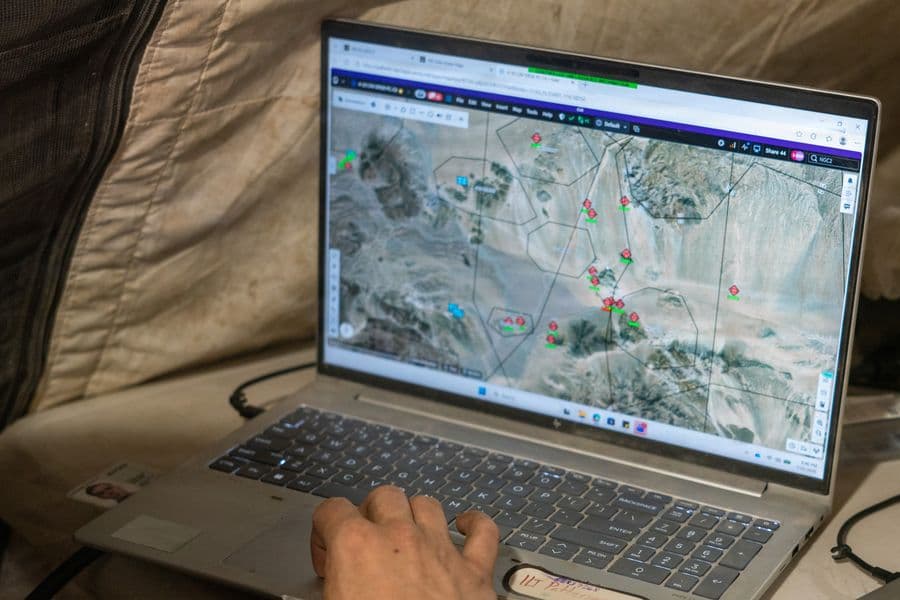
image: U.S. Army 2nd Lt. Kyle A. Frakes, assigned to 4th Squadron, 10th Cavalry Regiment, 1st Armored Brigade Combat Team, 4th Infantry Division, operates the ADIP software platform during a division reconnaissance and security experiment as part of Project Convergence Capstone 6 at Fort Irwin, California, July 21, 2026. PC-C6 is the premier Army-hosted experiment that allows the joint force and multinational allies and partners to integrate people, equipment, and technologies to support continuous transformation efforts aimed at aggressively shaping how future warfighters will operate in fast-paced, high-tech environments. (U.S. Army photo by Staff Sgt. Ger’vonni Straun)

Putin, Plague, and America’s Biodefense Gap
By Ryan Kane • RealClearDefense
From Hormuz to the South China Sea: Defending Freedom of Navigation in Contested Waters
By David F. Lasseter • RealClearDefense
Checklist for Modern Conflict Readiness
By Sergey E. Ivashchenko • RealClearDefense
AUTOWARCOM Is Heading for a Command-and-Control Collision
By Michael Carvelli • RealClearDefense
The Unfinished Reform
By Mark W. Castillon • RealClearDefense
U.S. and Japan Begin Naval Exercises Near Taiwan
By Mari Yamaguchi • Associated PressFrom Hormuz to the South China Sea: Defending Freedom of Navigation in Contested Waters
By David F. Lasseter • RealClearDefense
National Guard Soldier Shot While Breaking Up Fight in Washington D.C.
By Military.com
‘No Marine Fights Alone’
By Gidget Fuentes, USNI News
Sea Services Weigh How to Embrace Autonomous, Attritable Tech
By Reeves, NatDef